h-ronk…hrink…h-ronk…hrih: Canada Geese and the Art of Nocturnal Conversation

IMG_7765

Dawn at the shore of Cayuga Lake, at Aurora, New York,  thick with little ice floes, where Canada geese “sleep” at night. These were the conditions during much of January, February, and March 2015.


I never thought I would be moved to write about Canada geese, though naturalists are supposed to be interested in everything, and I am, but I have, unfortunately, shared many people’s misperceptions that these large, melon-shaped, waddling birds have more obnoxious qualities than pleasant ones. They can’t sing, and they take over lake shores leaving copious droppings. This is all wrong headed. They can’t sing, but they can talk in an interesting fashion, and their droppings are very “clean,” really just grass pellets.

Since Thanksgiving my husband and I have slept a dozen or so nights in Aurora, New York, just 250 yards from the shores of Cayuga Lake, one of the beautiful Finger Lakes in upstate New York. Each night the noisy conversations of the geese on the lake have made sleeping through the night  impossible.  As the woman at the coffee shop said, “It is a great cacophony.” One dozes, rolls over, opens an ear. Yes, they are still squawking at top volume…throughout the night. My question is, what are they talking about? Like most people I love the sound of the melancholy honks of migrating geese and the sight of their strong pinions flapping rhythmically like oars in the sky. But these geese are neither migrating nor mating. They are temporary residents of Aurora all winter, feeding in the cornfields nearby by day and chatting near the shore of the lake by night. Soon they will go north to breeding grounds that they return to year after year, I fantasize perhaps even to Teshekpuk Lake in Alaska.

I asked my husband what he thought the subject of their extensive conversations might be. His answer was quick. “It’s bedroom talk,” he said. “But it’s not mating season yet,” I said.

Pattern of ice breaking up on Cayuga Lake south of Aurora near Ithaca.

Ice breaking up on Cayuga Lake south of Aurora near Ithaca creates a beautiful pattern.

I would probably not have become obsessed with finding an answer if not for a recent reading of What the Robin Knows by Jon Young. Young, mentored by tracker Tom Brown in the Pine Barrens of New Jersey, has become a leading authority on bird communication.
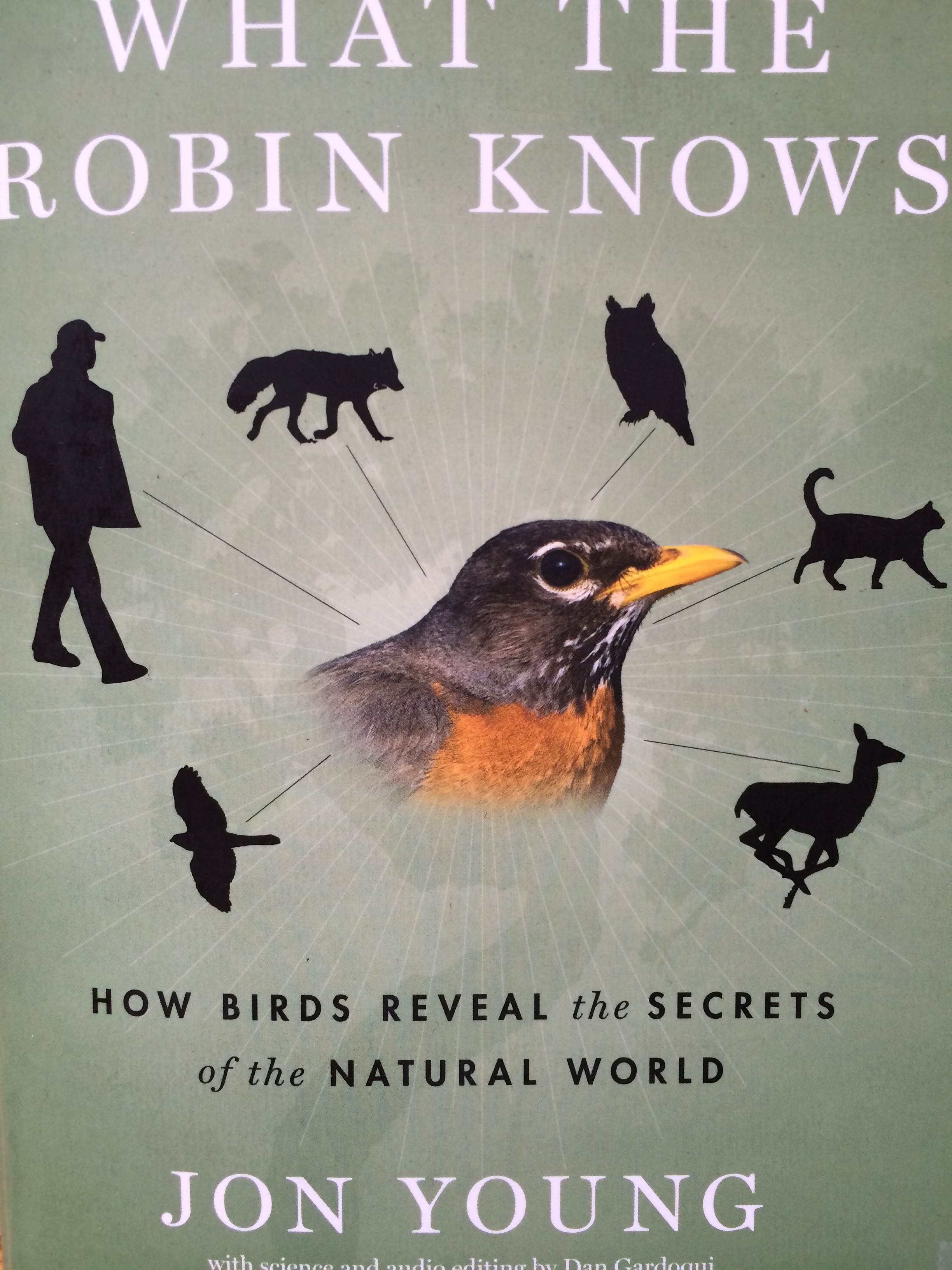
Valuable book for bird watchers.

Valuable book for bird watchers.

He writes, “Observers of bird language listen to, identify, and interpret five vocalizations: songs, companion calls, territorial aggression (often male to male), adolescent begging, and alarms.” His thesis is that songbirds have a number of specific vocalizations and if we humans pay attention we will know more about the world going on around them/us, the point being that them/us are One.

Rafts of snow geese on shore by Aurora. The snow geese do not mingle with or crowd the Canada geese.

Rafts of snow geese on shore by Aurora. The snow geese do not mingle with the Canada geese.

My search for an understanding of what they need or want to communicate about all night long  has led me on a wild chase into goose literature (the nights were way too cold and too dark for first-hand observation, and the geese sensing an interloper would have altered their talk). First, two points: (1) geese are perhaps second only to humans in their level of communicativeness, and (2) geese act purposefully, their vocalizations often indicating the purpose or concern at hand.  My exploration led me eventually to naturalist Bernd Heinrich’s book The Geese of Beaver Bog. He makes point #2 when talking about some unusual activity of Peep, the goose friend he observes in the book: “It is presumably not without reason. No goose behavior is.” This remark made me sure that the deafening nocturnal chatter of the Canada geese by the shores of Cayuga Lake in Aurora has a purpose.
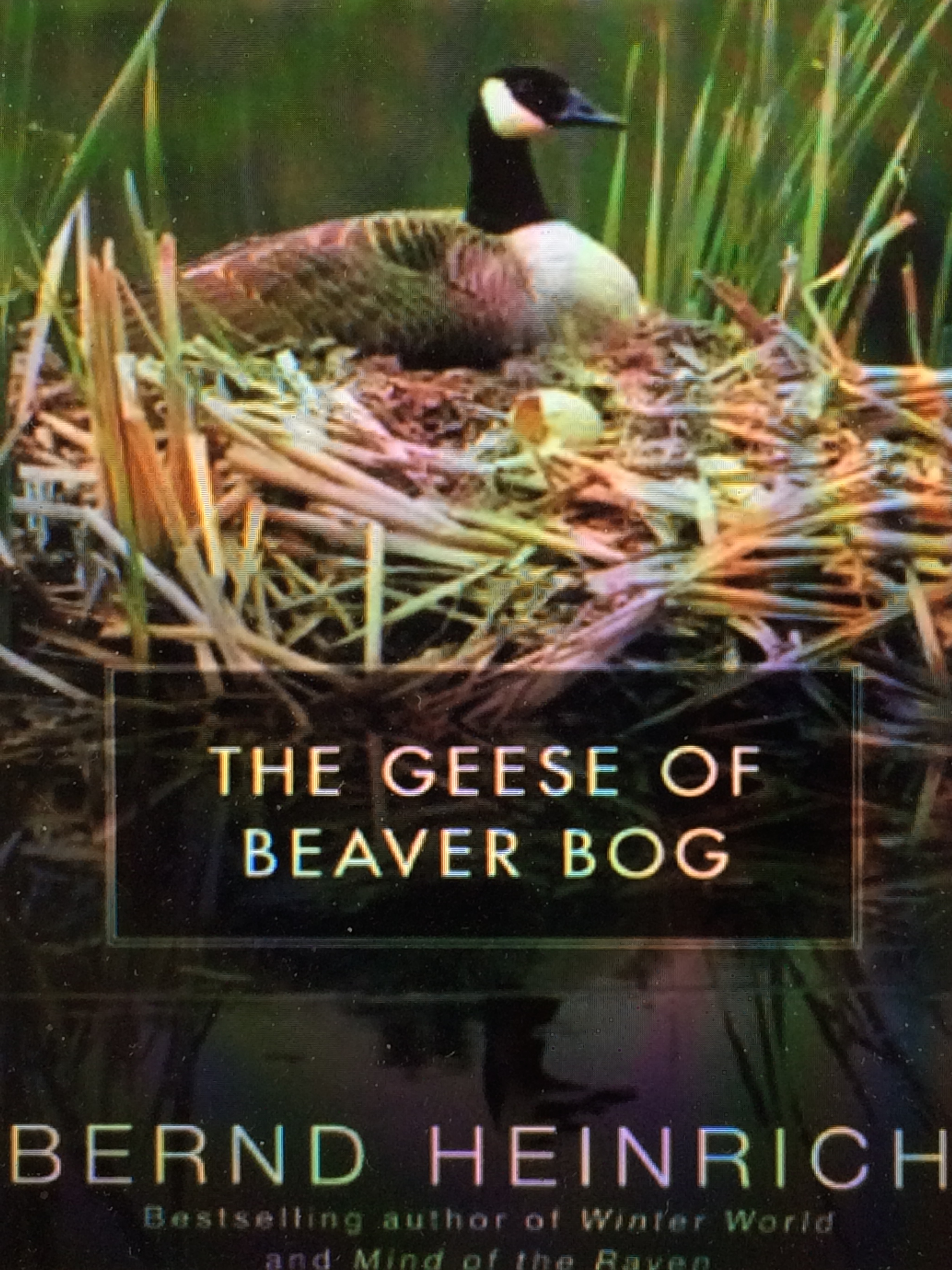
Bernd Heinrich reports on his observations of Peep and Pop, a goose and gander who nested near one the beaver ponds near his house. A dramatic account, as he is often dashing around reporting on various unusual activities.

Bernd Heinrich reports on his observations of Peep and Pop, a goose and gander who nested at the edge of one of the beaver ponds near Heinrich’s house. A dramatic account, as he is often dashing around sharing in the hardships of Peep and Pop.

Canada Geese are said to have at least 13 kinds of vocalizations, though one source puts the number at several dozen.  Some of these can be heard on the Macaulay Library of biodiversity audio and video recordings, part of Cornell University’s Laboratory of Ornithology. Under calls, they list “various loud honks, barks, and cackles. Also some hisses.” Peep, Heinrich’s part tame/part wild goose friend allowed him to observe intimate details of her life with the completely wild gander Pop. He writes of one of her sounds, “She closed her eyes and made barely audible low grunting sounds when I walked up to her. If sounds have texture, these were velvet.” His book gives one an entirely new appreciation of the intelligence and deep heart of this species. A recent youtube video made in February 2015 makes me think of Peep and Pop. It captures some of the evocative and tender impressions that I gathered from Heinrich’s book.

A comprehensive survey of the life history of Canada geese (Branta canadensis) by State and Federal Licensed Waterfowl Rehabilitator Robin McClary  describes their strong social bonds. McClary writes that Canada geese are “loyal and emotional towards each other,” a clue to their frequent vocalizations. They mate for life (though Heinrich describes a “divorce” in The Geese of Beaver Bog) and congregate in family groups. If first-time parents are negligent towards their progeny, older, more experienced adults move them to foster care. Extended family groups congregate and stay together until the next mating season, with large family groups showing dominance over small ones. McClary writes that mating bonds are sometimes established on wintering sites (clue). McClary describes the considerable range and subtlety of their vocalizations:

“The gander has a slower, low-pitched “ahonk” while the goose’s voice is a much quicker and higher-pitched “hink” or “ka-ronk.” Mated pairs will greet each other by alternating their calls so rapidly that it seems like only one is talking. The typical “h-ronk” call is given only by males. Females give a higher-pitched and shorter “hrink” or “hrih”. Pitch also changes depending on the position of the neck, and the duration of the call varies depending on context. Dominant individuals are about 60 times more vocal than submissive flock mates. Canada geese calls range from the deep ka-lunk of the medium and large races to the high-pitched cackling voices of smaller races. Researchers have determined that Canada Geese have about 13 different calls ranging from loud greeting and alarm calls to the low clucks and murmurs of feeding geese. A careful ear and loyal observer will be able to put each voice to the honking goose/geese.

Goslings begin communicating with their parents while still in the egg. Their calls are limited to greeting “peeps,” distress calls, and high-pitched trills signaling contentment. Goslings respond in different ways to different adult calls, indicating that the adults use a variety of calls with a range of meanings to communicate with their young. The goslings have a wheezy soft call that may be either in distinct parts – “wheep-wheep-wheep” – or a drawn out whinny – “wheee-oow”. Just as in adolescent people, when the voice changes as the goose matures, it will often “crack” and sounds like a cross between a honk and a wheeze. This will be noticeable when the goslings are becoming fully feathered and starting to use body movements to communicate. When a flock gets ready to take off and fly away, they will usually all honk at the same time. The female makes the first honk, to indicate it is time to go, while the rest of the flock will chime in all together. The female leads the flock away in flight.”

These descriptions were music to my ears as I realized how interesting a subject I had found through pursuing a naturalist’s query. My sojourn by the shores of noisy Cayuga Lake over, I feared opportunities for first-hand observation were over as well. However, I soon happened to find myself among the Canada geese again at my son’s college golf tournament in Hellertown, Pennsylvania. While having my morning coffee at a Panera in a busy intersection in Bethlehem, PA, I noticed a set of framed photos  to the left of the cash register featuring Canada geese.

Photos of Canada geese at Panera in Bethlehem, PA.

Photos of Canada geese at Panera in Bethlehem, PA.

I took a close up of their photo of goslings protected under feathers of mother goose.

Goslings nesting in mother goose's feathers.

Goslings nesting in and under mother goose’s feathers. (Photo courtesy of Panera.)

Then I looked outside the window and saw a goose or gander in the median strip of the busy intersection.
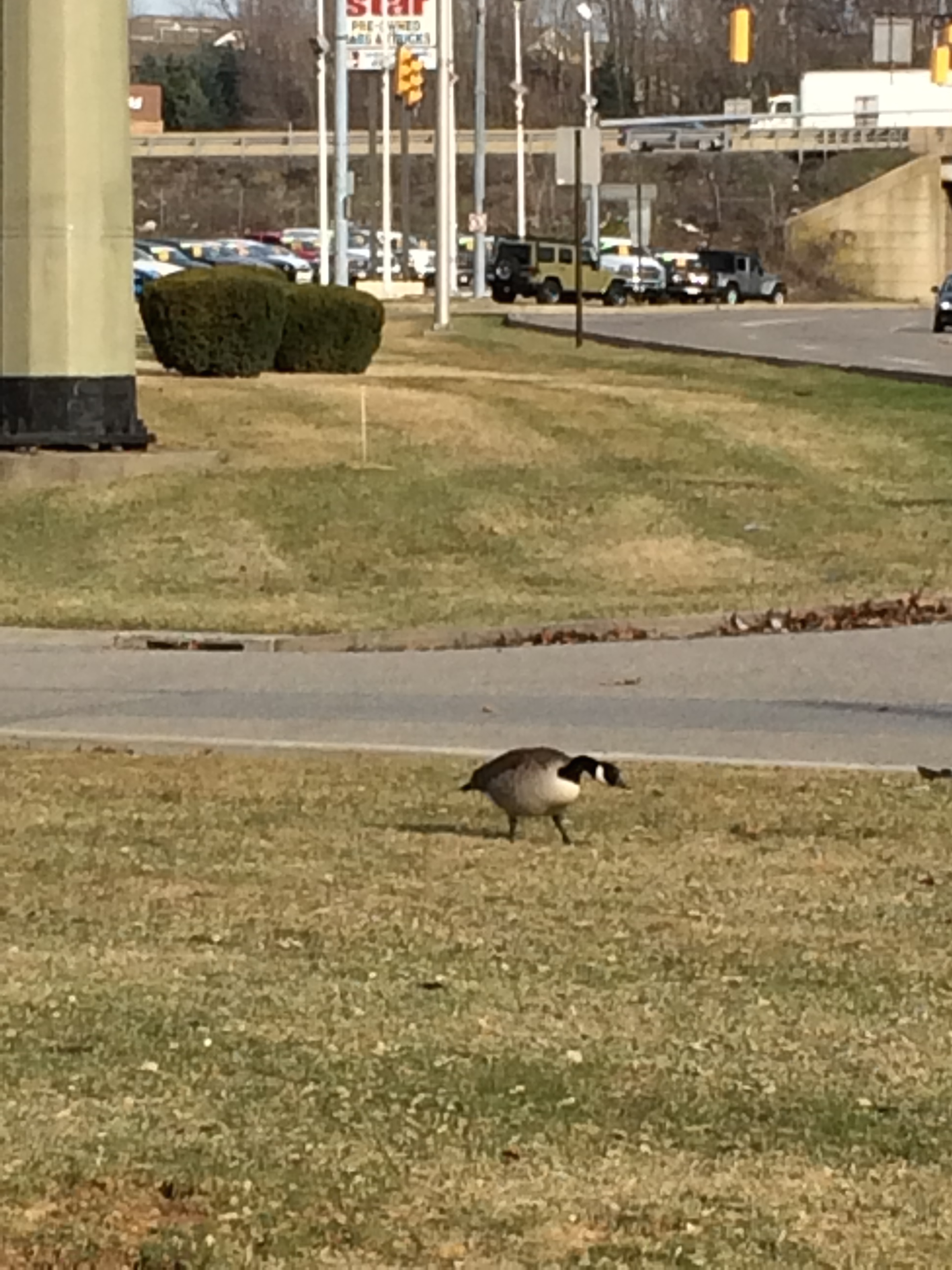
Goose or gander in narrow strip of turf near busy intersection. Note bright white chin strap.

Goose or gander in narrow strip of turf near busy intersection. Note bright white chin strap.

I did some further investigations (it was a very hard area to drive in, so the geese have quite an advantage in flying), and found a small conservation area (a small swampy stream) across the highway from the Panera, where  a family group browsed. Parking was not easy, so I observed from the car window. Also, I didn’t want to disturb them. If they had mastered this busy environment, they didn’t need a stranger upsetting their routine. They are wary birds, very attuned to human behavior.

On to the golf course I went, where, happily, I found that Canada geese were plentiful at the various ponds and other water hazards.

Canada geese at Silver Creek Golf Course, Hellertown, PA.

Canada geese at Silver Creek Golf Course, Hellertown, PA.

By now I had learned enough about Canada geese to be respectful and a somewhat savvy observer. I did not try to get close enough to take better photos, and I avoided disturbing their feeding. All the geese I encountered had paired off, with the gander acting as lookout for the goose, so she could browse undisturbed. The pairs remained silent for the most part, rarely a honk or hiss. Things are relatively serene now, as nesting has not yet occurred, and the geese seem to know  that golfers startle easily and need quiet surroundings. I enjoyed watching the pairs and noting how their behavior was  like that of Peep and Pop, as described by Heinrich in The Geese of Beaver Bog.
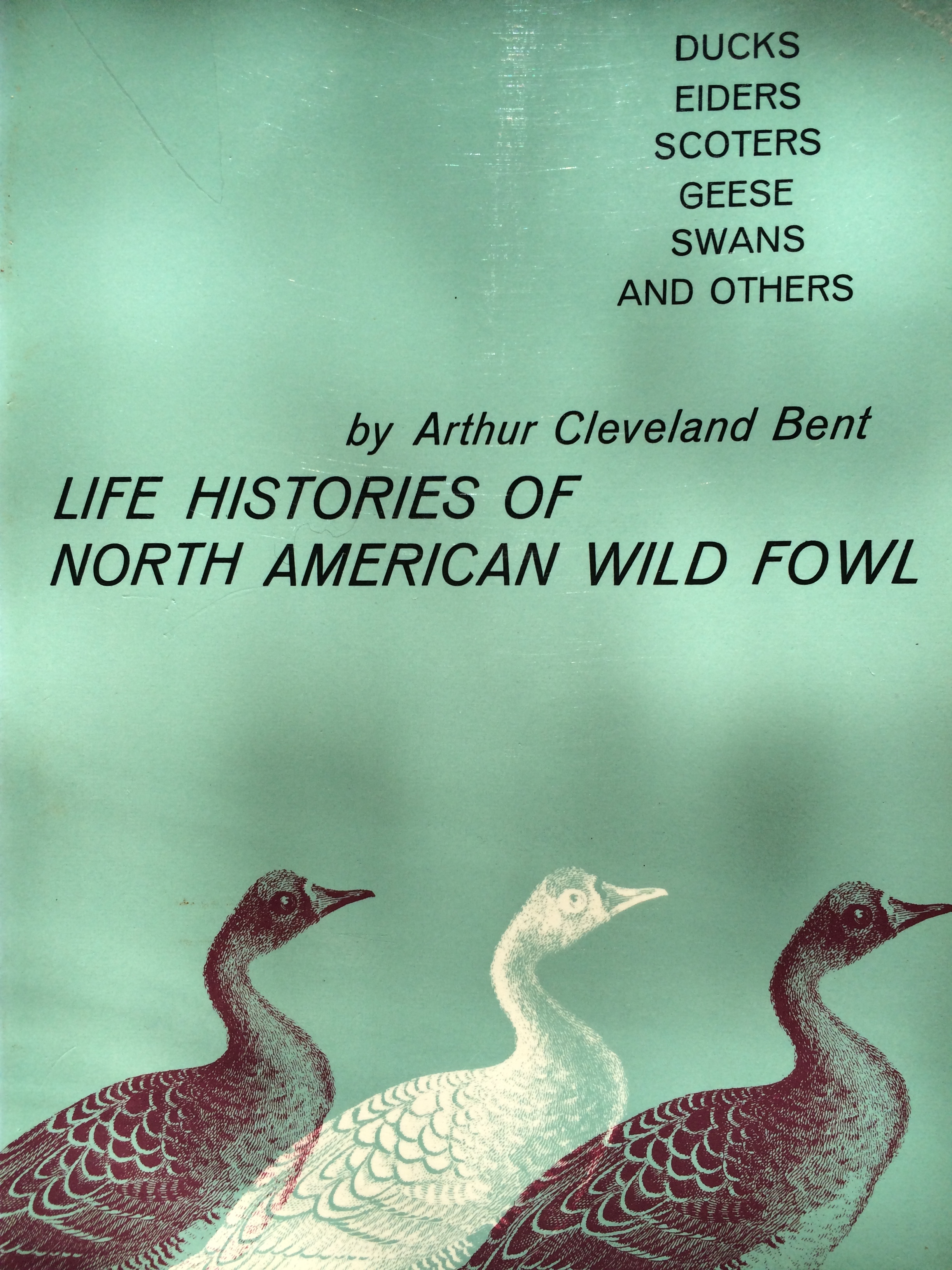
One of the sources I consulted for this piece. This is  part II, of one of the 20 volumes in the magisterial work on North American birds by Arthur Cleveland Bent.  Bent's account reports a lot of Audbon's beautiful writing on Canada geese.

One of the sources I consulted for this piece. This is part II, of one of the 20 volumes in the magisterial work on North American birds by Arthur Cleveland Bent, who quotes freely from John James Audubon’s spirited writing on Canada geese.

I have done a lot more research than I can report on here, but clues abound in answer to why the Canada geese talk through the night in their midwintering grounds at Aurora, NY. Yes, it could definitely be bedroom talk as my husband suggested. McClary mentioned that the choice of mate for first-time maters often occurs in midwinter.  Also, it could be that family groups become separated during feeding at the cornfields during the day and just need to sort themselves out at night, with the larger family groups jostling for space over the smaller family groups. And, as McClary noted, dominant individuals talk 60% more than less dominant individuals, so the gathering off the dock may have been full of dominant individuals. Maybe they were complaining over the ice floes, the cold, the state of the cornfields. Maybe….

The last night that we stayed in Aurora, I placed  ear plugs by my bed, but did not use them. I couldn’t do it. I wanted to listen and imagine even if I could not understand.

(I have posted on youtube a video recording, courtesy of David Fernandez [husband], of the vocalizing Canada geese. Quadruple the volume and you will have some sense of the “great cacophony.”)


“It Was Blowing a Blizzard.”

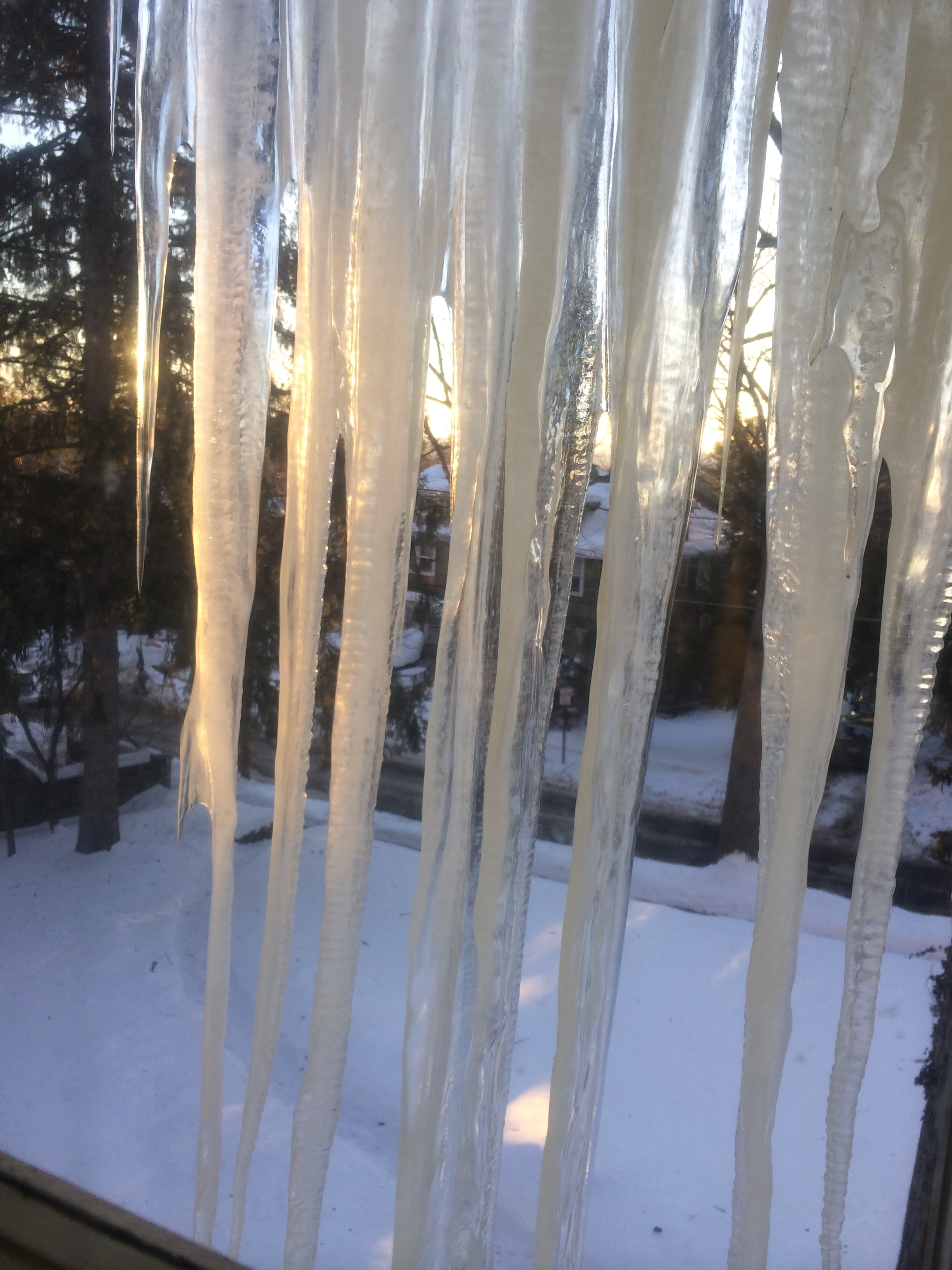
Setting sun gilds the icicles hanging outside the bathroom window.

Setting sun gilds the icicles hanging outside the bathroom window. These are relatively small.


The mantra of the naturalist is “Pursue direct experience outside every day.” I have been struggling to keep faith with the mantra, in the coldest February on record in Ithaca, New York. The temperature at 7 am a few days ago was -20 degrees F without a wind chill factored in. Houses all over town look like jails as enormous, life-threatening icicles hang from gutters. It’s a little grim, from the inside looking out.

However, throughout the prolonged deep cold a tufted titmouse has been singing at dawn every morning in the apple tree outside my bedroom window. This particular individual’s whistle-like call is an insistent reminder: Go out, go out, go out. Breathe the bracing air, rejoice, and shiver to acclimate and become one with the outside.


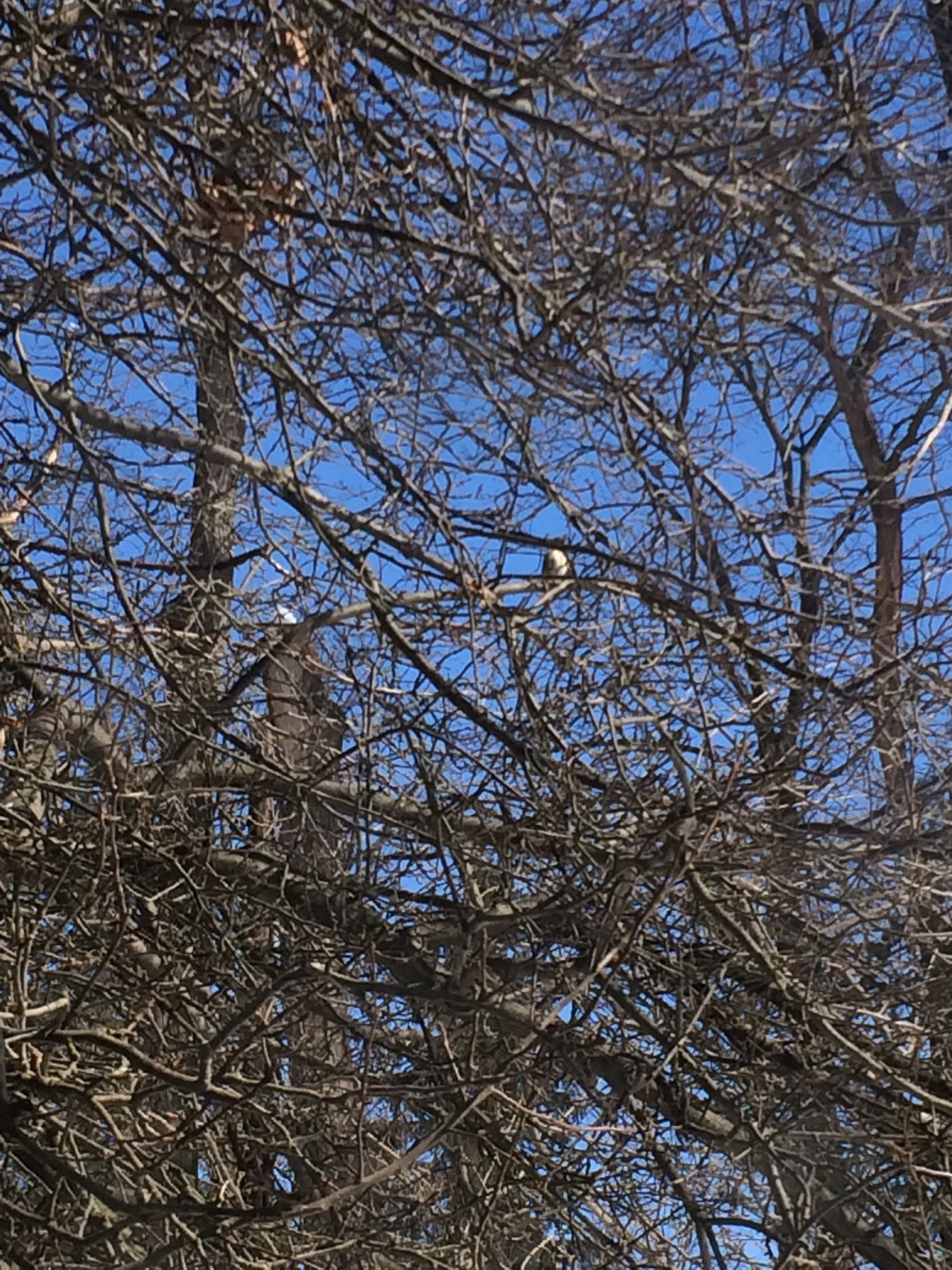
Tufted titmouse, slighting to the right and up from center, in the branches of the apple tree. Only the buff belly is visible.

Tufted titmouse, slighting to the right and up from center, in the branches of the apple tree. Only the buff belly is visible.


However, sometimes it is easier to be pulled out than to go out. My husband and I took leave of the bitter cold here in Ithaca and made a dash south to Vinegar Hollow in Mustoe, Virginia, to be with family at our homeplace. We were not expecting it to be much warmer because the Allegheny Mountains of western Virginia usually report very similar temperatures to those of upstate New York.

The end of Vinegar Hollow.

The end of Vinegar Hollow, cold but calm.

It was bitter. A brief warming trend lightened our spirits, melting much of the snow, but then a blizzard roared up from the south, filling the hollow with whirling, horizantal streams of snow. One by one the locusts, maples, and cucumber trees on top of Stark’s Ridge became ghostly, as did the hills and meadows and fence posts. In the yard the big yew and the big boxwood fluffed out like giant white owls. The cottage seemed to spin inside the whirl winding snowflakes.


The colors of winter: white on gray.

The colors of winter: white on gray.


My husband loves inclement weather. He was out there somewhere in the forest chopping wood. When poor visibility made chain sawing a hazard, I presume, he came to the sliding glass door. “Come out for a walk!” he said. “You don’t want to miss this!” I looked at the fire. I looked outside. “A walk?” The double sliding glass doors gave a full view of the white out conditions. I was no naturalist if I chose sitting by the glowing fire instead of going outside to be inside a small blizzard.


Author poses for husband in blizzard.

Author poses in blizzard for husband.


It was glorious. I could not see very far in front of my feet, but we walked on known land, around the Pine Tree Hill where the family cemetery awaits me. Yes, the sounds of the blizzard in the forest and the whizzing motions of the thousands of snowflakes stinging my face, ping, ping, ping, hypnotized my thoughts, commanding my attention to just one thing. Being there outside.

Trees silvered by snowflakes.

Trees polished to pewter by wind and snowflakes.


The next day I found an old paperback in my parents’ library room over the root cellar. There it was, an appropriate choice for the season–Scott’s Last Expedition: The Personal Journals of Captain R. E. Scott, CVO, RN. Found next to his frozen body, the diary is compelling reading even though we know the tragic outcome. One can read it over and over, trying to comprehend the predicament of this small group of men. Scott and his team are very near the South Pole traveling under extreme conditions when they find a black flag and sledge and dog tracks indicating that the Norwegians had made it there first. They had lost “priority.” Scott writes, “Many thoughts and much discussion have we had. To-morrow we must march on to the Pole and then hasten home with all the speed we can compass. All the day dreams must go….”

"All the day dreams must go...."

Published by Tandem Books, in the Great Ventures Series.

“All the day dreams must go….” The poignancy of this comment haunts me. But they must walk on, though emaciated and frostbitten. They do leave their mark at the North Pole proper, but then turn around in the worst blizzard they have yet encountered to head to the closest storage depot. They die just 11 miles away. But in what manner should they compose themselves for the end?

Scott makes a number of entries about his subordinate Titus Oates:

Should this be found I want these facts recorded. Oates’ last thoughts were of his Mother, but immediately before he took pride in thinking that his regiment would be pleased with the bold way in which he met his death. We can testify to his bravery. He has borne intense suffering for weeks without complaint, and to the very last was able and willing to talk about outside subjects. He did not—would not—give up hope till the very end. He was a brave soul. This was the end. He slept through the night before last, hoping not to wake; but he woke in the morning—yesterday. It was blowing a blizzard. He said, ‘I am just going outside and may be some time.’ He went out into the blizzard and we have not seen him since.

Scott himself at the time of writing has one foot so badly frostbitten that he knows it will have to be amputated should he live. The temperatures are -40 degrees F day after day. On March 22/23 he writes:

Blizzard as bad as ever–Wilson and Bowers unable to start–to-morrow last chance–no fuel and only one or two of food left–must be near the end. Have decided it shall be natural–we shall march for the depot with or without our effects and die in our tracks.

The reader hopes this is the end of the text and a merciful ending to their lives. But there is one more entry on March 29th. The last line of the diary is “It seems a pity, but I do not think I can write more.”  Roland Huntford in his book The Last Place on Earth gives an account of the interval between March 22/23 and March 29. Scott and his two remaining subordinates, too debilitated to move,  stayed in the tent in their sleeping bags writing letters to loved ones, documents that have become the subject of scrutiny by historians. Scott’s reputation as heroic explorer has been the subject of controversy.


Modern Library Edition of Roland Huntford's account of "Scott and Amundsen's Race to the South Pole."

Modern Library Edition of Roland Huntford’s account of the race to the South Pole: Britain’s Robert Scott vs. Norway’s Roald Amundsen. His critique has been challenged by subsequent historians. The photo of Castle Rock on the book cover was taken on 17 September 1911.


Huntford critiques Scott as inept, but recent evidence indicates that Scott faced harsher than usual weather and one of his orders that could have saved him was never carried out. Despite getting to the South Pole first, Amundsen lost the battle for renown, in part, Huntford says, because Scott was the better writer.

My blizzard was small. I was not at the North or South Pole, suffering the Homeric conditions that plagued the famous Arctic and Antarctic explorers, who fought their way to the poles for nation and glory. I knew exactly where I was, and it was not far from a fire, so I was no heroine. My reward was exhilaration, not renown, as I went outside to feel the weather, rather than look at it from the inside. The naturalist has a different temperament than the polar explorer, happily from my point of view, but the polar explorers have left us with diaries that exemplify heroic aspects of human beings, inept or not, under duress in the great outdoors.

I am back in Ithaca, the tufted titmouse still singing in the apple tree  at 1º F.

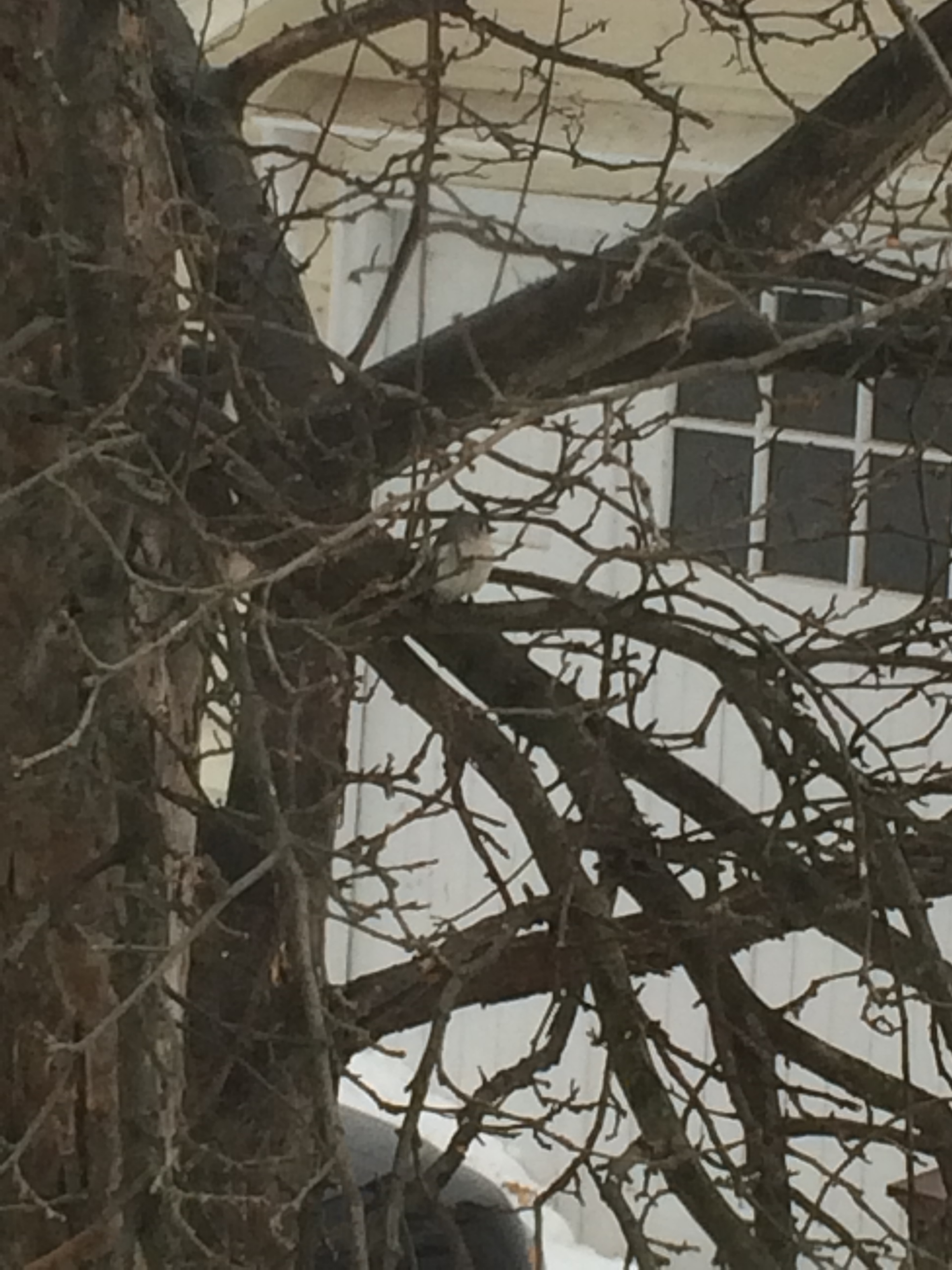
Tufted titmouse slightly up from center in the apple tree.

Tufted titmouse slightly up from center in the apple tree. Profile view.


Today I decided to stand at the window observing. I stood and the tufted titmouse sat, silent for once. This went on for quite a while. Sometimes the branches of the apple tree distracted me. That’s when I noticed the second tufted titmouse. There she/he was, higher up in the tree. So, silence because mission accomplished? The mate has acquiesced? I don’t know, but I will be looking into the habits and psychology of this hardy little bird.

The second tufted titmouse.

The second tufted titmouse almost dead center in the photo.


So, have I rambled? What do the tufted titmouse and the blizzard have in common? As John Muir said “When we try to pick out anything by itself, we find it hitched to everything else in the Universe.”


“Petrified Lightning”–for Charles Darwin, “Spy of Everything”


The Modern Library edition of The Voyage of the Beage.

The Modern Library edition of The Voyage of the Beage.


Whenever I used Darwin’s The Voyage of the Beagle as a text for Academic Writing at Ithaca College, the students and I celebrated the author’s birthday with a cake if Feb. 12 fell on a M-W-F. We devoured Wegman’s best vanilla sheet cake with white icing, lemon filled in the middle and blue letters for “Happy Birthday, Charles Darwin.” We may have left the classroom desks slightly smeared with gooey frosting as we honored the young man we had grown so fond while reading the Voyage and his letters home, available online at the Darwin Correspondence Project.

The students were quick to sympathize with a young man who seemed aimless and unsuited for many professions. He had failed in both the medical and theological studies that his father pushed him into after college. He was UNPROMISING. Luckily, a mentor recommended him for what might now be called a gap year, room and board paid for, as he sailed around the world as a shipboard naturalist. Despite constant seasickness and homesickness, Darwin prevailed. Adrift and alone, he found a new way of looking at the world.


The Penguin Classics edition of the Voyage of the Beagle.

The Penguin Classics edition of the Voyage of the Beagle.


While the students particularly liked his descriptions of animals, like the puffer fish, I have marveled at a passage at the end of Chapter III about finding examples of petrified lightning near Maldonado, in what is now Uruguay. Darwin describes Maldonado, where he spends 10 weeks, as “quiet and forlorn.” However, after many weeks on a 90-foot long ship, he is positive about his view. He writes,

The scenery is very uninteresting; there is scarcely a house, an enclosed piece of ground, or even a tree, to give it an air of cheerfulness. Yet, after being imprisoned for some time on a ship, there is a charm in the unconfined feeling of walking over boundless plains of turf. Moreover, if your view is limited to a small space, many objects possess beauty.

With that mindset it is no wonder that his eye would be open to discerning fulgurites poking up out of a drab sandy hillock, though Darwin had reasons for being distracted from his work if he so chose. For example, the gauchos:

They frequently wear their moustaches and long black hair curling down their backs. With their brightly colored garments, great spurs clanking about their heels, and knives stuck as daggers (and often so used) at their waists, they are a very different race of men from what might be expected from their name of Gauchos, or simple countrymen. Their politeness is excessive; they never drink spirits without expecting you to taste it; but whilst making their exceedingly graceful bow, they seem quite as ready, if occasion offered, to cut your throat.
Darwin may have sipped their spirits to be convivial, but he stayed on task, making copious notes about the habits of every manner of flora and fauna, the four-footed as well as the two-footed. The tucutuco, which he writes can “be briefly described as a Gnawer,” is also a grunter, and is named for its persistent and resonant vocalizations. If one could only read one chapter in the Voyage, a good choice would be Chapter III. In its last few pages he describes his finding of the petrified lightning, also known as fulgurites.


The Anchor Library of Science Edition of the Voyage of the Beagle.

The Anchor Library of Science Edition of the Voyage of the Beagle.


It being February 12, 2015, Darwin’s 206th birthday, and nearly Valentine’s Day, I have composed a prose poem/birthday card/Valentine trying to paint a picture of the young Darwin unearthing the almost invisible glass tubes from the sandy hillock near Maldonado. Darwin said at the end of his life that he could not read poetry, that his thinking had become too dependent on facts. This may be an occupational hazard for a naturalist. Darwin never embroiders or exaggerates, though he allows himself to talk about beauty. There is a serene, disinterested moderation in his description and diction. In my birthday card I have tried, however, to demonstrate the drama of this quiet moment, Darwin on his hands and knees noticing, noticing, noticing to 1/30 of an inch. My prose poem/birthday card/Valentine is meant to be literal, place based, and accurate with just a slight leaning toward the dramatic.


Petrified Lightning

A fierce history marks

life on our planet.

Lightning explodes in 1793

over Buenos Aires,

striking 37 times, killing 19 people.

Charles Darwin in 1832, just 22, visits

Monte Video and Maldonado, Uruguay,

across the Rio Plata from Buenos Aires,

by night, sleeping under the stars with gauchos,

by day observing the river hog, the tucutuco,

the tyrant flycatcher, the carrion hawk, and the verbena.

As he explores what exists,

the living and the nonliving,

Fanny, the girlfriend in England, stops writing,

while despotic General Rosas befriends him,

paranoid as such rulers must be,

asking why the traveller scribbles notes.

Darwin replies, Naturalista.

Oh, so you are a spy? Rosas asks.

Yes, a spy of everything.

The tips of minute glass tubes

signal to him from loose sandy

hillocks near Maldonado.

Delicate, sooty black, wrinkled like bark,

driven into the ground by violent heat, they

prove the meeting of heaven and Earth.

Fiery thunderbolts melt particles of silica,

fusing them into threads of glass, petrified lightning.

Digging on his hands and knees,

unearthing the filaments, two feet deep,

measuring the thickness of their walls to 1/30 of an inch,

Darwin confirms that no event on Earth goes unrecorded.

If we follow the traces of life’s thunderbolts,

we will live forever.

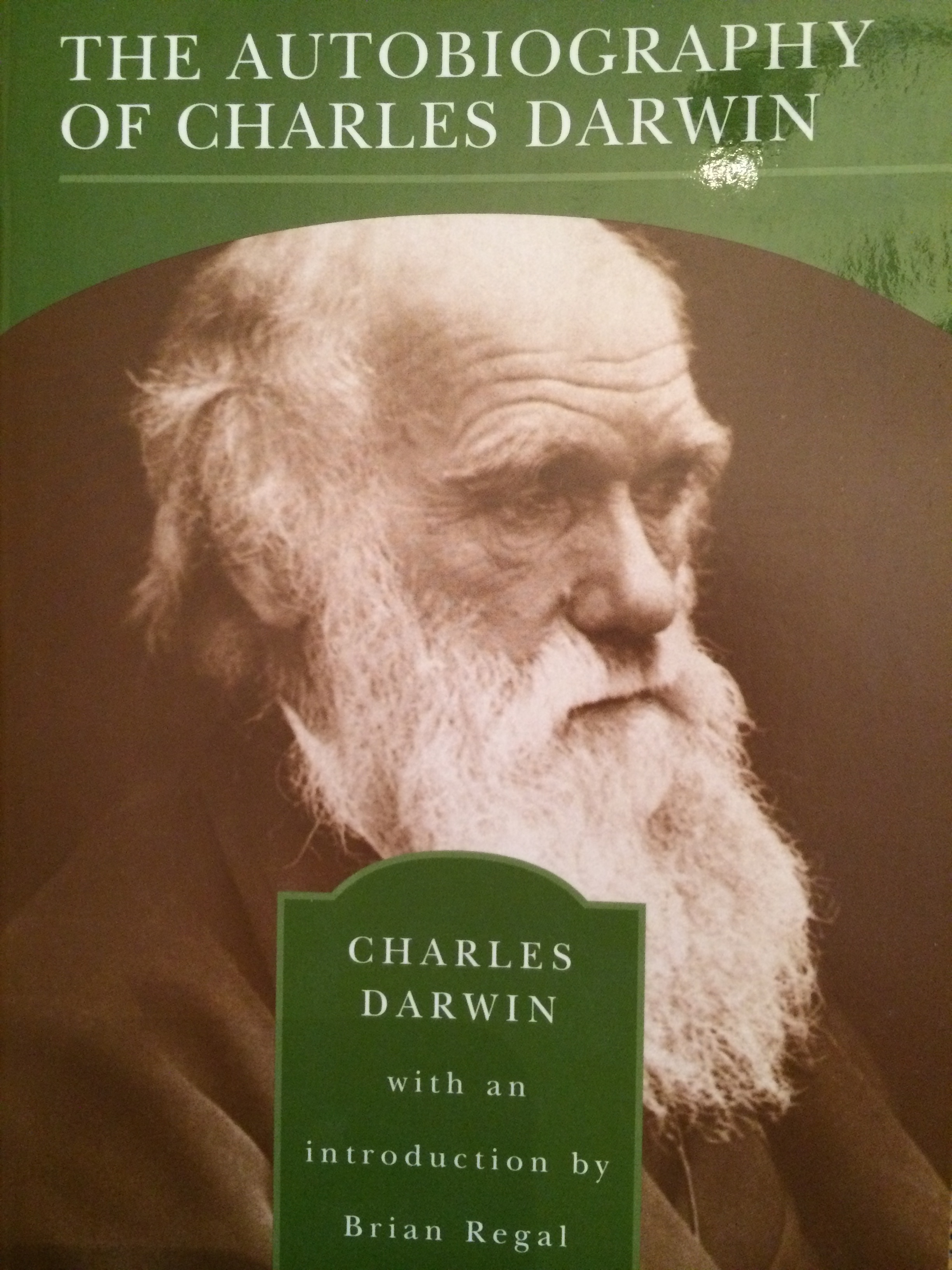
The Barnes & Noble edition of the Autobiography of Charles Darwin.

The Barnes & Noble edition of the Autobiography of Charles Darwin.

Snow as Metaphor: Revealing and Concealing

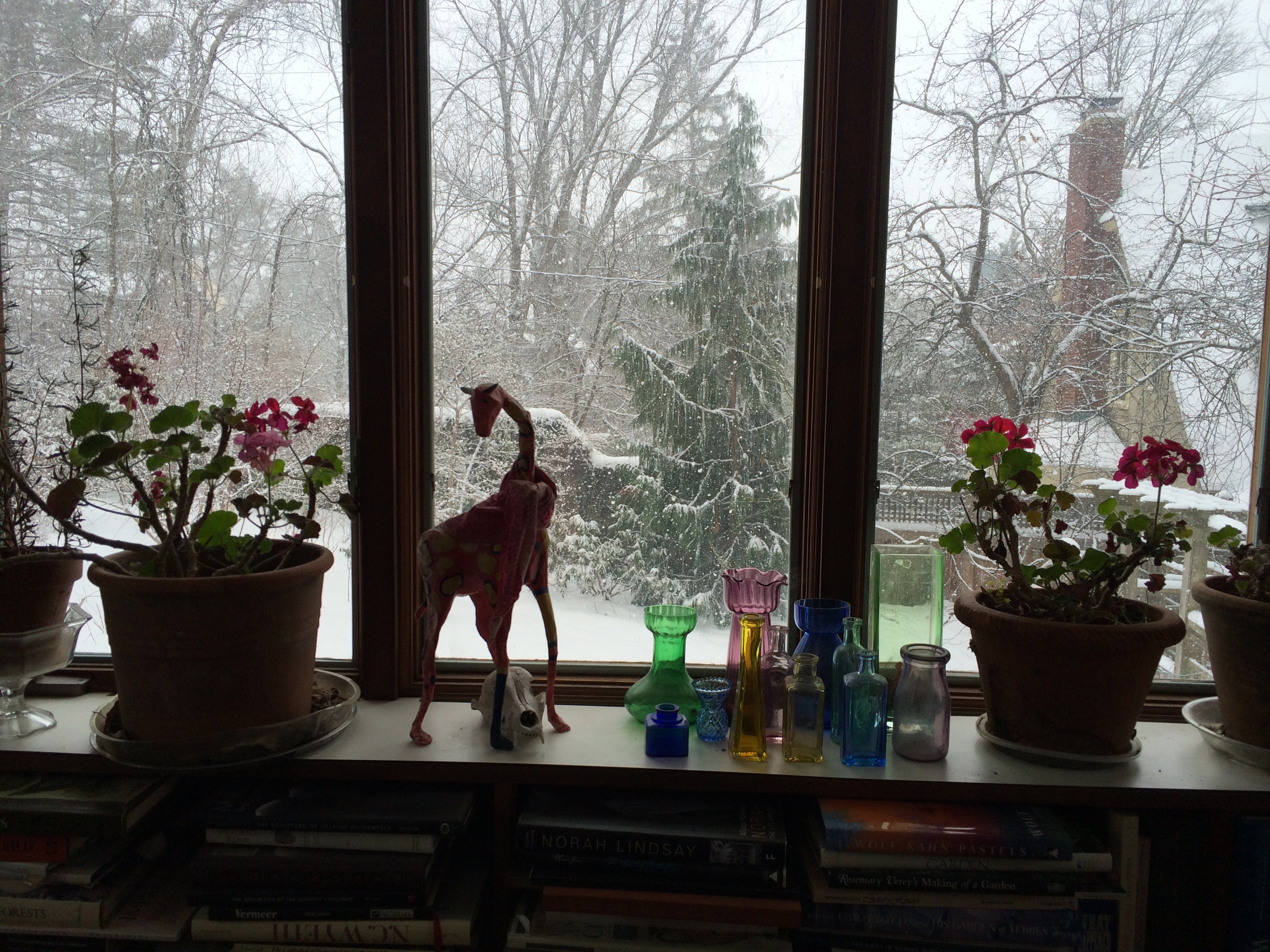
From the inside looking out on a cold morning in Ithaca.

From the inside looking out on a cold morning in Ithaca.

It was 1° in Ithaca, NY, this morning. It seemed cold but then I checked on my daughter’s temperature, she has recently moved to Saranac Lake, NY, and it was negative 15°  there. So I felt warmer but overindulged and longed to give some of this excess warmth to my daughter.

There was yet a new dusting of snow. Yesterday morning felt more like being in a snow globe turned upside down by an enthusiastic child, while today a cobweb mohair shawl covered surfaces and crevices. All this month I have been thinking of the cold and the snow, wanting to appreciate winter, understand how it helps us see or not see what is around us. (And if we feel a longing for what we cannot see, this perception should help us remember to love that which is missing when it is right in front of us.)

The garden bench is occupied.

The garden bench is occupied.

This reminded me of a favorite text that I used with my academic writing students at Ithaca College, Figures of Speech for College Writers, an anthology by Dona J. Hickey. The readings were all about metaphor, the central thesis being that metaphors are imperfect and paradoxical, concealing and revealing in one tiny phrase. The students and I found a lot to discuss in the essays chosen by Hickey.

The naturalist’s calling is to learn from first-hand experience. This is difficult at 1º,  but I have a dog who lives for just that, so off we go several times a day, around the block, if the roads are too bad to get to the country.

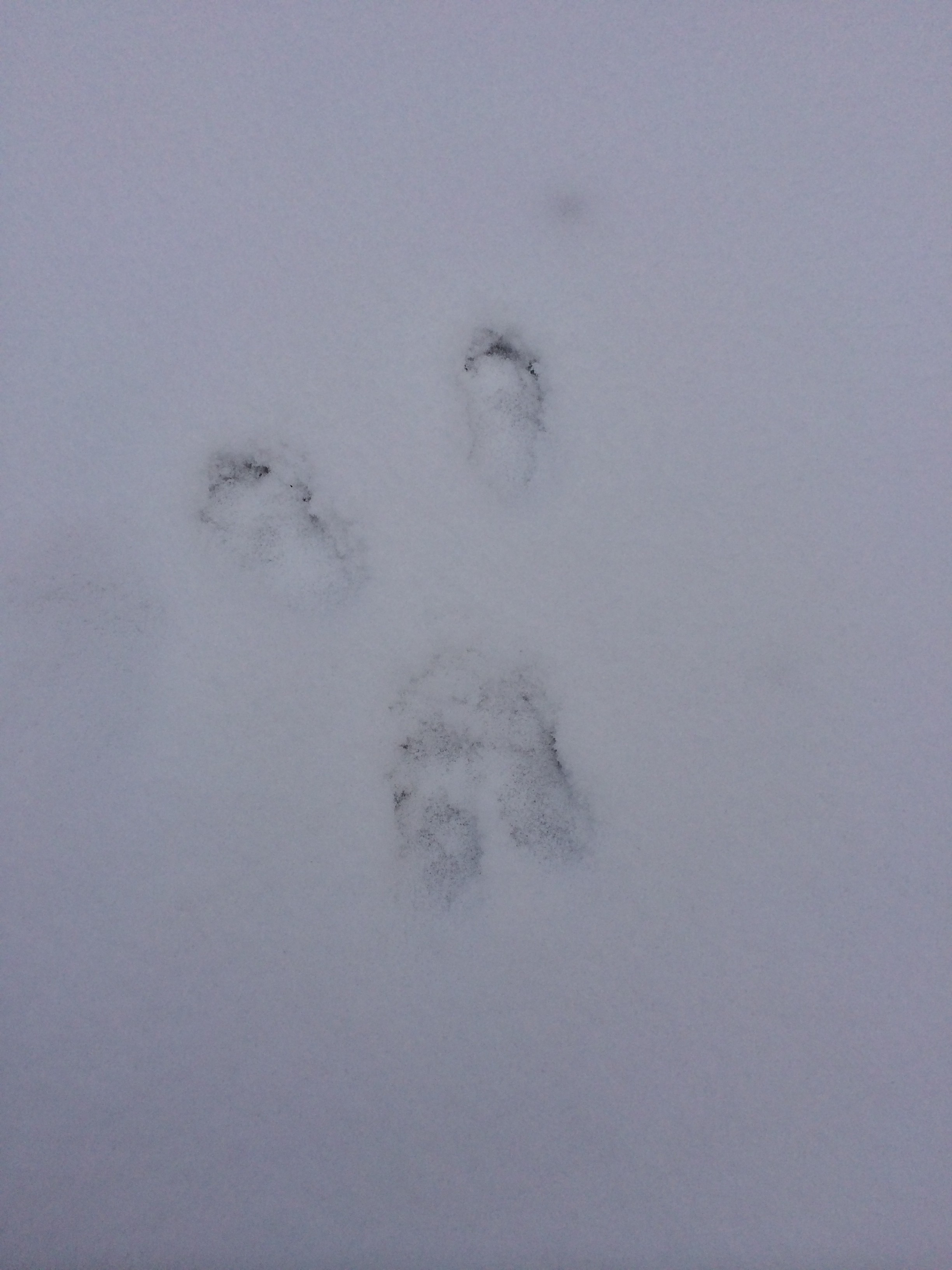
I see the tracks of a rabbit out early. I know her in summer, and now I see her hunched in the cold, feet making butterfly shapes.

Butterfly-fly tracks of one of our neighborhood rabbits.

Butterfly-fly tracks of one of our neighborhood rabbits.


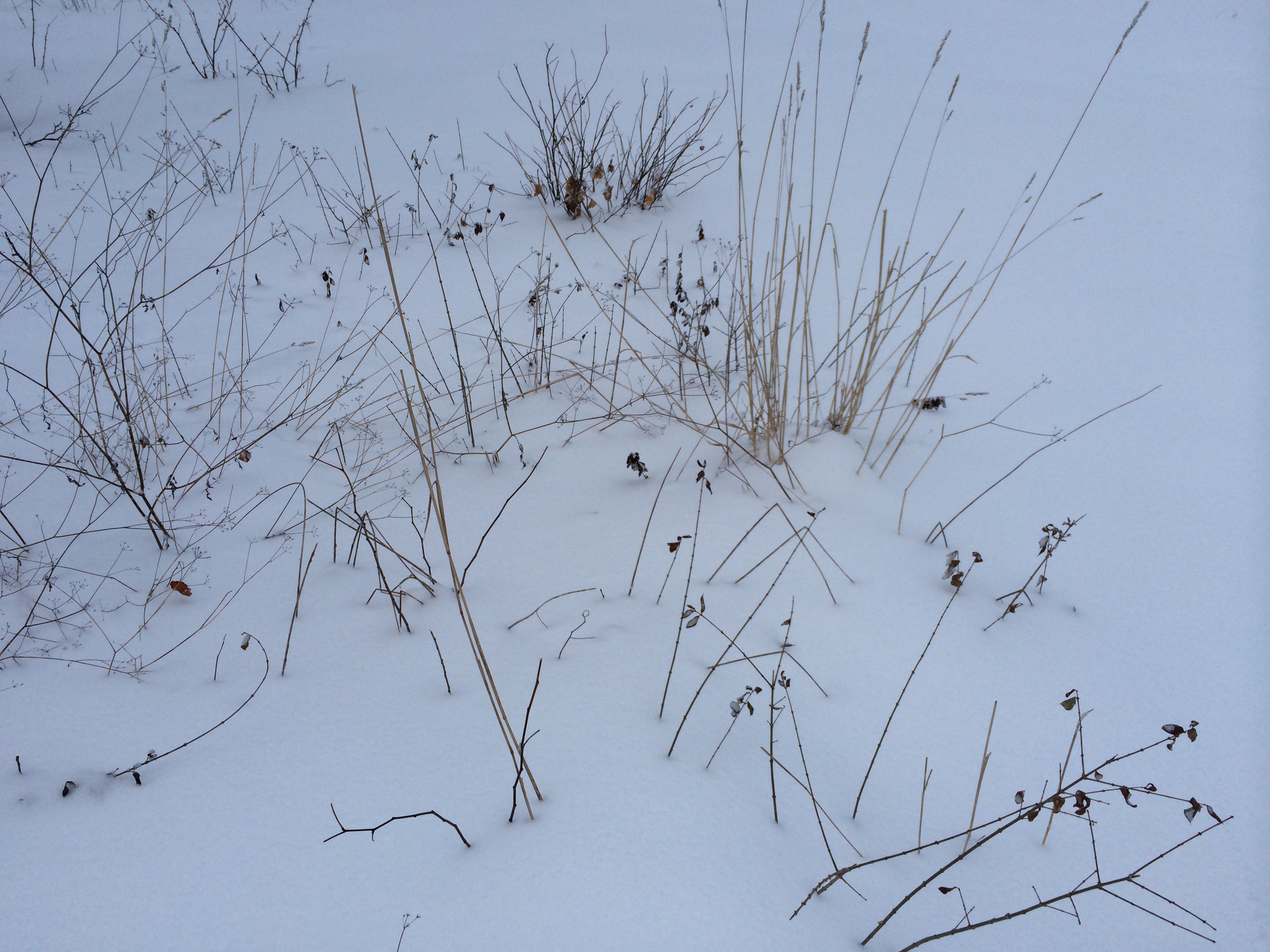
I see the brown-and-white skeletons of summer’s weeds against the winterwhite of early morning. The snow reveals their delicate structure clearly now. In summer they probably appeared nondescript, without definition, to most passers by.


Winter weeds: a chiaroscuro.

Winter weeds: a chiaroscuro.

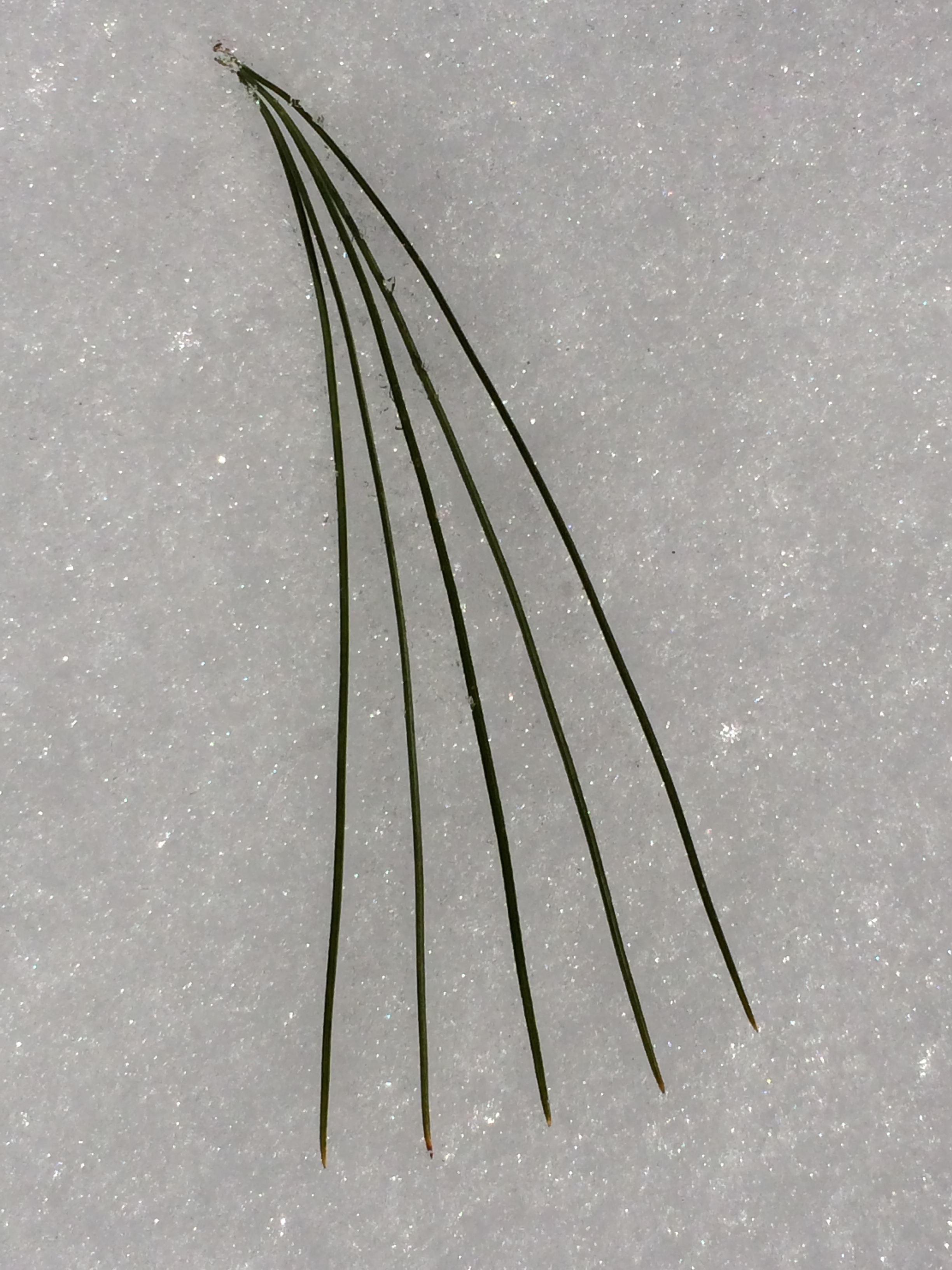
I see the five needles, bundled into a fascicle, of the white pine displayed as if for a textbook. I would not have noticed that fallen fascicle if not for the whiteness of the ground.

The white pine displays the characteristic 5-needle arrangement of a needle bundle (fascicle).

The white pine displays the characteristic 5-needle arrangement of a needle bundle (fascicle).

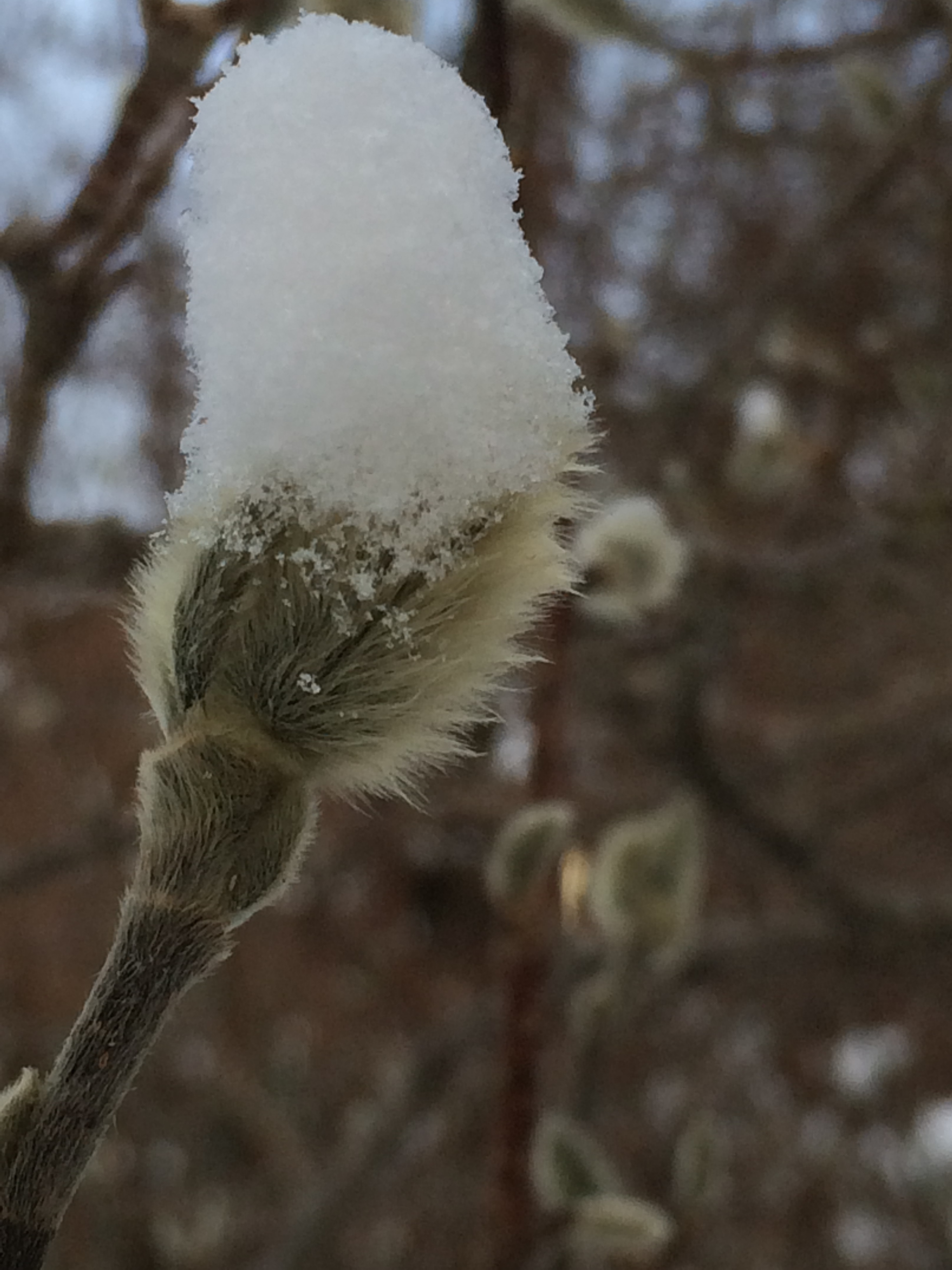
I see top hats on the golden-green furry buds of the star magnolia.

Snow-capped star magnolia bud.

Snow-capped star magnolia bud.

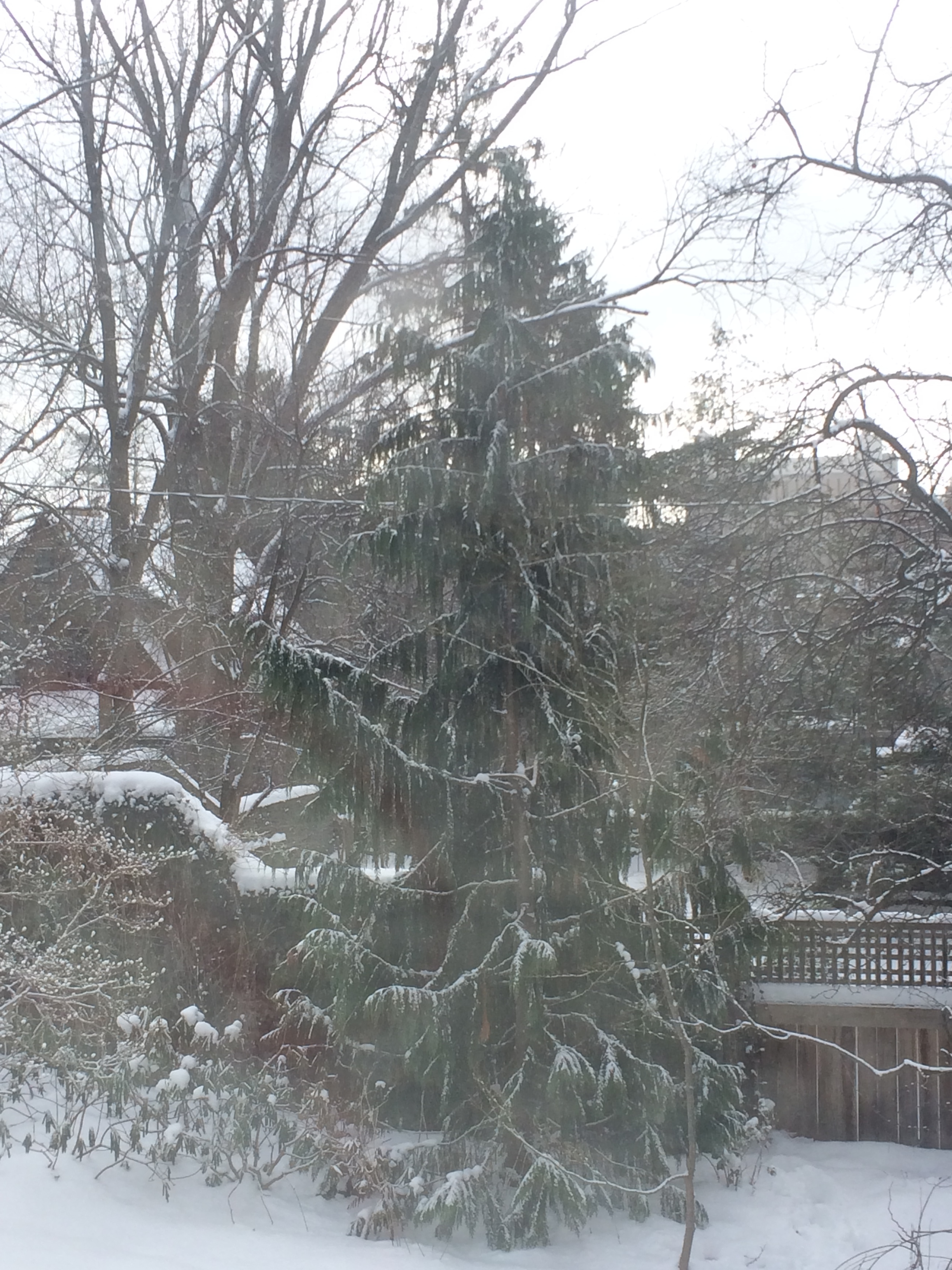
I see the graceful architectural sway of the main branches of the Weeping Alaska Cypress (Chamaecyparis nootkatensis pendula) that my husband planted to replace the magnificent multi-stemmed white oak cracked by lightning a few years ago. I was too busy then to document its life and death, but now every time I look at the cypress, I remember to weep for the white oak.

Snow revealing architectural elements of the graceful Weeping Alaska Cypress.

Snow revealing architectural elements of the graceful Weeping Alaska Cypress, with star magnolia to the far left.

I see a part of a tail in the driveway. There’s a tale here I am sure of something that happened in the night…..

A tail is lost....

A tail is lost….?

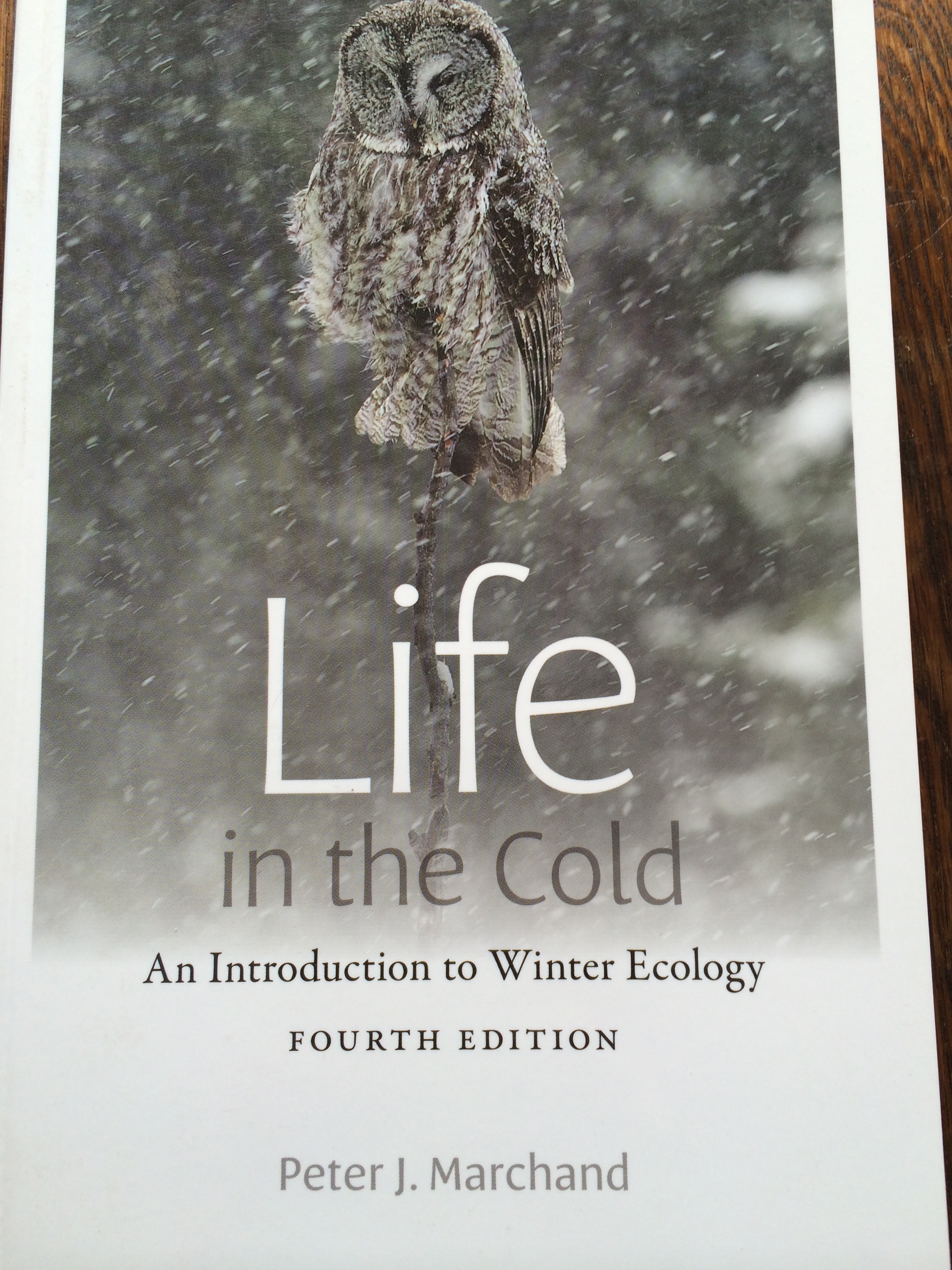
The naturalist does turn to literature to find answers to questions and deepen perceptions. This fall I stumbled on a wonderful book by Peter J. Marchand called Life in the Cold: An Introduction to Winter Ecology (4th edition), published by the University Press of New England. It is a somewhat academic text, but so clearly and elegantly written that I recommend it as pleasurable reading for anyone on a cold winter’s evening.

A revealing book on winter ecology.

A revealing book on winter ecology.

Last winter I wrote in one of my blogs about how trees adapt to winter, but now I am interested in Marchand’s chapter titled “Humans in Cold Places.” The take-home message is that humans do not have many adaptations for the cold, but they can increase their tolerance, as shown in studies that he describes of aboriginal Australians, the Kaweskar and Inuit peoples, Norwegian and Gaspe fisherman, Quebec City mailmen, Antarctic workers, Finnish outdoorsman, and Tibetan and Indian yogis. This latter group shows some of the greatest ability to exhibit cold hardiness. He writes:

A group of Tibetan Buddhists who live in unheated, uninsulated stone huts in the Himalayan foothills and who practice an advanced form of meditation known as g Tum-mo yoga, show an extraordinary ability to elevate skin temperature in their extremities by as much as 8° within an hour of assuming their meditative posture.

He cites an interesting study showing that yoga-trained army recruits demonstrated greater cold hardiness than physically trained recruits.

Marchand concludes the chapter:

By our cultural and technological ingenuity, we have inhabited the coldest places on earth. Biologically we remain essentially tropical beings.

Tropical? I consider myself more of a north-temperate being as truly tropical climates make me wan and lifeless. Maybe the 64 winters that I have lived through have caused some basic physiological adaptation, but it would be difficult for a researcher to gather data from my experience.

And there are those people who seem to be fatally attracted to cold temperatures. Rebecca Solnit’s new book The Faraway Nearby describes haunting stories of explorers and travelers in the Far North. For example, Peter Freuchen, a young Dutch/Jewish explorer, volunteered to stay in a tiny hut in northeastern Greenland for the winter of 1905/1906 to take meteorological data. He was only 20. His companions left, his dogs were eaten by wolves, and the hut’s interior space became smaller and smaller from the condensation of his breath into ice. Solnit writes:

Before winter and his task ended and relief came, he was living inside an ice cave made of his own breath that hardly left him room to stretch out to sleep. Peter Freuchen, six foot seven, lived inside the cave of his own breath.

Solnit’s book carries many themes, but particularly ruminates about stories that are told and retold and mistold. Tightly woven, the book’s stories will entrance and perhaps frighten the reader on yet another cold winter’s night.

Cover of Rebecca Solnit's new book, which is part memoir, part essay, part many parts.

Cover of Rebecca Solnit’s new book, which is part memoir, part essay, part many parts.

But back to snow as metaphor, for example: snow is a shawl or blanket. Snow cover insulates life in winter, concealing the seeds and roots that will grow in spring. They are there in frozen ground under snow, waiting. Some life forms wait for what seems like forever.

Last year I learned to play, courtesy of my piano teacher, little Fran, who is 91, the very old tune, “Es ist ein Ros entsprungen,” translated as “Lo, How A Rose.” There is a line describing how the rose

“it came, a flow’r-et bright, ___ Amid the cold of winter, When half spent was the night”

(15th-century wording; see Carols for Christmas, arranged and compiled by David Willcocks).

Half spent is our winter here. I will continue to observe snow’s concealments and revelations and sympathize with the cold even as I look forward to my primroses showing up bright in the squishy earthmelt of early April.

Primrose.

Primrose.


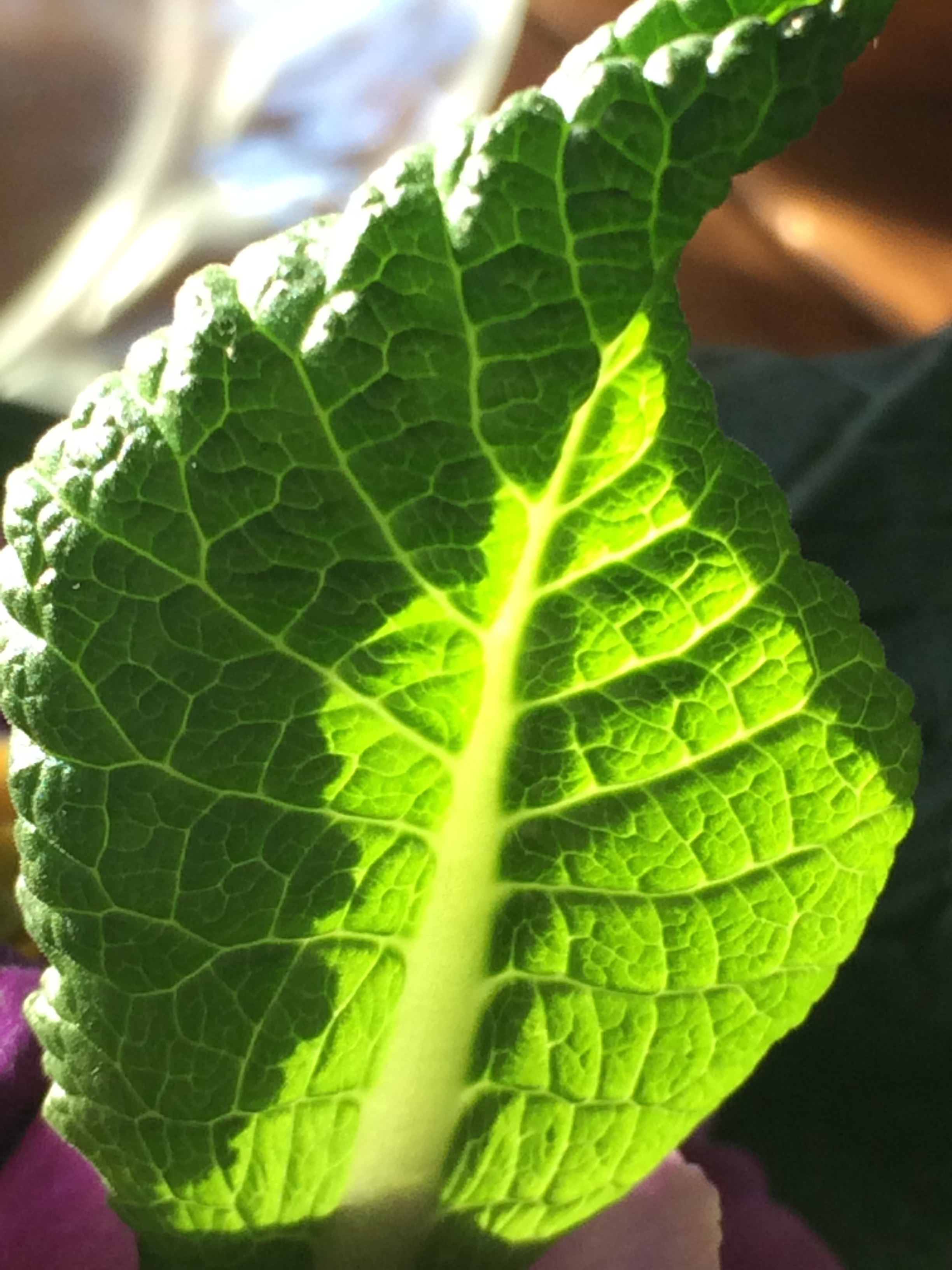
Light shining through an unfurling young primrose leaf.

Light shining through an unfurling young primrose leaf.

If You Must Talk, Whisper!

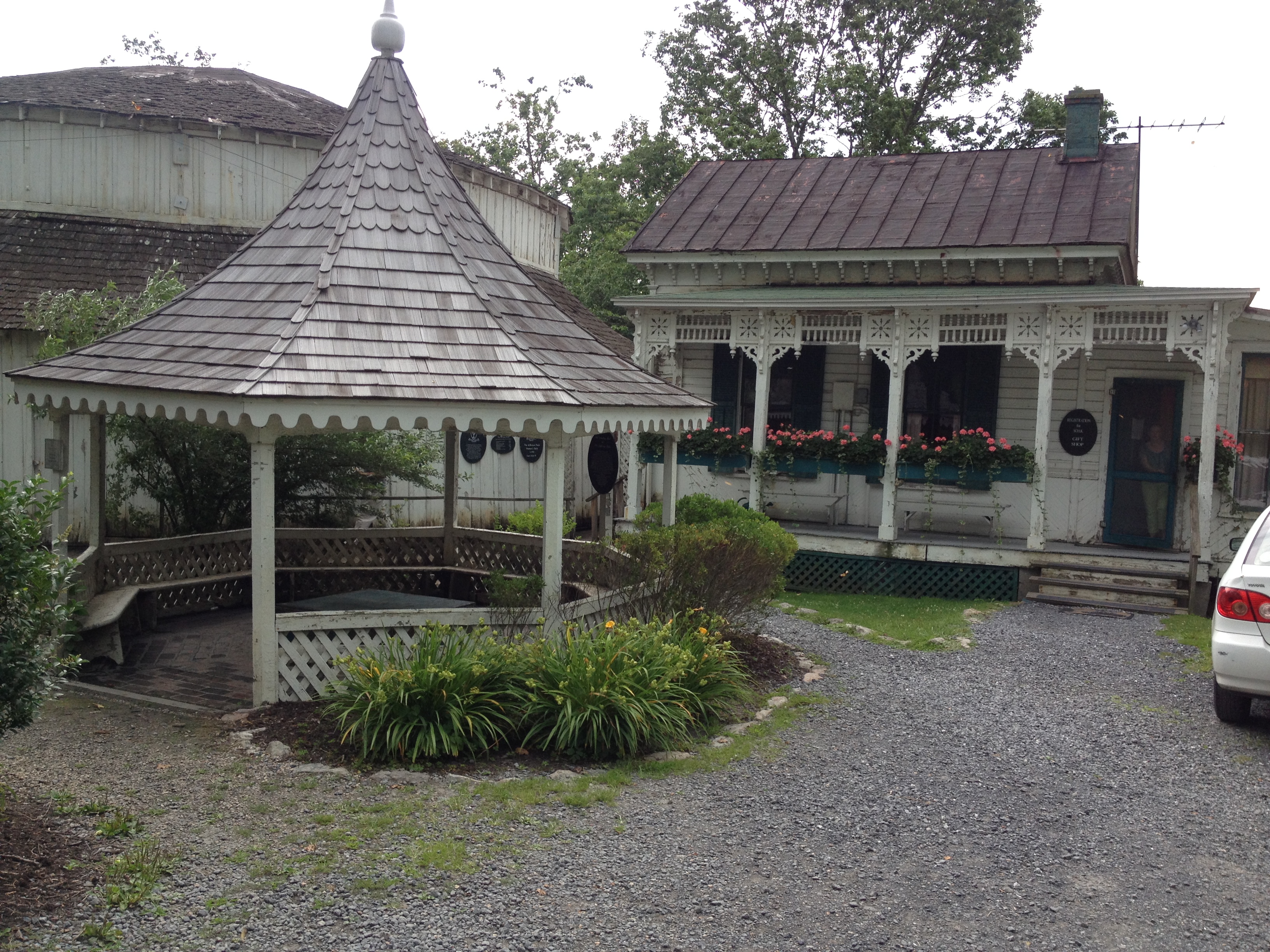
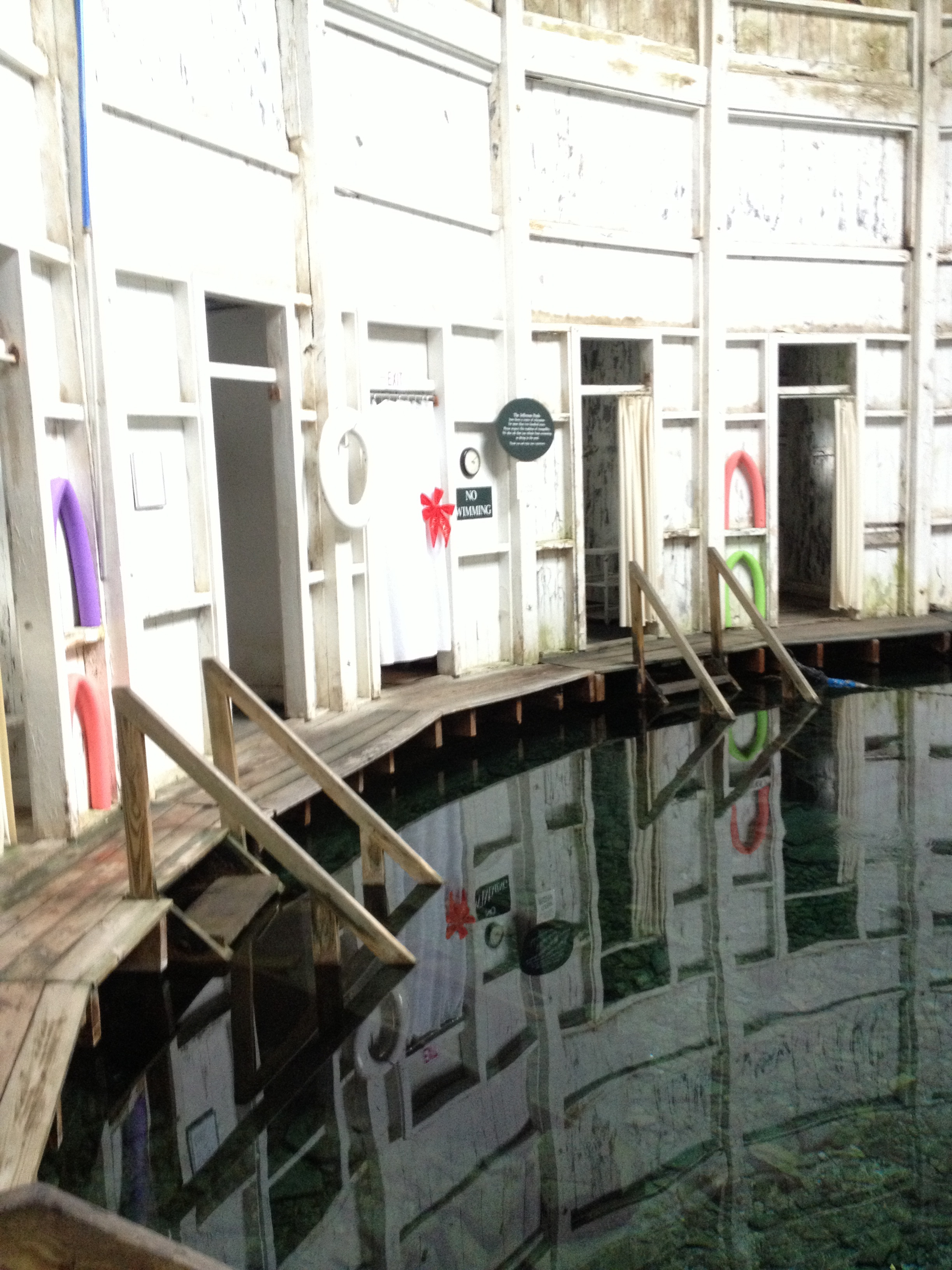
Jefferson Pools in Warm Springs, Virginia

Jefferson Pools in Warm Springs, Virginia

It was a spur of the moment decision to stop at the baths in Warm Springs, Virginia, which are officially known as the Jefferson Pools because Thomas Jefferson soaked in the men’s hut in 1818 for 22 days. I did not have my bathing suit but remembered that there was always a basket of bathing dressses inside the door of the hut. Although not fashionable, they provided full coverage and were made of cotton in colorful designs.  I went into the cottage adjacent to the hut to pay. I mentioned that I did not have a bathing suit, but hoped to use one of the bathing dresses. The woman at the counter informed me that the woman who made the little jumpers had died and the suits had been removed.

“I would have to bathe naked?”

“You would,” she said.

A cheerful young man who probably monitored the men’s hut, and was carrying cheeseburgers in baskets for the woman and himself, said, “It’s not so bad. There are three ladies in right now who faced the same issue. They decided to bathe anyway. You can just sneak in. Besides, they are about to leave, and the two young women in there now will have to leave soon.” It turns out that the Homestead bus service would be retrieving them for return to the resort hotel.

I pondered this, but no doubt looked fairly hesitant. The woman attendant said, “If you choose a dressing cubicle right next to a stairway, you can drop your towel right by the stairway and slip in and out without anyone seeing you.”

Had the time come to be more adventurous than I usually am? I do not swim au naturelle. I have never worn a bikini and it is safe to say that I will die without ever having worn one.

“Ok,” I said. “Could I have two towels?”

“Yes,” they said.

For a fee, one has an hour of soaking time. I paid and proceeded. I met the next attendant, a woman who sits in the entry way of the hut dispensing towels. I found a cubicle right by one set of stairs into the pool. A nervous mermaid, I unswathed my towels and slipped in without the two young ladies in bikinis noticing me, I believe, and soon they were called away, so I had the healing springs to myself. I poked my head out to the bathing attendant, “Can I take photos?” “As long as no one else is there,” she answered.

Inside of circular hut showing noodles tucked in spaces of the wall.

Inside of circular hut showing noodles tucked in spaces of the wall.

Inside the hut white paint peels artfully over wooden boards. Some visitors have commented that the whole appearance is run down. So it is, but run down straight from the 18th century to the 21st, and I find that extremely beautiful. Yes, restoration is in order, but I feel as if I am right there with Thomas Jefferson, though I am glad that he would be in the men’s hut, and I would have privacy. He was a complicated man, and I am sure that he benefitted from his days of reflective soaks in a men’s-only hut. While he came for his rheumatism, I can imagine his mind drifting to thoughts of his past and his future. He wrote a letter from Hot Springs to his daughter noting that the baths were first rate.

Another view of curving wall with noodles.

Another view of curving wall with noodles.

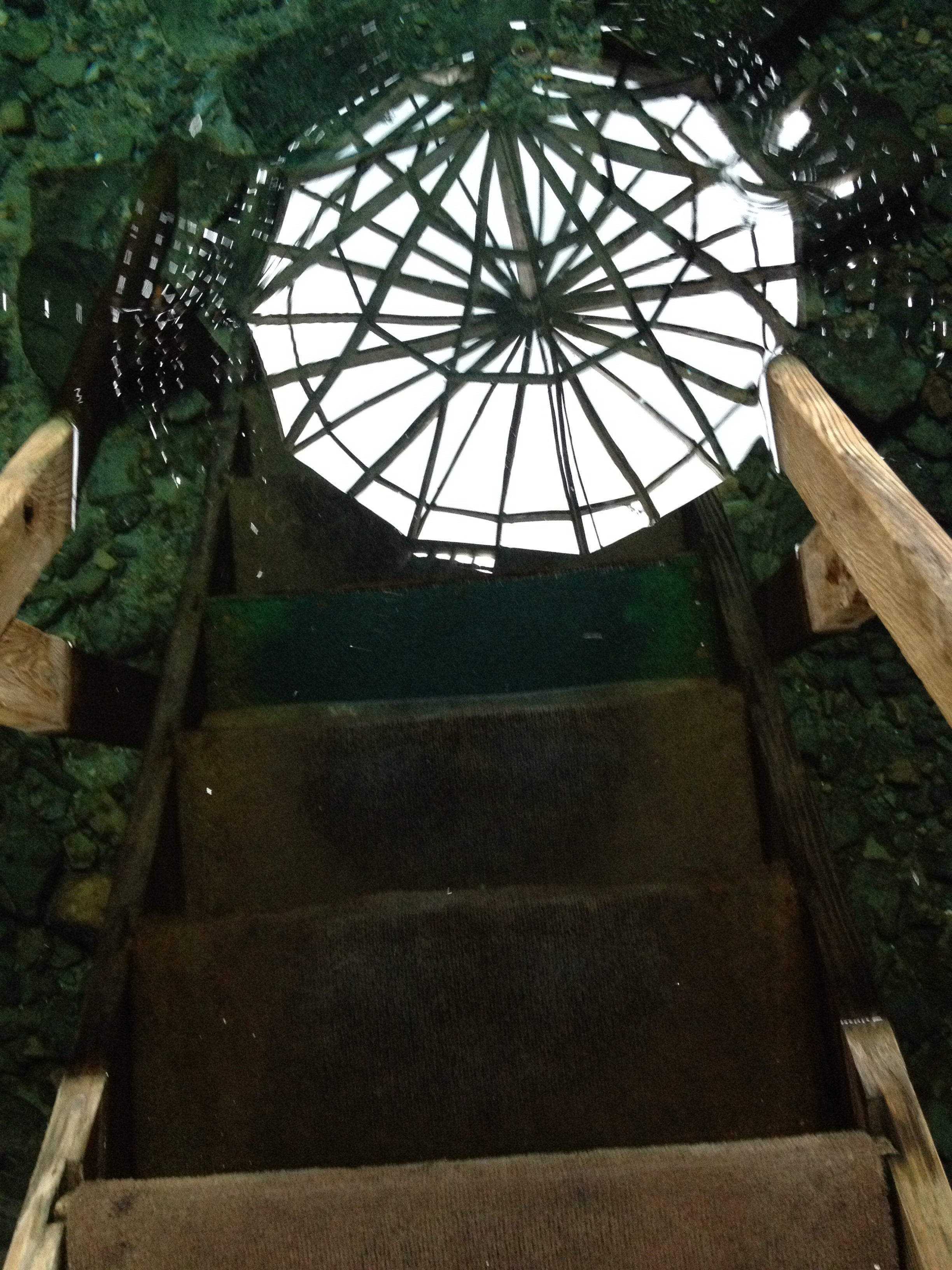
Although the noodles in bright shades of lime green, pink, purple, and blue look out of place perhaps, they are indispensable for a really comfortable soak. One can drape oneself over one, two, or three to find a position for total relaxation, for instance, floating on one’s back. I drift like the clouds in the blue sky visible through the opening in the roof.

IMG_3929

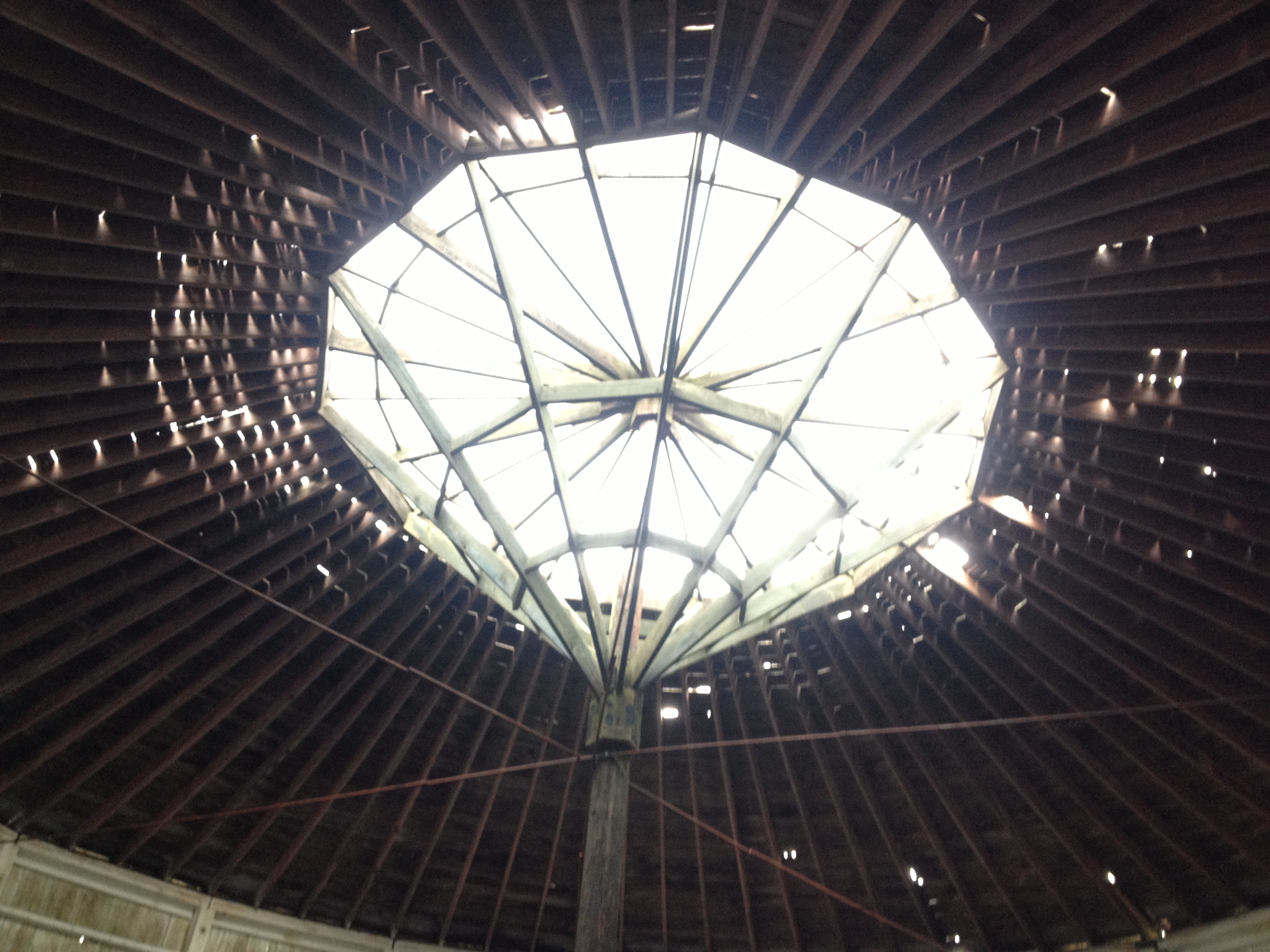
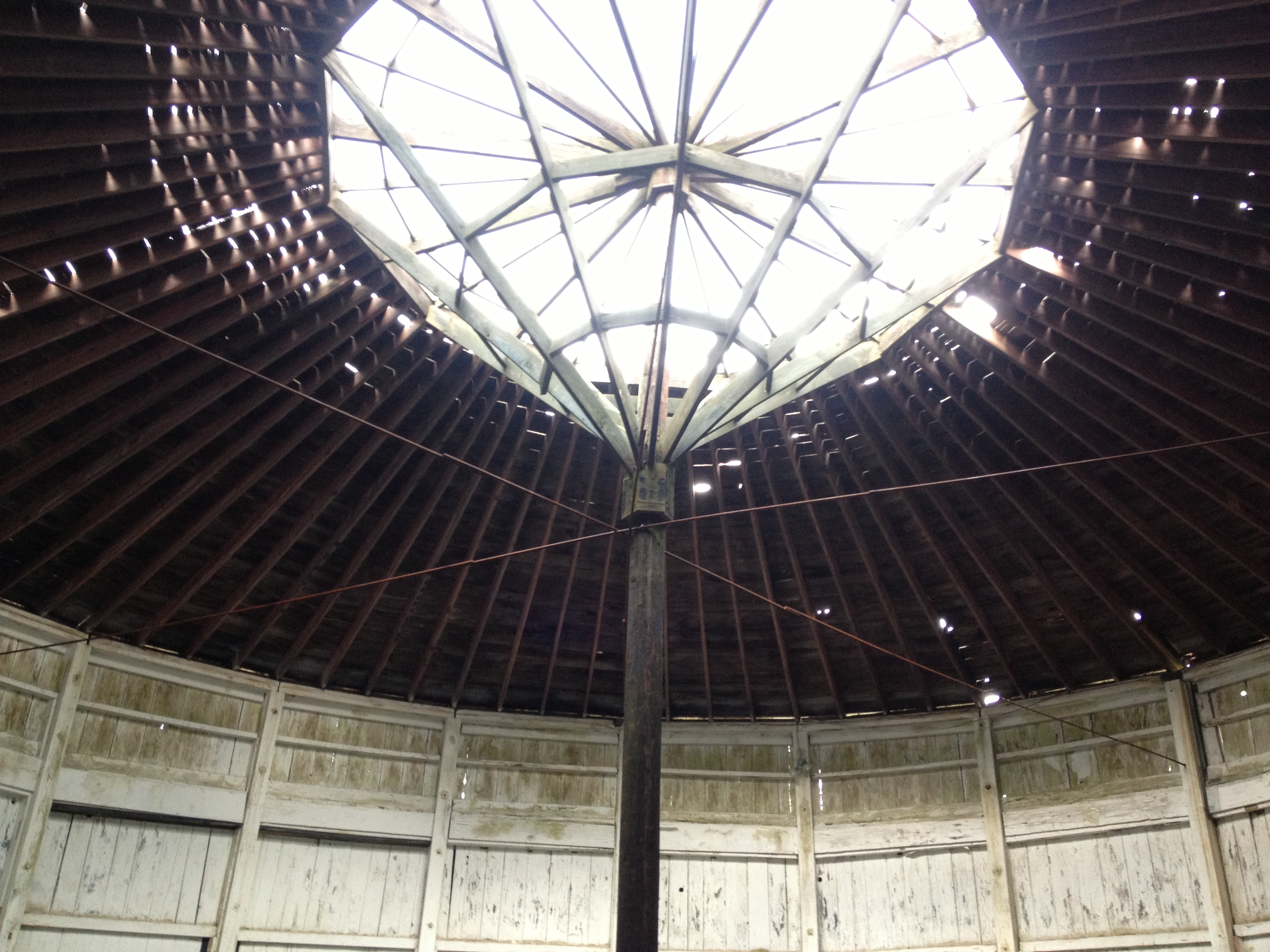
I have tried before to describe the architecture of the open roof in words and found it difficult. The view of the sky and the clouds piecemeal through the spokes of the dome captures attention. I have never been in a space similar to this, though my husband reminds me that the structure is very much like the oculus of the Parthenon in Rome, but so much the better to be immersed in healing waters, which are warm, about 98 degrees, and clear. There is a very slight sulfurous smell. The Homestead‘s website conveys some of the 9,000 year history of the baths and interesting statistics about the rate of flow and qualities of the water.

I floated with the noodles, I let the bubbles swirl up around me, and I stared up at the ceiling of the hut through which I could see the sky and passing clouds. I meditated on time and space, and then I slipped into my towels and commenced taking a few photos with my i phone. I knew I had a unique opportunity. It is hard to convey the magic of the bathing hut without a photo or two.

Another view of roof.

Another view of roof.

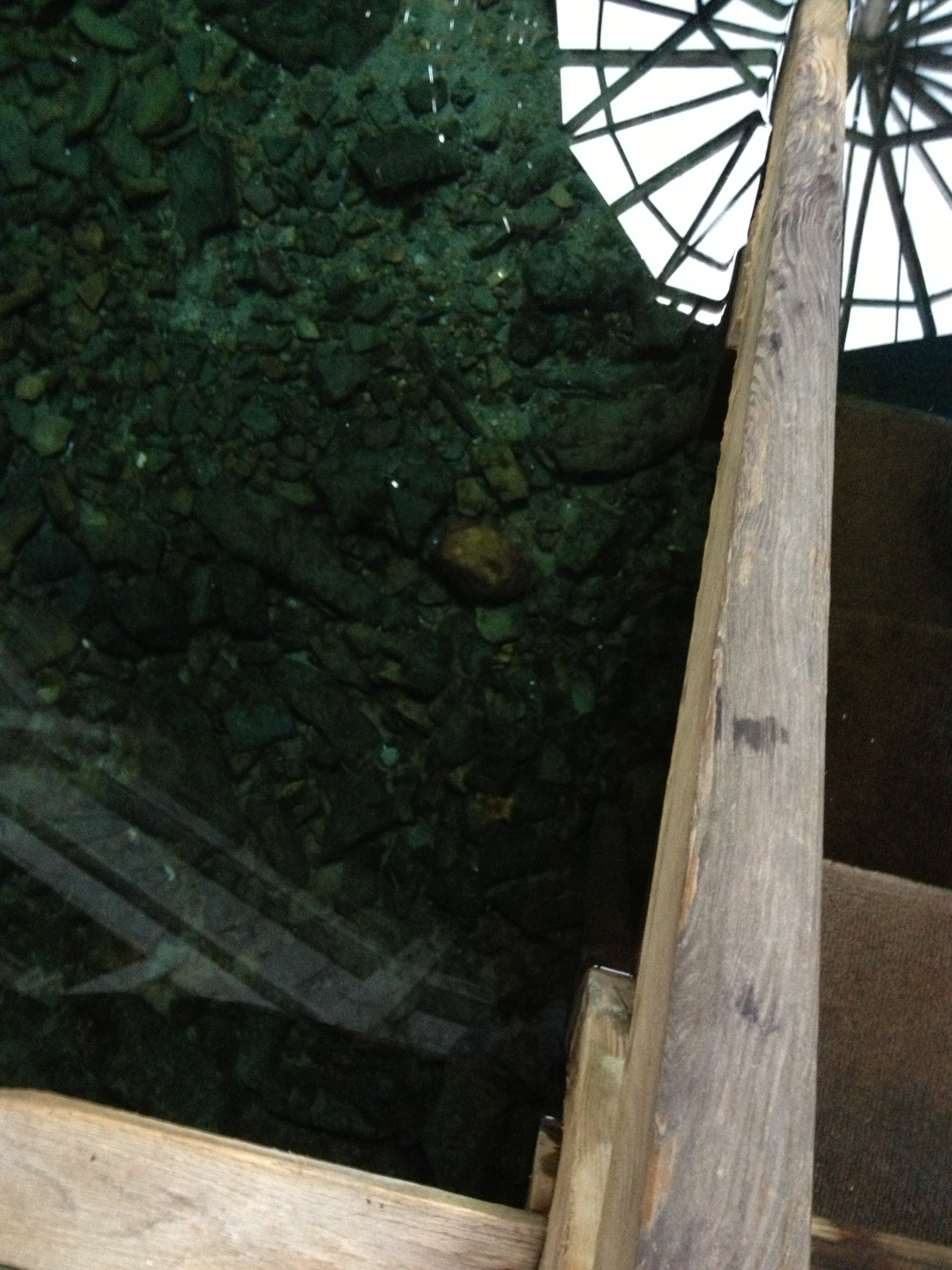
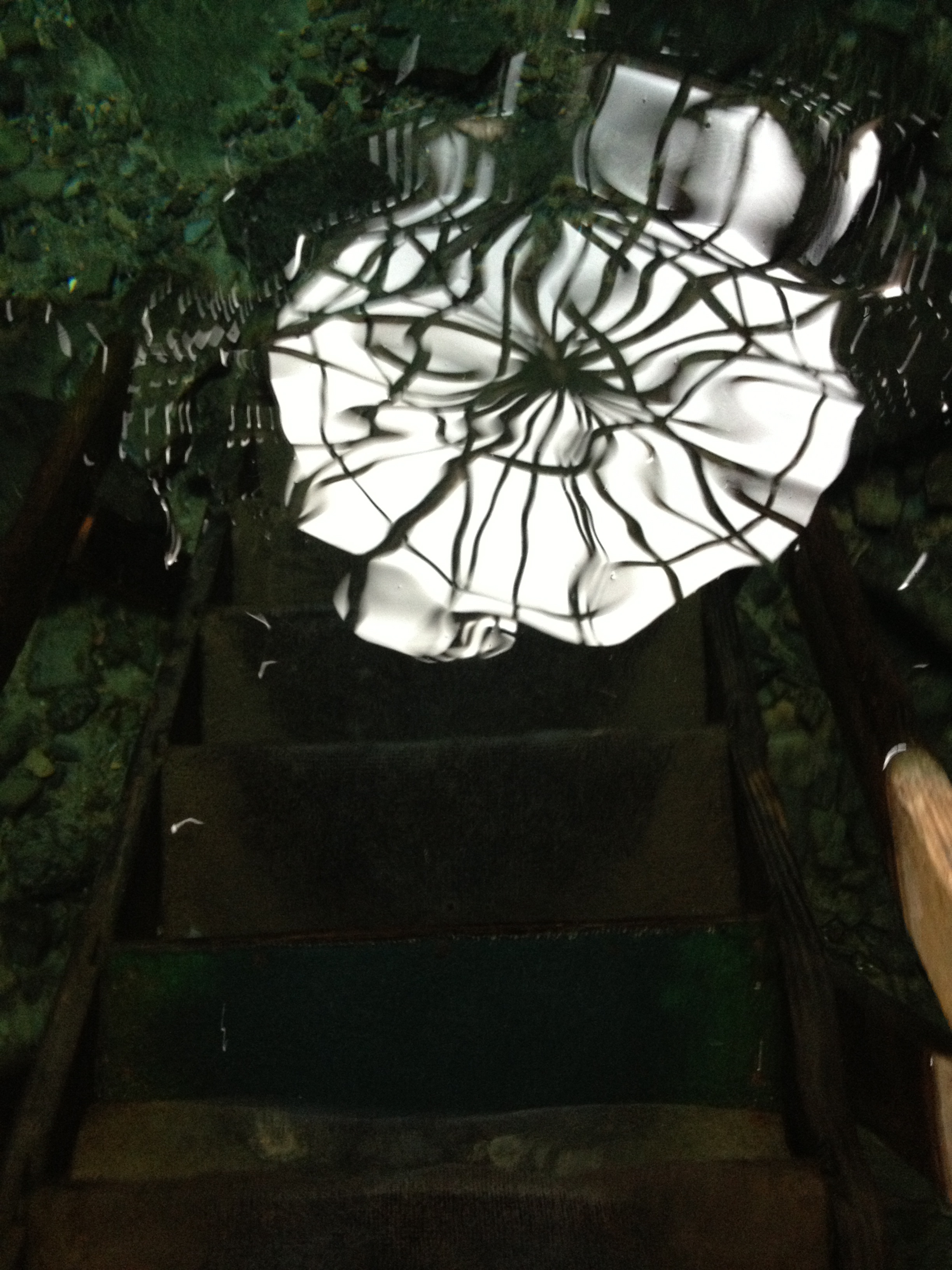
Reflection of central post attaching to center of roof in the healing waters.

Reflection of central post attaching to center of roof in the healing waters below. Pebbles appear luminous in the slightly blue-green water.

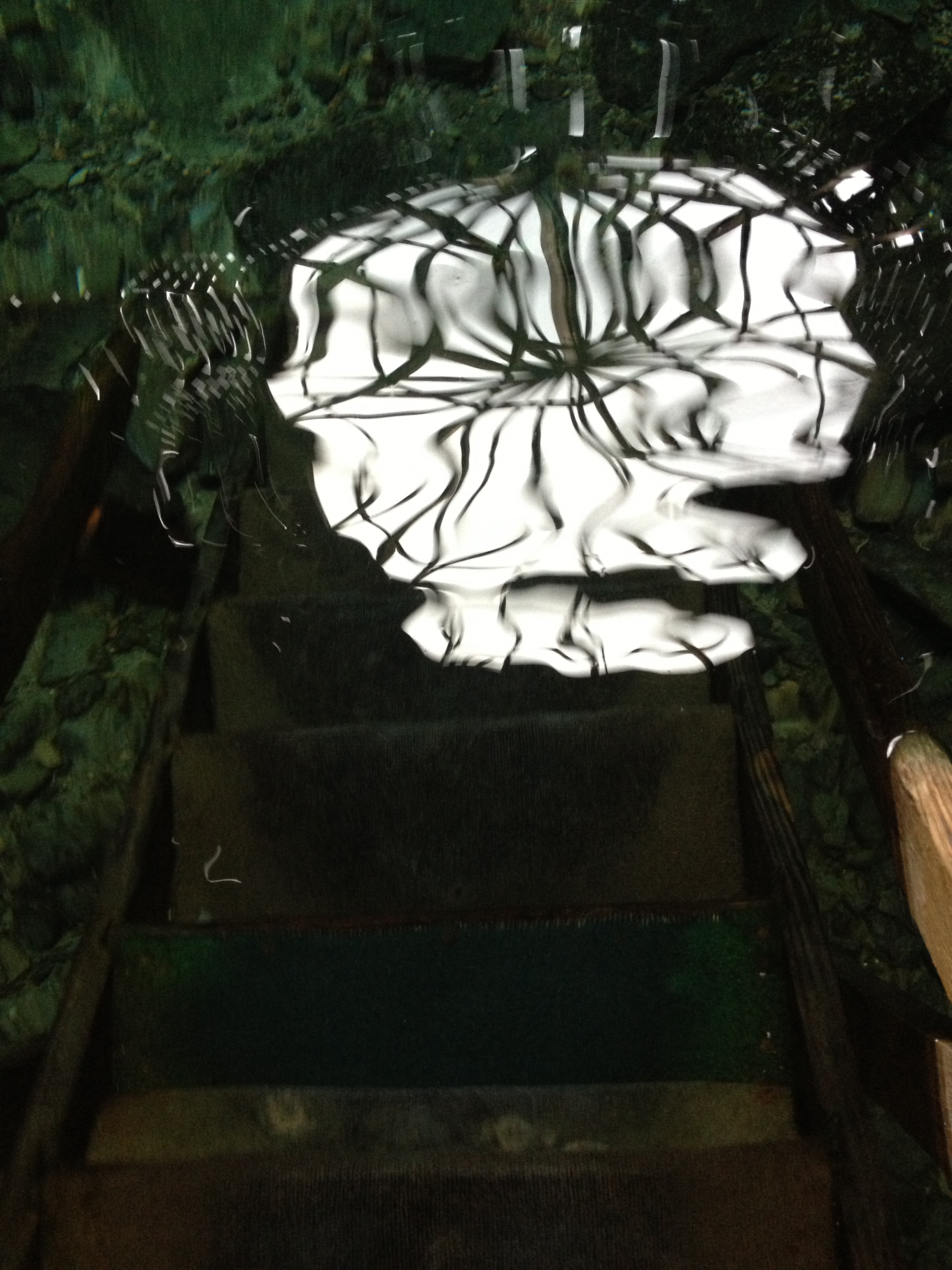
But as I was going in and out, mermaid like, taking pictures and soaking, I noticed that the design of the roof was even more beautiful reflected in the water. The reflection accompanied me, swirling from little to big. I put my hand in it, causing the reflection to wobble and gyrate. It was mesmerizing watching the reflection settle back into itself.

IMG_3936

Reflection of roof architecture in water.

Reflection of roof architecture in water, wobbling.

A wobbling reflection

Wobbling even more.

I emerged from my soak relaxed, wholesome, a noodle, a strand of perfectly cooked spaghetti. The waters are body temperature and flow at 1,700,000 gallons per day, conditions that render the human body mellow and agreeable. Departing in excellent spirits, I thanked the attendants for their encouragement: the au naturelle method of bathing is fine. The bubbles that percolate up one’s torso and the wobbling reflection of the oculus at one’s elbow distract body and mind from anxious concerns. I hope Thomas Jefferson achieved similar moments of serenity.

I understand the admonitions posted at various point around the pool. Like the reflections of the oculus, human beings wobble and wobble and wobble in so many forms of uncertainty. Drifting this way and that, I soon hear a serene silence inside my body, so soothed by the warm spring with its minerals and cheerful bubbles.

IMG_3945

Fieldwork 101: Identifying the “Infinite in the Small”


Summer in the northeast United States is a time for a bounty of life forms, little bugs munching leaves and landing out of nowhere in our midst and tiny weeds decorating “waste” places trying to show us that life can be lived in the most unassuming of places. Seemingly they have come from nowhere and humbly they will disappear at frost. Having a minor  reputation in my neighborhood as a naturalist, I am presented with various creatures for ID, and then one simply fell into my lap (precisely speaking, onto my page), and then there is the case of the striking stranger that came for the cat food. I write about them in the spirit that the least among us deserves recognition and has a story to tell–part of the Big Story of Life on Earth.


Carrion beetle on my kitchen counter.

Burying beetle on my kitchen counter.


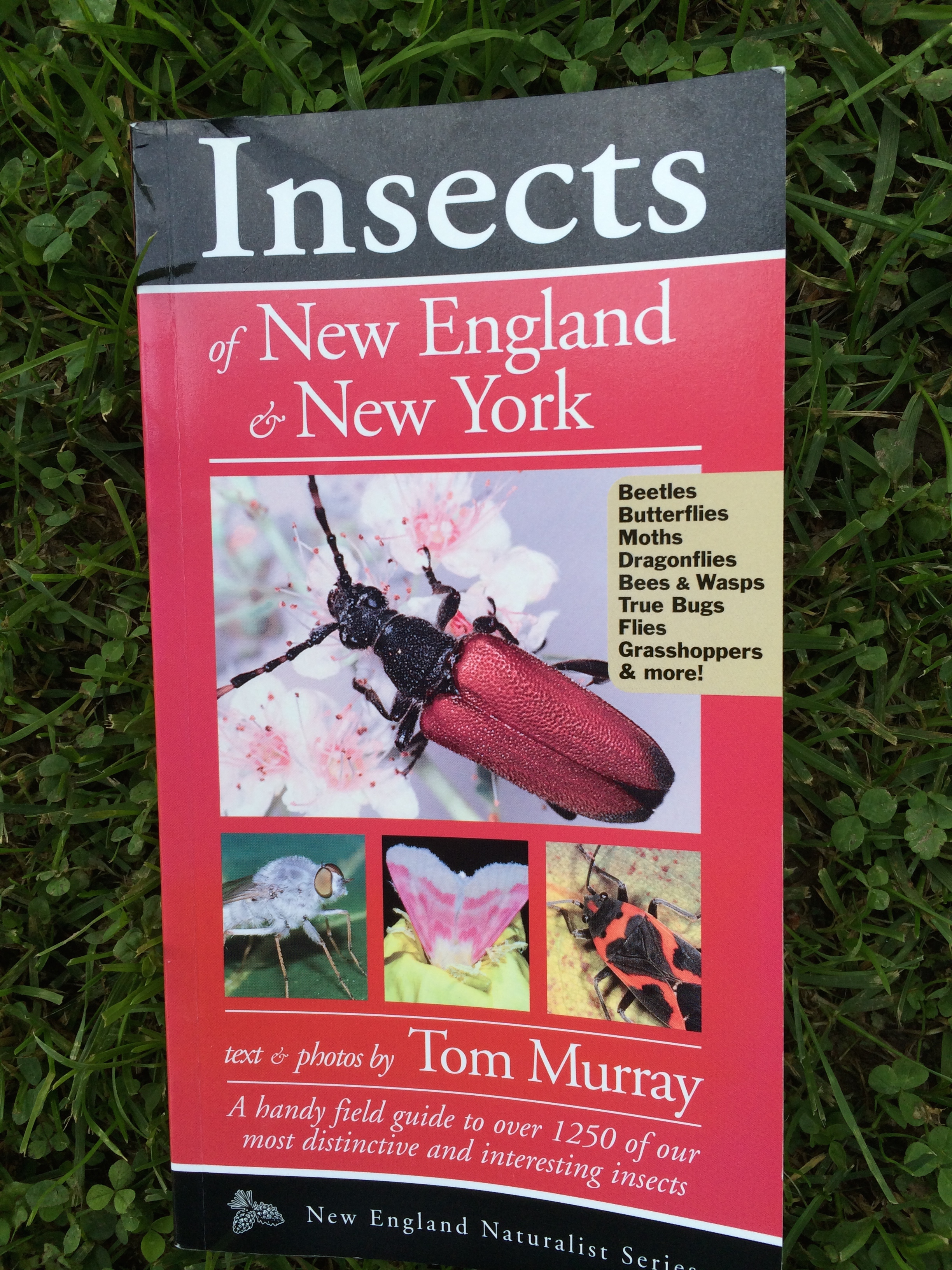
This handsome beetle popped out of an empty cat food can in my sink.  We had gone to Columbus, Ohio, for a wedding, leaving Rex Fernandez the cat in the care of an expert cat sitter who left the nearly empty Fancy Feast cans in the sink as requested.  Upon tidying up I encountered this large, dramatically colored beetle. I was surprised but not horrified. As most naturalists would, I decided to photograph it with my iPhone for identification. Darwin, famously, put a beetle, or was it two, in his mouth for safekeeping to carry home for study, because his hands were full with specimens and equipment. I had just acquired Insects of New England & New York by Tom Murray, so it was a simple matter of flipping through pages of photographs of beetles to find one like this.

Insects of New England and New York by Tom Murray, published by Kollath + Stensaas Publishing.

Insects of New England and New York by Tom Murray, published by Kollath + Stensaas Publishing.

Simple-minded or not, this is my first approach to identification. It was quickly apparent that this individual belonged to the family of Carrion Beetles (Silphidae) and more particularly to the genus Nicrophorus, commonly known as Sexton (Burying) Beetles. Murray writes,

“In the Northeast we have 9 of the 15 Burying Beetles species. Adults bury the carcass of a small mammal or bird, and then lay eggs on it and are dedicated parents, feeding the larvae bits of carrion.”

That’s how life continues, by not wasting available resources and good parenting. I narrowed from genus to species. It looked exactly like the photo of Nicrophorus defodiens in Murray’s book, which I stumbled upon online as well. These beetles get around. One comment beneath the online photo indicates they are a pest on the Isle of Skye in western Scotland, or I should say a wee pest (the go-to lingo of the Scots). I am sure that I could not put this kind of beetle in my mouth.

And then in further tidying I discovered a note and a container from the expert cat sitter by the telephone.

“Elizabeth. I’m trying to find a home for this strange bug–also to find out what kind of bug he is. Maybe the [grand]children would be interested?! I consulted an insect ID book to no avail. Anyway he is a fascinating little (very) creature. Susan”

The Wegman’s Olive Bar container had beautiful little holes in the lid and nothing in it at first view. Near some shredded leaf parts I saw a tiny, very tiny as she had said, fuzzy little bug.

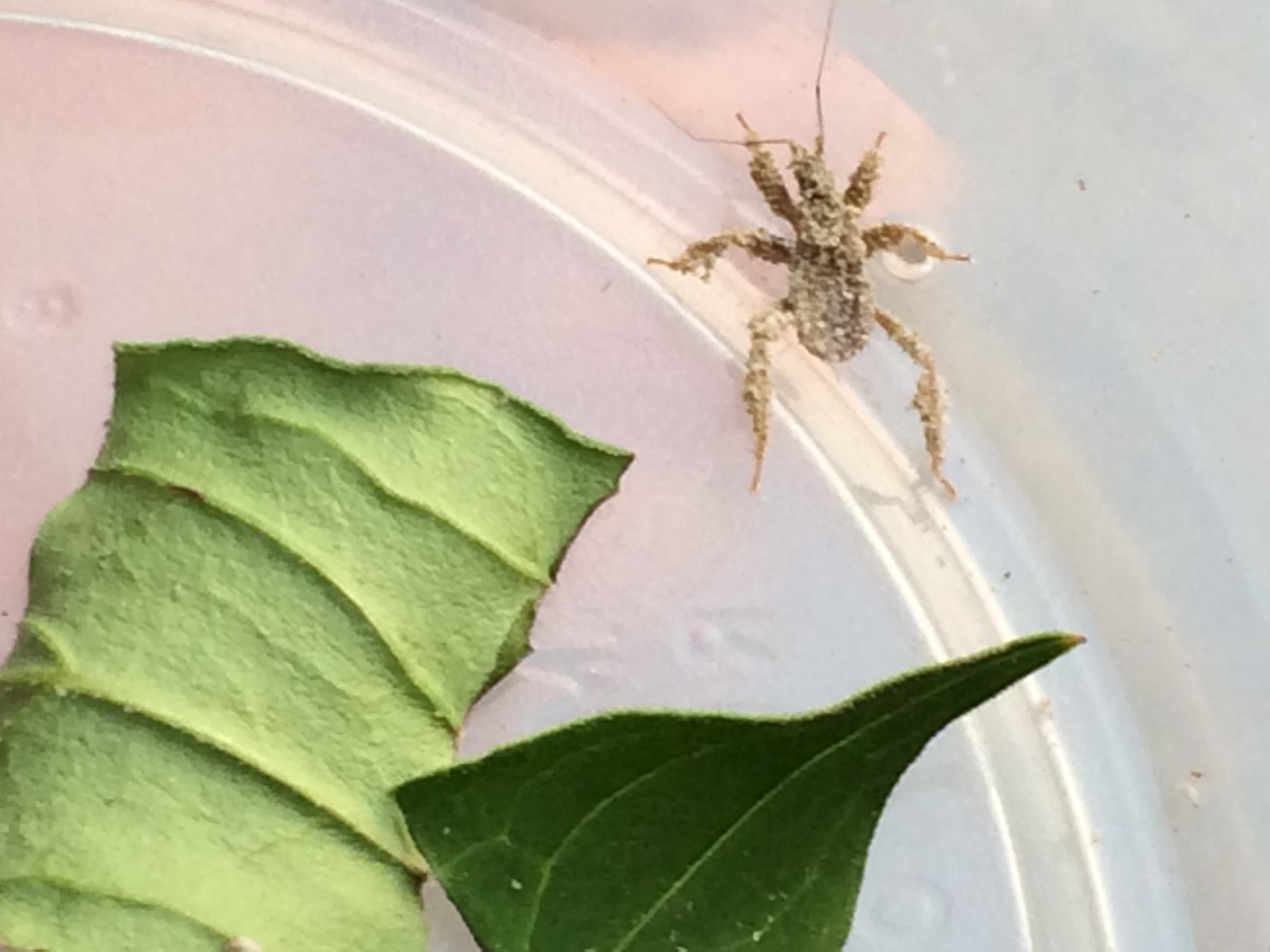
Susan's bug.

Susan’s bug, magnified considerably.

Higher magnification of Susan's bug.

Higher magnification of Susan’s bug. Note the widened “flanges” of the hind legs.


I went off on a wild goose-bug chase. The chances of ID-ing such a tiny bug, especially one that appeared to have been rolling around in gooey dust  seemed futile. I observed it, photographed it, and then let it go because I didn’t want it to die while I was on my chase. The hind legs were distinctive.  I immediately thought of leaf-footed bugs, known for “leaf-like expansions” (Murray) of their hind legs, and a photo in Murray’s book of the Distinct Leaf-footed Bug (Merocoris distinctus) bore some likeness. Murray’s description reads: “These little, fuzzy bugs can be found on flowers throughout the eastern U.S., except Florida where M. typhaeus occurs.” Susan said that she had found it on her shower curtain, but this unusual location did not necessarily rule out the Distinct Leaf-footed Bug because bugs get around for various reasons. Such a tiny bug could have blown on a gentle breeze from one of the flowers in her garden to her shower curtain, possibly. I wasn’t satisfied, however. The Distinct Leaf-footed Bug was supposed to be 9 mm or so, and Susan’s bug was smaller I thought. But perhaps it could be just a nymph, an immature stage in maturation of insects. It would get bigger and then look more like the photo in Murray’s book perhaps, especially if it was cleaned up. But that line of thinking was definitely fuzzy. I puzzled on.

Browsing around online, googling search terms like “tiny, fluffy bug” or “tiny, fuzzy bug” or “tiny, sticky bug,” I can’t remember exactly, I stumbled on Doug Green’s Simple Gifts Farm (www.simplegiftsfarm.com) with a great photo of a lookalike. You have to scroll down past the wooly aphid to get to the photo of the nymph of the Masked Hunter Bug (similar to Susan’s bug). The fascinating little creature on the shower curtain was a member of the Assassin Bug family, specifically Reduvius personatus. Called Assassin Bugs, because they hunt and kill other bugs, they like to be indoors and can, if disturbed, inflict very painful bites upon humans. The Masked Hunter is so-called because the nymphs go around covered in dust as a camouflage. The adults are not half as fascinating looking, as shown on Michigan State University’s webpage, written byHoward Russell, who notes that they have a “sizable beak” with a “needle-like mouthpart.” I am more entranced by the Masked Hunter with its costume of dust.

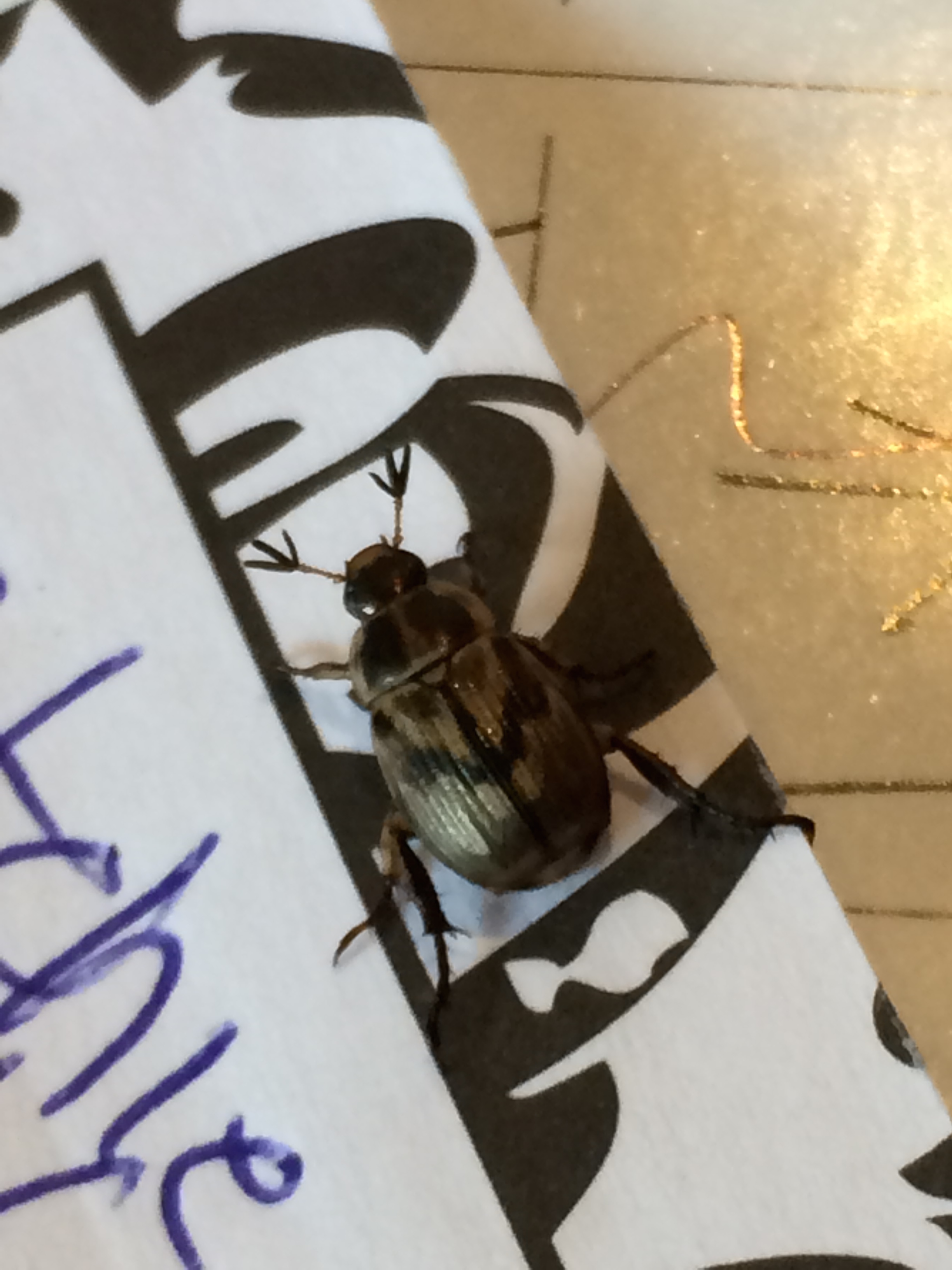
My third identification adventure occurred in a coffee shop. I was sitting with my portable, paper 2014 Edward Gorey’s The Evil Garden Calendar (Pomegranate) open and my coffee, plotting to get my life in order when a beetle dropped onto the page.

Beetle on calendar.

Beetle on calendar.

I had been immersed in beetles and bugs, and here was another one begging for attention. Had it dropped off the ceiling? my hair? At least it wasn’t an assassin bug. It seemed cheerful and actively explored my page.

Beetle on the move.

Beetle on the move.

The pattern on the back was interesting but not outstandingly helpful. After escorting the beetle outside to an ornamental planting by the parking lot, I started looked through all beetles that had three-pronged, black antennae. There were a lot. I narrowed it down to some type of scarab beetle, and after much wandering among beetle photographs decided that it was mostly likely the Oriental Beetle, Exomala orientalis (synonym Anomala orientalis). My photographs match those on bugguide.net almost exactly. Various accounts point out that the pattern often varies this way and that (i.e., no two snowflakes are alike), and sometimes it is completely black, as shown in Murray’s book. It is an immigrant from Asia, and frequents rose and hollyhock blossoms. The grubs live in the ground and feed on turfgrass roots.

In graduate school I took courses that gave me practice in some of the arts of identification–Agrostology, the study of grasses, at the University of Texas at Austin, and Entomology, the study of insects, at Cornell.  It’s not so much the name per se that a naturalist seeks, but knowing and honoring the individual through seeing well–discriminating between details of appearance with appreciation. I cannot fly around the world like David Attenborough, but I can engage in adventures that everyday life presents, and they are nonstop.

I found a wonderful website called Beetles in the Bush created by entomologist Ted MacRae. He posted  ID Challenge # 23on July 12, 2014. I was too busy investigating my own challenges to undertake his challenge, but I urge readers to get involved and accept challenges. For example, here is a long-legged insect that I found ensconced on peony fruit capsules in my Secret Garden.

Long-legged green insect on peony fruit capsules.

Long-legged green insect on peony fruit capsules.


Here's a higher magnification.

Here’s a higher magnification.

I think it is a katydid. The challenge is what kind of katydid? I also pose this challenge in the spirit of the  “revisioning the insect-human connection,” the subtitle of a wonderful book by Joanne Elizabeth Lauck titled The Voice of the Infinite In the Small. This is a beautiful book about tuning in to our smallest brethren and shedding human self-centeredness in order to really belong to the delicate lace of life on planet Earth. I for one feel that my life is more in order when I try to identify my fellow life forms.

A classic: The Voice of the Infinite in the Small: Revisioning the Insect-Human Connection by Joanne Elizabeth Lauck.

A classic: The Voice of the Infinite in the Small: Revisioning the Insect-Human Connection by Joanne Elizabeth Lauck.

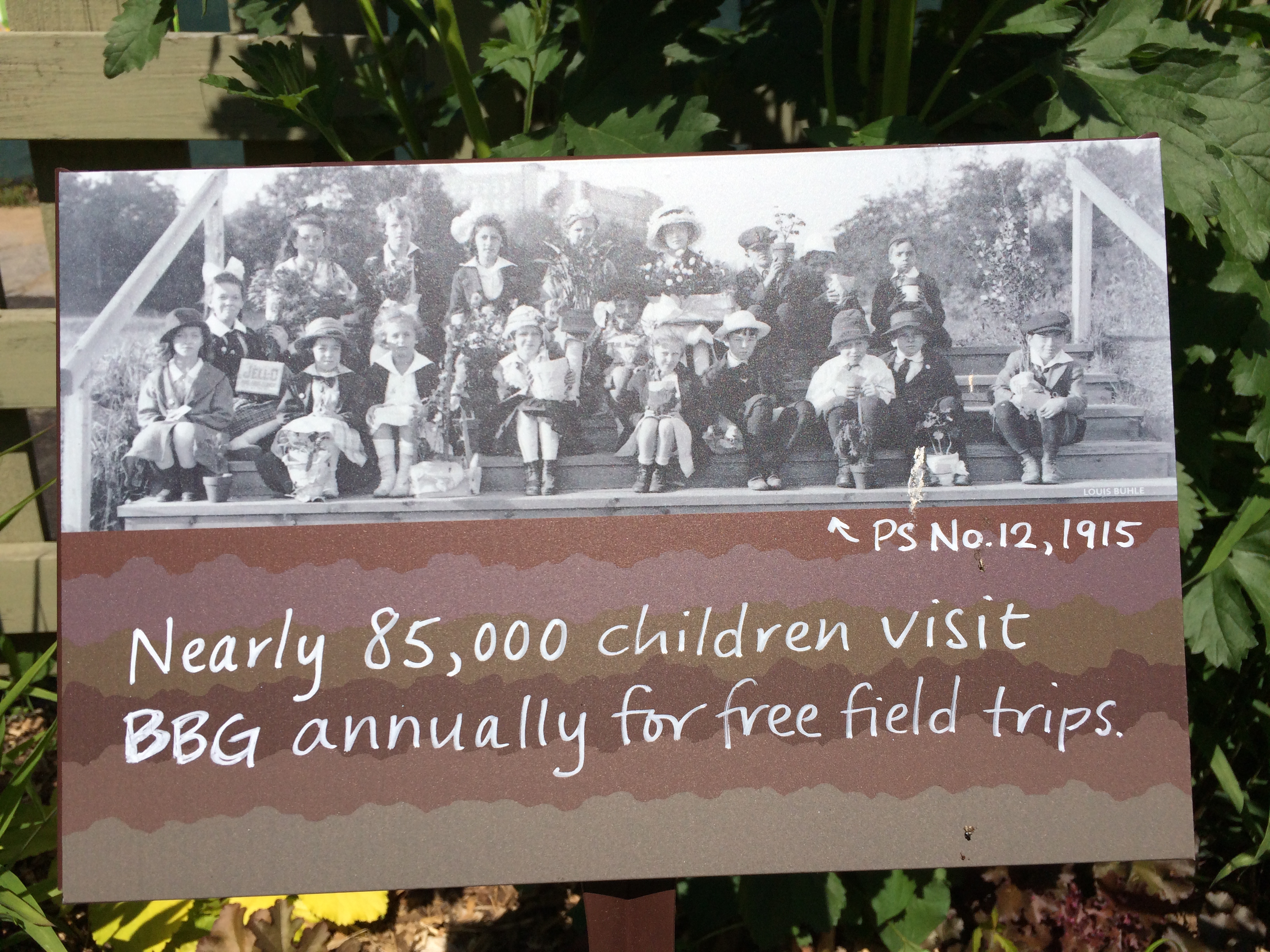
Plants and People: Celebrating the Brooklyn Botanic Children’s Garden

Display near the entrance to the Children's Garden of the Brooklyn Botanic Garden.

Display near the entrance to the Children’s Garden of the Brooklyn Botanic Garden.


On Saturday, June 7th, 2014, the Brooklyn Botanic Garden (BBG) celebrated the 100th Anniversary of its renowned Children’s Garden. As Frances Miner, who worked in the Children’s Garden for 43 years said, “There are plants and there are people, and there are many ways they can be brought together.”


Exhibit item in the Steinhardt Conservatory at BBG.

Exhibit item in the Steinhardt Conservatory at BBG.


The history of the Children’s Garden is beautifully described on BBG’s website. Anyone interested in gardening with children will find this history interesting. Anyone interested in reading about strong women will find the profiles of Ellen Eddy Shaw and Frances Miner, who both shaped the garden for many years, inspiring.

Elizabeth Scholtz (left),   Director Emeritus of BBG, and Ruth Harzula, fellow instructor in the Children's Garden.

Elizabeth Scholtz (left), Director Emeritus of BBG, and Ruth Harzula, fellow instructor in the Children’s Garden.

I came to BBG as a “botanical instructor” just as Frances Miner was retiring. The motto she stressed was “learn by doing.” This statement has rung true to me many times over the years. Too often we feel “stupid” because we can’t replicate a procedure or activity after hearing an explanation. But we are not “stupid,” we just have not learned through the body. The Director of BBG at the time, Elizabeth Scholtz (shown above) still goes to work at the garden, as Director Emeritus, Monday through Friday. Her devotion, charm, and horticultural advocacy are legendary. Ruth Harzula (also shown above), who was the first woman to graduate from Delaware Valley College with a degree in Ornamental Horticulture,  was in my cohort of young “botanical instructors” who worked at the garden in the 1970s. She brought many talents to our group, among them working with special needs children in the vegetable garden. I also remember the day she unleashed a natural history drama at lunch. Bringing forth her insect collection for show and tell, she screamed upon opening it.  There were lots of little “bodies” moving around.  A praying mantis egg case had hatched and a swarm of tiny praying mantises, each the length of a finger nail at most, was busy devouring her carefully pinned insects. It was a terrifying scene of carnage, wings and legs strewn about half eaten.  At least this is how I remember it. Ruth, please let me know if I have misrepresented the event.


Tools in the Children's Garden house.

Tools in the Children’s Garden house.

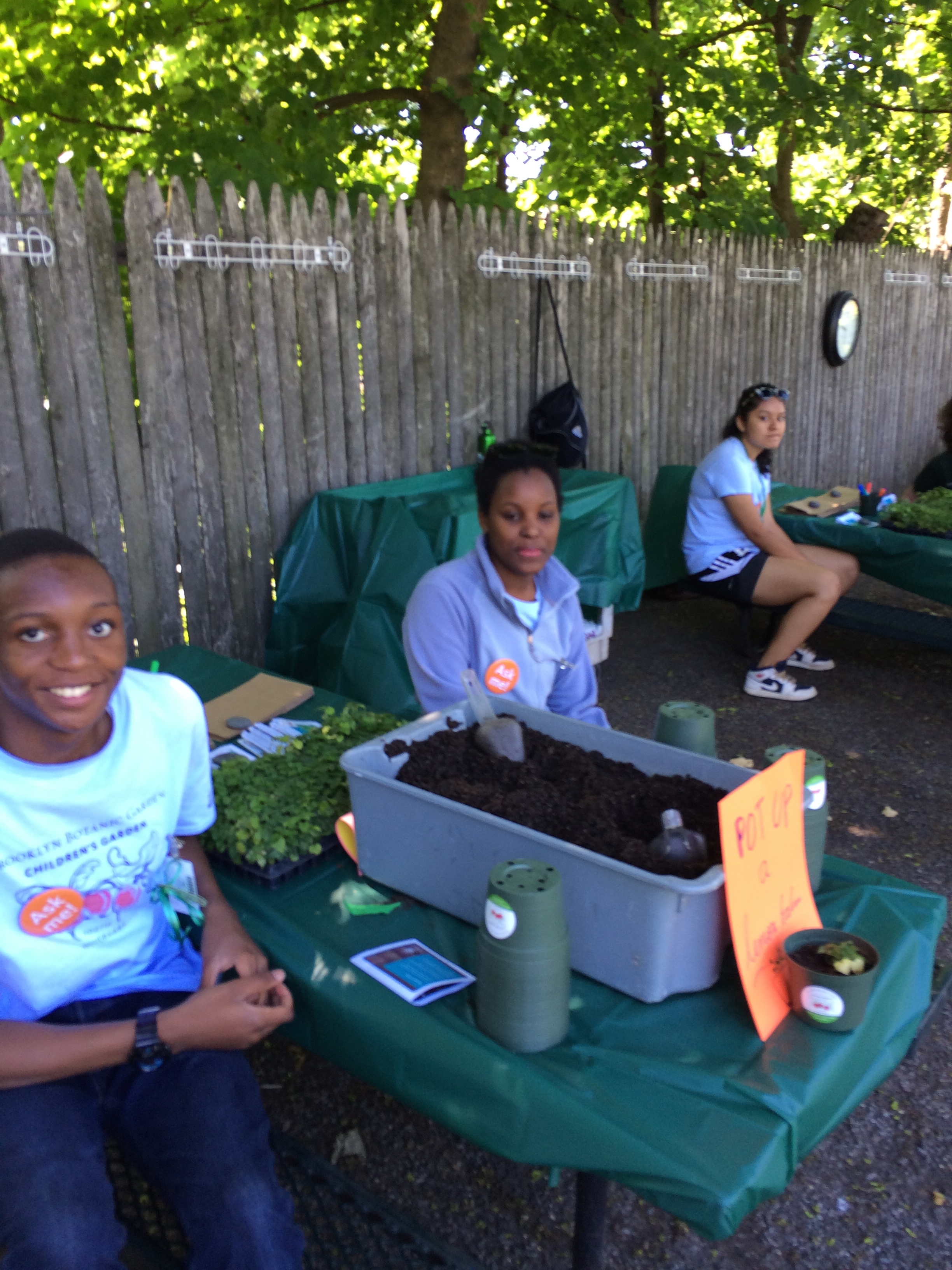
In my era we taught a sequence of four classes for New York City public school children in which they learned how to make cuttings, how to pot up their rooted cutting,  and had tours of the conservatory and the outdoor plant collections. I remember the students as being very interested and well behaved. They loved the hands-on work in the greenhouse. We taught adult classes as well. While most classes had a practical application, like dyeing fibers with plant materials, I taught a “romantic” one, “Trailing the Wild Arbutus with Gun and Camera,” about the world’s great plant explorers and the plants they introduced to our gardens. These plant-loving explorers underwent extraordinary deprivations and dangerous situations to make these flowery “introductions.”

Staff in the Children's Garden offer lemon balm cuttings for potting up.

Staff in the Children’s Garden offer lemon balm cuttings for potting up at the celebration. Lemon balm is tough and lovely. The cutting I potted up survived several subway rides and a long bus ride to arrive safely in Ithaca, NY.


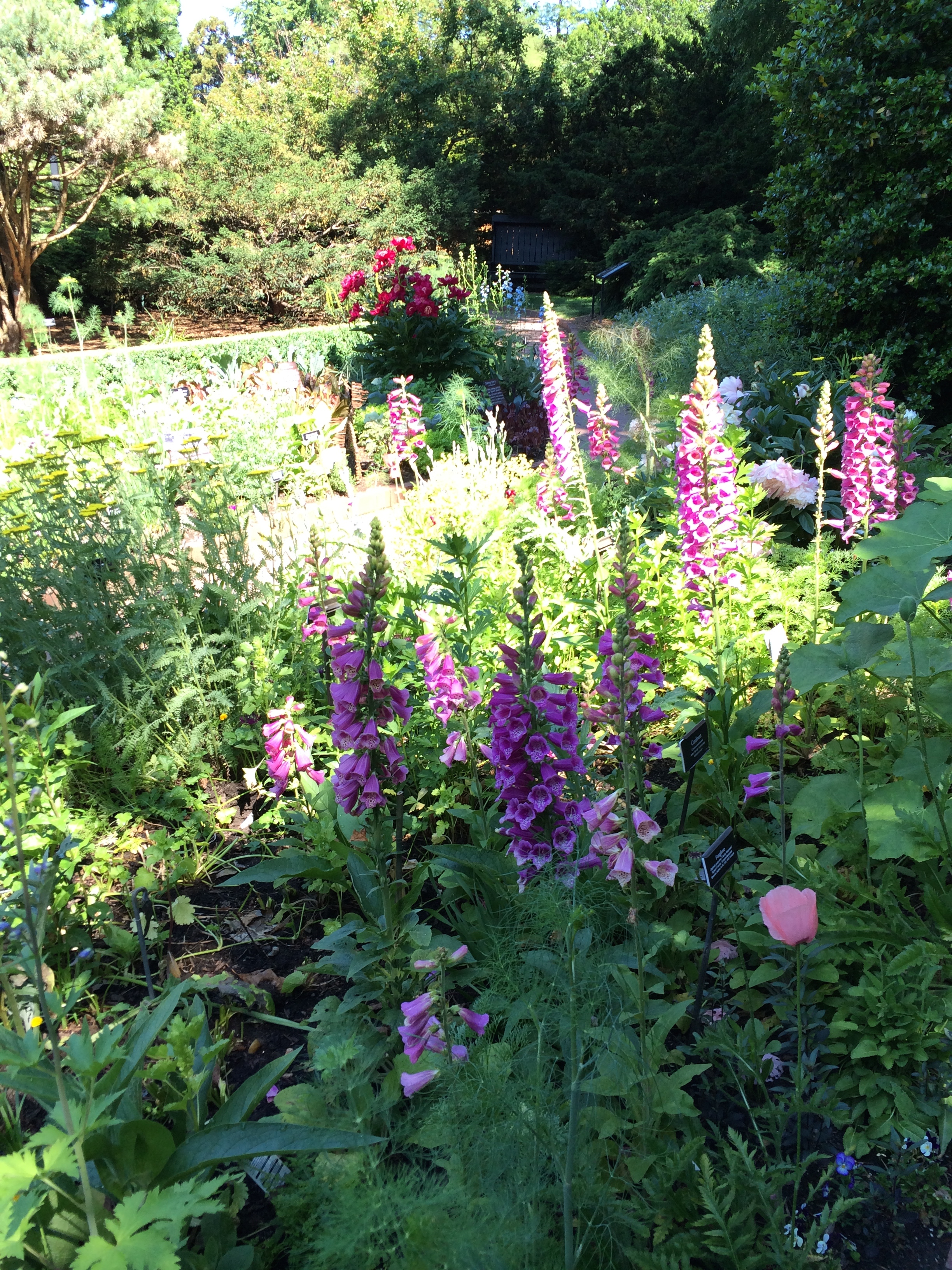
I was also in charge of the Shakespeare Garden, but at that time there was insufficient funding for buying special varieties or even spending many hours in the garden. Luckily it looked perfectly beautiful, to me, with too many foxgloves.

There are still lots of foxgloves in the Shakespeare Garden.

There are still lots of foxgloves in the Shakespeare Garden.


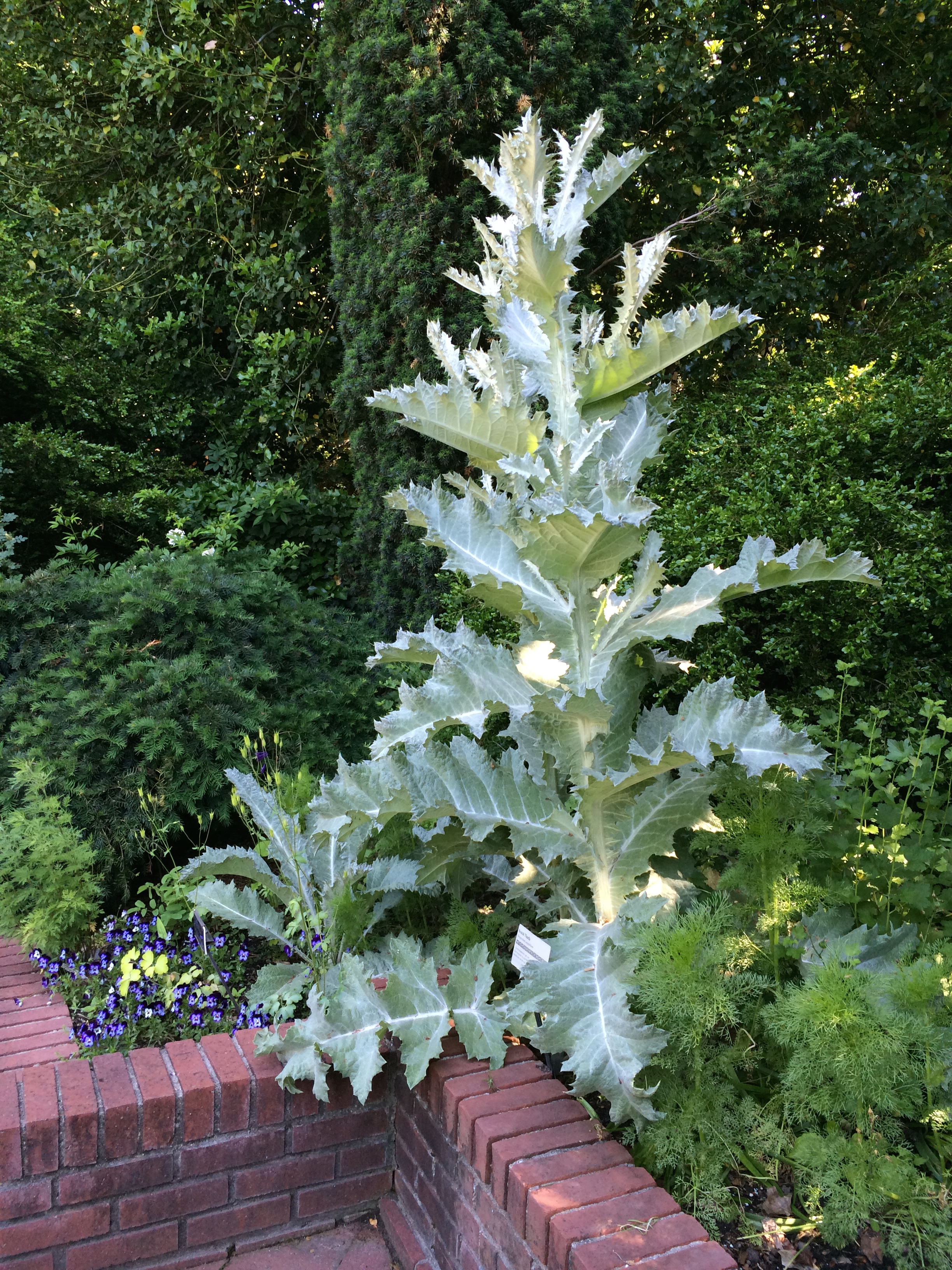
Scotch thistle in the Shakespeare Garden.

Scotch thistle in the Shakespeare Garden.


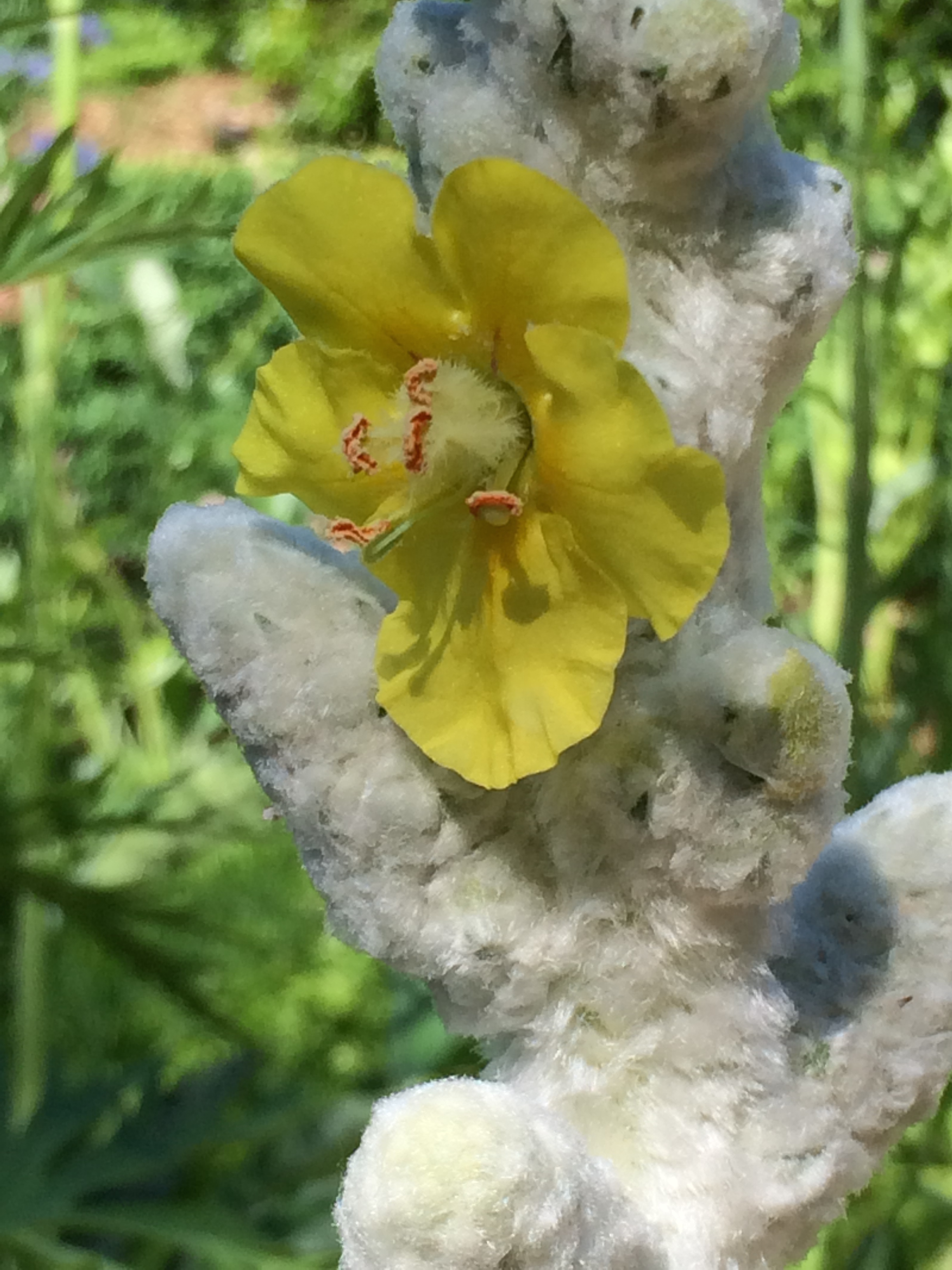
Mullein plant in the Shakespeare Garden.

Flowering stalk of the Arctic Summer Mullein (Verbascum bombyciferum ‘Polarsommer’) in the Shakespeare Garden.


There were people as interesting as the plants. One was George Kalmbacher, a retired postal worker, who became an expert in bromeliads (pineapples and their relatives), traveling all over the world to visit and document rare species. Like our very own phantom of the opera, he could be found at all hours of the day and night scurrying between the herbarium and the conservatory with a huge camera and a plant in his hand that he was photographing, probably for the book What Flower is That? It had over 1000 photographs of garden flowers. His knowledge was encyclopedic–because he certainly learned by doing. One winter he got quite excited because the night-blooming cereus (a kind of cactus) was getting ready to flower and he  urged us to be in the conservatory between 10 pm and 11 pm for the grand opening. I fretted about staying so late in the city, but he said that this would be my only chance to watch the huge buds open, petal by petal, and he was right. Some call it the Queen of the Night, and have paid tribute with musical accompaniment. By morning the Queen has wilted, her gown in disarray, the petals hanging limp.


Keyhole tree near the Steinhardt Conservatory at BBG.

Keyhole tree near the Steinhardt Conservatory at BBG.

And then there was Frank Okamura who curated an outstanding collection of bonsai. He was a little intimidating, not loquacious like George, stern in protecting his tiny trees. Although not a fan of bonsai, when I stood before one of his two-foot-high, 100-year-old oak trees in full flower, I felt the miracle of being able to physically and mentally encompass the entirety of the oak.  You can shrink a tree, but not its flowers. The oak tassels (the name for their flowers) were their normal size, dangling like hugely oversize but still elegant ear-rings on the diminutive trees, an incongruous, arresting sight.  Some people don’t realize that trees flower, so a bonsai seen through the seasons can be instructive. Like Mr. Kalmbacher, Mr. Okamura was self-trained.  The obituary in the New York Times written by Stuart Lavietes describes how, interned in California in WWII, Mr. Okamura came to the garden to work in its neglected Japanese garden, but also waited tables and set pins in bowling alleys.  Mr. Okamura’s daughter said that he “virtually dangled off precipices in the Catskills to get saplings he thought would make good bonsai trees.”


The celebration offered healthy drinks.

The celebration offered healthy beverages.

I first started as a botanical instructor in Fall ’73 or early ’74, fresh from a year as a horticultural work-study student at Kew Gardens. The salary was $6000 a year so I commuted one and a half hours from home each way. Leaving a trail of corn muffin crumbs from my favorite deli in Grand Central, I carried hazelenut coffee, a book, and my earth shoes. It was in Grand Central that I bought a copy of One Hundred Years of Solitude by Gabriel Garcia Marquez.  The opening lines transported me:

Many years later, as he faced the firing squad, Colonel Aureliano Buendia was to remember that distant afternoon when his father took him to discover ice.

Upon reading that sentence I was deeply in love with a book. An untidy passenger, I sat on the subway reading and spilling coffee but never scalded anyone but myself. Back then Grand Central was not the upscale place it is now. I remember a homeless woman in a tattered nightgown barely covered by a dirty raincoat standing on the top of the steps leading down to the Lexington Avenue line, urinating and shouting obscenities. The stream of well-dressed commuters heading to Wall Street parted in front of her and united beyond her seemingly without notice. Buffeted by the noise and the soot, I rose out of the subway as bedraggled as the Queen of the Night after flowering and entered the Brooklyn Botanic Garden through a turnstile leading to the Cherry Esplanade. Calm, green, symmetrical allees of flowering cherry trees lined a central area, a place to breathe deeply, a sanctuary. I learned then and know so much more now how much work it takes to maintain a sanctuary. In the obituary mentioned above, Stuart Lavietes writes that

Mr. Okamura taught his students that practicing bonsai required patience, sensitivity to nature and five fundamental qualities: humanity, justice, courtesy, wisdom and fidelity.

I would like to think that people, children and adults, do learn these qualities in working with plants, all plants, from liverworts to radishes to roses. I will let Ted Maclin, former coordinator of the Children’s Garden at the Brooklyn Botanic Garden speak here:

Statement from

Statement from Ted Maclin, displayed in the exhibit at the Steinhardt Conservatory commemorating the 100th anniversary of the Children’s Garden at the Brooklyn Botanic Garden.


So, I learned from plants and people in my days at the Brooklyn Botanic Garden. It was poignant on June 7th to greet people that I have not seen in 40 years. The good news is that their smiles are as youthful and their eyes as bright as when I first knew them. We were happy to be together again in the garden.


Carolina spicebush (Calycanthus sp.) near Cherry Esplanade.

Strawberry Shrub (also known as Carolina Allspice, Sweet Shrub, Sweet Betsy, Bubby Bush [Calycanthus floridus])  near Cherry Esplanade.


My friends, the liverworts!

Homage to the bobcat at the end of a double row of flowering pears at Cayuga Landscape tree nursery.

Bobcat at the end of a double row of flowering pear trees at Cayuga Landscape tree nursery in late afternoon of overcast spring day in mid-May.

May 12, 2014. Late afternoon. I am off to my husband’s tree nursery to walk the dogs. I have two now, Daisy the golden and Belle the Belgian shepherd.  Daisy, Jack’s dog, comes occasionally for a week of  camp with grandma. There is abundant visual interest in the late afternoon under a brooding spring sky that spits raindrops but not too seriously. The dandelions, the pear trees, and the green grass. That is enough to marvel at after such a long winter plagued by polar vortexes. I have walked here for years and I watch the trees grow and am sad when they depart. I walk desultorily (I constantly remind my husband that my country walks are not  fitness hikes), looking at what’s going on–the leafing out and the sprouting and the spreading and the bubbling of algae in the two little marshy ponds. I absorb the energy of exuberant growth.


I walk around the end of field 2 with its rows of young conifers and boxwoods, enjoying the swoosh of the tails as the doggies go in and out of the hedgerows sniffing and peeing. They are happy to be off leash in the country and that makes me happy too. I come to the end of field 2, which has a huge compost pile, a great site for giant teasel and monster mustard weeds in the summer and late fall, and a fenced enclosure for growing specialty trees and shrubs. It is not appealing to see anything fenced in, but there is so much loss to deer browsing already in the nursery that my husband reluctantly decided to fence in a small area.

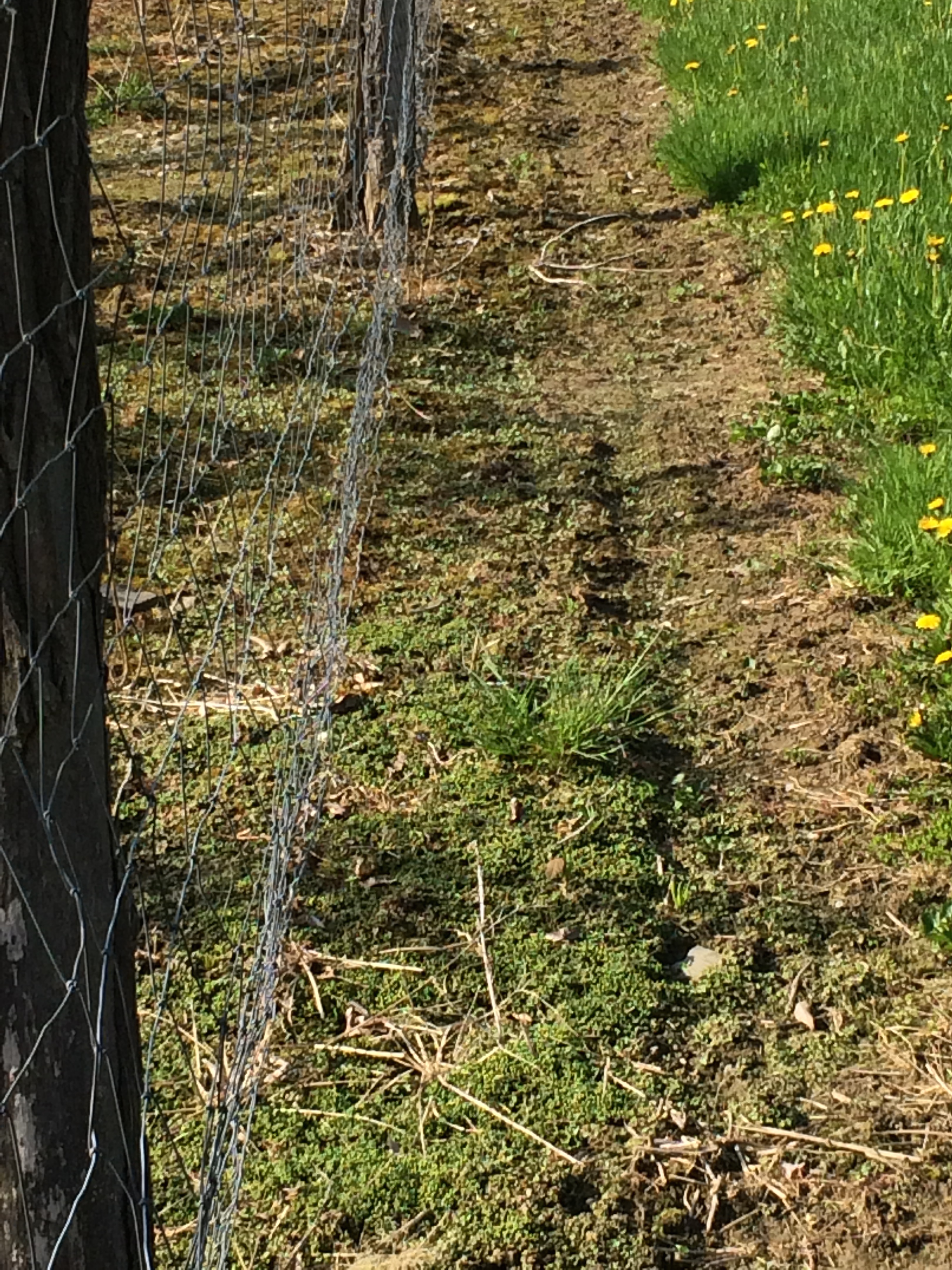
Disturbed soil underneath fence line.

Disturbed soil underneath fence line of enclosure.


I walk near the fence line of the enclosure. I see bare earth and something more.

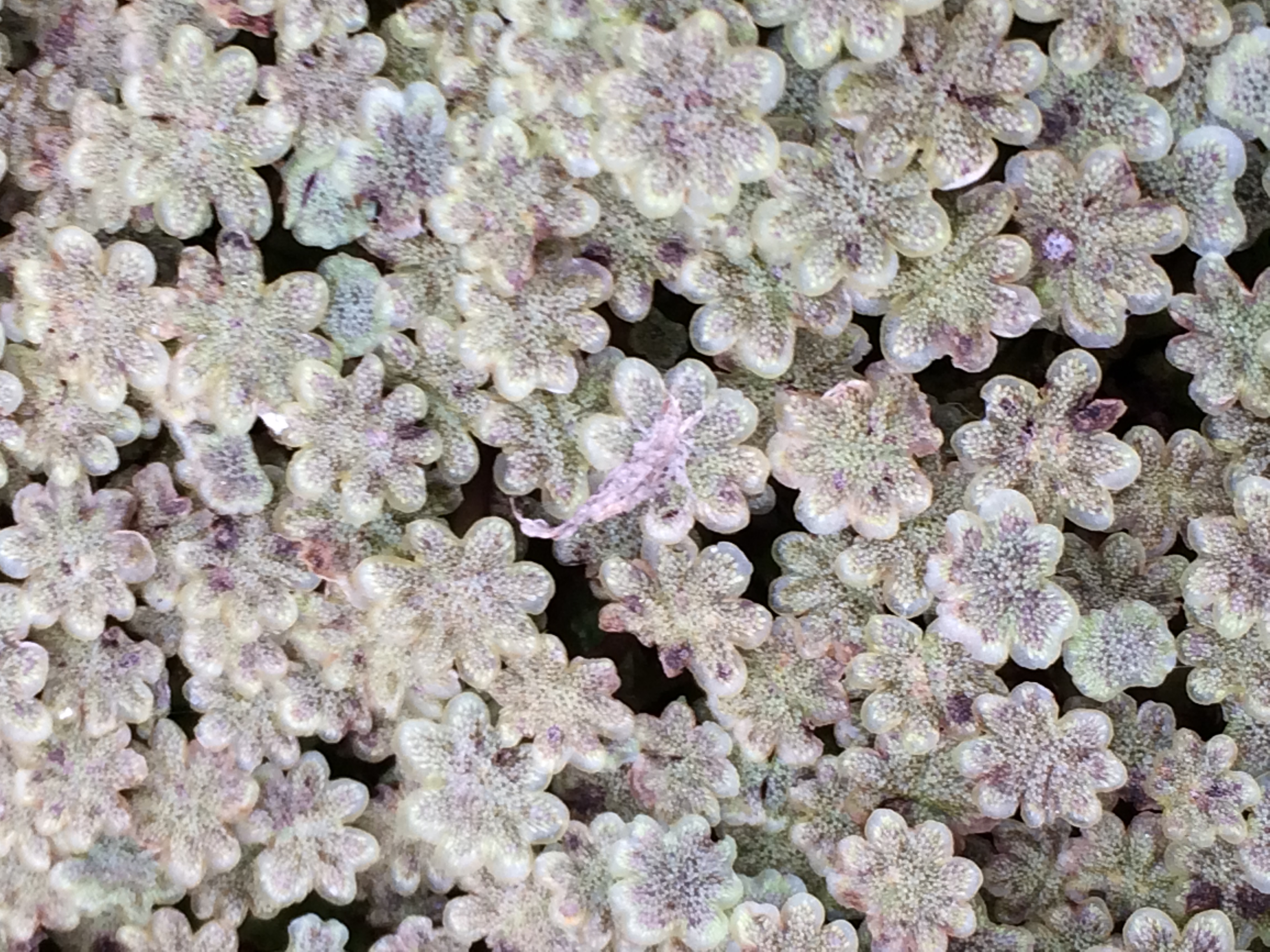
Pale pink pattern of male fruiting bodies of the common liverwort.

Pale pink rosettes of male fruiting bodies of Marchantia polymorpha.

A beautiful pattern on the mud.

Zoomed in image of the one above.

I stopped, thrilled to see an old  friend, the common liverwort (Marchantia polymorpha). Years ago as a graduate student in the Botany Department at the University of Texas at Austin I spent hours looking at slides of every aspect of the life cycle of this primitive, nonflowering plant under the tutelage of the great botanist Professor Harold C. Bold. He was a stickler for life cycles, and this plant has several ways of reproducing itself.

A view of  the female umbrellas of the common liverwort.

A view of the female umbrellas of the common liverwort.


Zoom-in view of photo above.

Zoom-in view of photo above.


View of gemmae cups, which are a means of asexual reproduction. Sometimes called splash cups, the they hold little balls of tissue that splash out in the rain, spreading the plant vegetatively rather than sexually.

View of gemmae cups, which are a means of asexual reproduction. Sometimes called splash cups, the they hold little balls of tissue that splash out in the rain, spreading the plant vegetatively rather than sexually. (I apologize for the focus, but I find it hard to hold my iPhone steady while on my hands and knees with the dogs breathing down my neck, intensely interested in what I am doing.

I walk on, finding a patch with male and female reproductive structures near each other, which means that sperm may easily swim from the underside of their “umbrellas” to the underside of the female “umbrellas,” where sexual union may take place if circumstances (like water) are conducive. Liverwort “love” results in a very little plant, the sporophyte, which only lives on the underside of the female umbrella for a short time, producing spores. There are further explanations about “life cycle” and “alternation of generations” and “haploid vs. diploid” that I could delve into but will dash on instead to basic liverwort stuff.

Male and female reproductive structures relatively close together. Gemmae cups apparent also.

Male and female reproductive structures relatively close together. Gemmae cups apparent also.


The “body” of a liverwort is called a thallus, and is considered primitive because there is nothing much to it at first glance, or second glance, or third glance. A thallus looks like the underside of a very skinny old green bathtub mat, the kind that has suction cups.  Or maybe I should just say that spreading thalli look like pond scum that has found its way to land, which is probably what happened millions of years ago. They do not stand. There is no water-conducting or structural tissue in the thallus. Only the reproductive structures lift themselves from the horizontal. There are so many wondrous aspects of liverwort biology that I could go on about, but I know that blogs are better short than long. I went home and dug up some of my liverwort literature. There is the grand three-volume The Hepaticae and Anthocerotae of North America by Rudolf M. Schuster.

The classic

The classic three-volume The Hepaticae and Anthocerotae of North America by Rudolf M. Schuster.


Volume I.

Volume I.

Volume I.

Volume II.


Volume III.

Volume III.

I have photographed the covers because these are Schuster’s own illustrations (the Foreward notes that he drew 98% of the illustrations in the three volumes) to give a sense of the beauty of these minute plants. In the Preface Schuster writes that he traveled 175,000 miles over the 20 years of his research. His travels took him from Key West, Florida to Ellesmere Island, part of the Qikiqtaaluk Region of Nunavut, a Canadian territory–“within 80 miles of the northernmost edge of land.”  He wanted to see each species as a “living, dynamic entity.” I, a native of the Appalachian mountains, take particular interest in his comment that there is a high degree of endemism in the southern Appalachians. His wife Olga typed and retyped his manuscript and critiqued his work. Professor Schuster  includes an epigraph for the book on a page directly  after the title page:

Quote used in prefatory material to Volume I.

Quote used in prefatory material to Volume I.

There is no epigraph for Volume II, but there is one for Volume III.

Quote in the prefatory material to Volume III.

Quote in the prefatory material to Volume III.

Schuster’s three volumes are a work of art and, as the epigraph above suggests, one good reason for lack of brevity is a textual appreciation for the diversity of flora and fauna found on planet Earth. I have learned that Professor Schuster only recently died, at 91, after a lifetime as a professor, world explorer, bryologist (one who studies mosses), botanist, and writer. Early in his career he studied at Cornell University, which is where I completed my graduate studies in botany, and not very far from where I am writing this blog. The scope of Professor Schuster’s three-volume work is daunting. For the beginner hepaticologist I recommend Non-flowering Plants, a  Golden Nature Guide. This is a wonderful series and I often go to one of their guides to get my bearings in some aspect of the natural world–minerals, spiders, seashells, fossils, ….

Non-flowering Plants, a Golden Nature Guide by Floyd S. Shuttleworth and Herbert S. Zin.

Non-flowering Plants, a Golden Nature Guide by Floyd S. Shuttleworth and Herbert S. Zin.

In defense of little plants, like the mosses and liverworts grouped in the plant family known as the liverworts, the eminentVictorian botanist and plant explorer Richard Spruce, who spent many years collecting, among other plants, the very beautiful leafy liverworts of South America, wrote:

The Hepaticae are by no means a ‘little family.’ They are so abundant and beautiful in the tropics, and in the Southern Hemisphere generally that I think no botanist could resist the temptation to gather them. In equatorial plains, one set creeps over the living leaves of bushes and ferns….In the Andes, they sometimes hang from the branches of trees in masses that you could embrace with your arms….I like to look on plants as sentient beings, which live and enjoy their lives–which beautify  the earth during life….When they are beaten to a pulp or powder in the apothecary’s mortar, they lose most of their interest for me. It is true that the Hepaticae have hardly as yet yielded any substance to man capable of stupefying him or of forcing his stomach to empty its contents, nor are they good for food;  but if man cannot torture them to his uses or abuses, …they are, at the least, useful to, and beautiful in themselves–surely the primary motive for every individual existence.” (epigraph to Schuster’s Introduction of Volume I)

I take to heart what Spruce says about the primary motive for existence–to be useful, and beautiful, to oneself at least. Motivated by his love of mosses and liverworts, Spruce explored, at great expense to his health, and in doing so found bitter bark quinine and introduced it to Europe. Liverworts are useful as well as beautiful. They are known to colonize burned areas, their thalli flattened on the soil like bandaids. Indeed, my husband said that he used RoundUp (it is a commercial nursery) along the fence line of the enclosure, so it should be no surprise to find liverworts there.


Seeing the liverworts reminded me of my days as a young botany student, when I thought I could learn everything about all the species in the plant kingdom (and other kingdoms) and be the richer for it–richer in appreciation for the “endless forms most beautiful” (Darwin) that grow around us.”Studying little things”–I did a great deal of that for a number of years, peering into various kinds of microscopes in the laboratory and on my hands and knees in the field. I am the richer for it, or I would not have noticed, and respected so greatly, what was going on in the mud along the fence line of the enclosure at the tree nursery.


P. S. If anyone does want to know more about the life cycle of the common liverwort, please let me know! And here is my homage to Professor Harold C. Bold of the University of Texas at Austin. There is probably no book in my beloved library that I have ever read so closely as his text:

My copy of the Third Edition of Professor Harold C. Bold's Morphology of Plants.

My copy of the Third Edition of Professor Harold C. Bold’s Morphology of Plants.

I underlined almost every sentence, in pencil, as a young graduate student. Unfortunately, the  more “primitive” a plant (I put primitive in quotes because sometimes a seemingly simple organism is actually a reduced version of something that was once more ornate [elegance is often the result of the trimming of the extravagant), the more Dr. Bold expected that we students should be able to visualize and comprehend the significance of every cell in the plant body (the thallus mentioned above). It was a struggle for me then–the elaborate vocabulary (male umbrellas were anteridiophores and female umbrellas were archegoniophores), the strange convolutions of the life cycle.  I, a human being, wandered in a marvelous botanical garden.

Pages from Bold's Morhology of Plants, illustrating the cellular anatomy of the common liverwort.

Pages from Bold’s Morhology of Plants, illustrating the cellular anatomy of the common liverwort.

Falconress: A Facebook Avatar

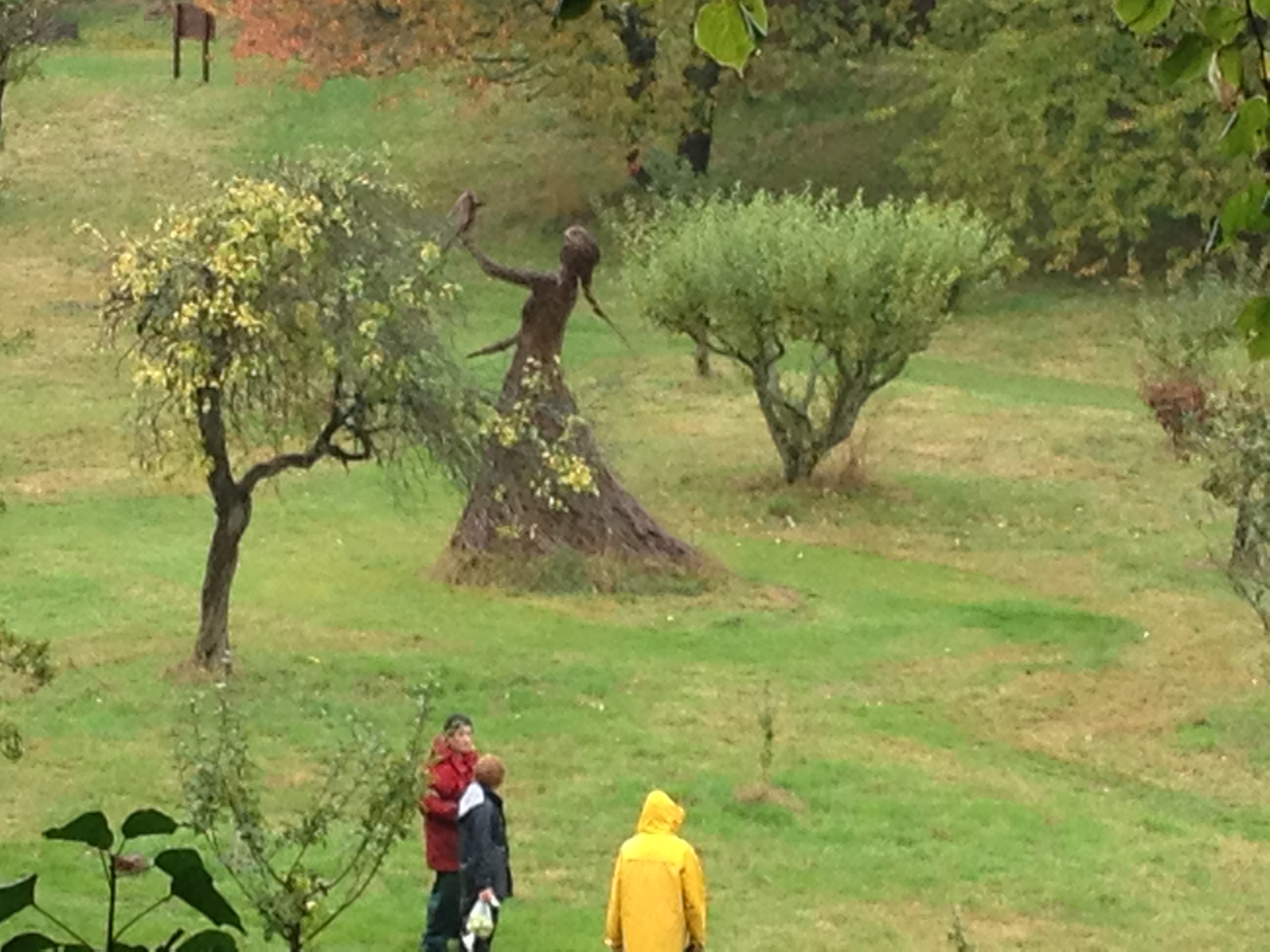
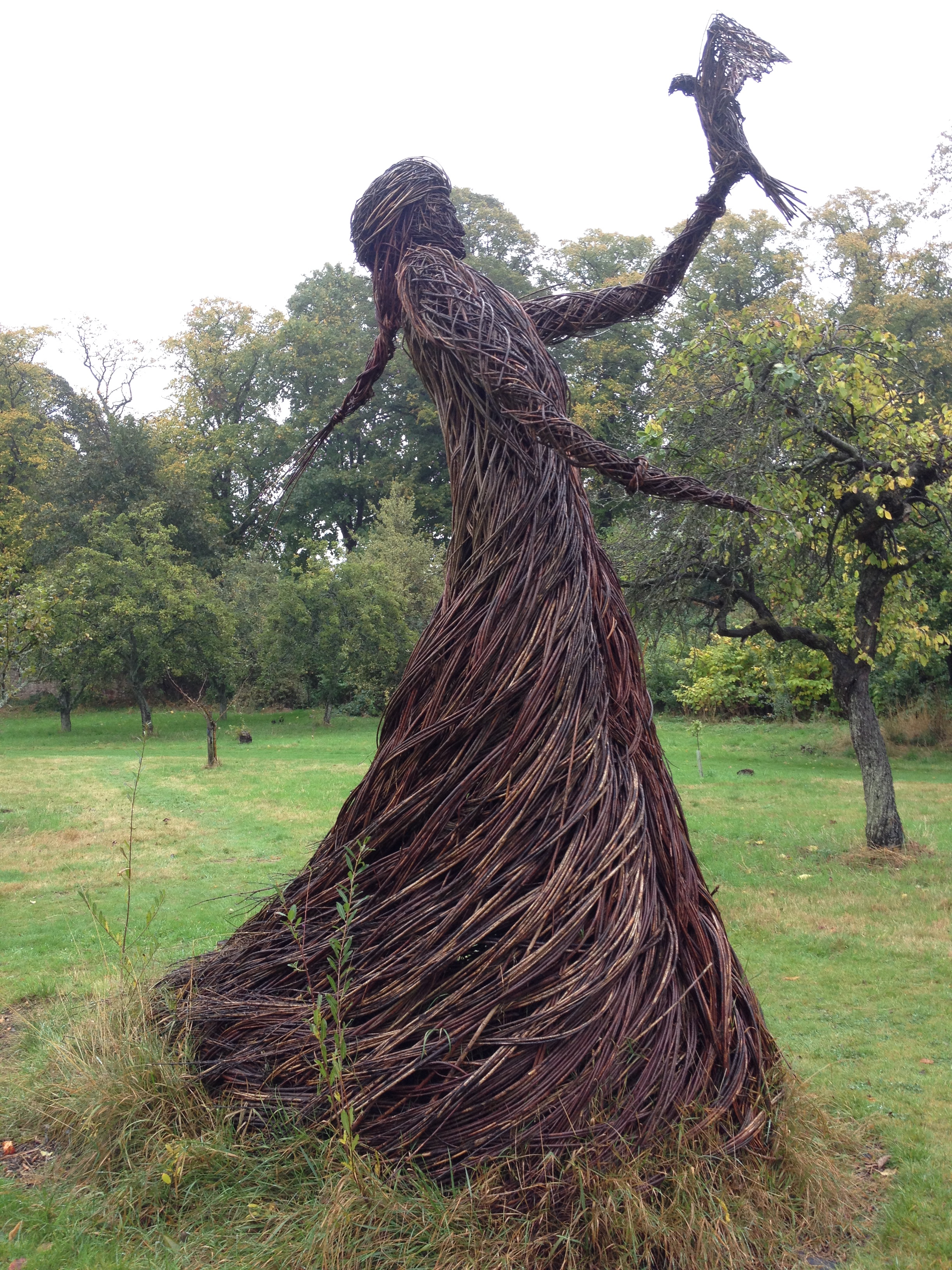
Trevor Leat's sculpture of a falconress (perhaps meant to be Mary Queen of Scots) at Falkland Palace, Kingdom of Fife, Scotland.

Trevor Leat’s sculpture of a falconress (perhaps meant to be Mary Queen of Scots) at Falkland Palace, Kingdom of Fife, Scotland.


My friend and professional mentor Jill Swenson had reminded me once again—“no egg heads on Facebook.” I figured it was time to take action. I have been slow to join Facebook because I struggle with reticence, but having found Twitter a treasure trove of interesting associations and even new windows into the natural world, I decided to dive into Facebook and solve the egg head problem.

But, what image should signify my presence in the world of Facebook? Myself? A photograph of me taken 30 years ago recently turned up. I could photograph that with my iphone and use it, but it seemed so vain to use my youthful unblemished self. On the other hand, my newer, older, self is less pleasing—the neck wrinkles, the liver splotches, the creases around the eyes. I love old faces, but mine is in transition, a work in progress, not fully perfected. When I have, hopefully, reached the fullness of true old age, I intend to love my wrinkles.


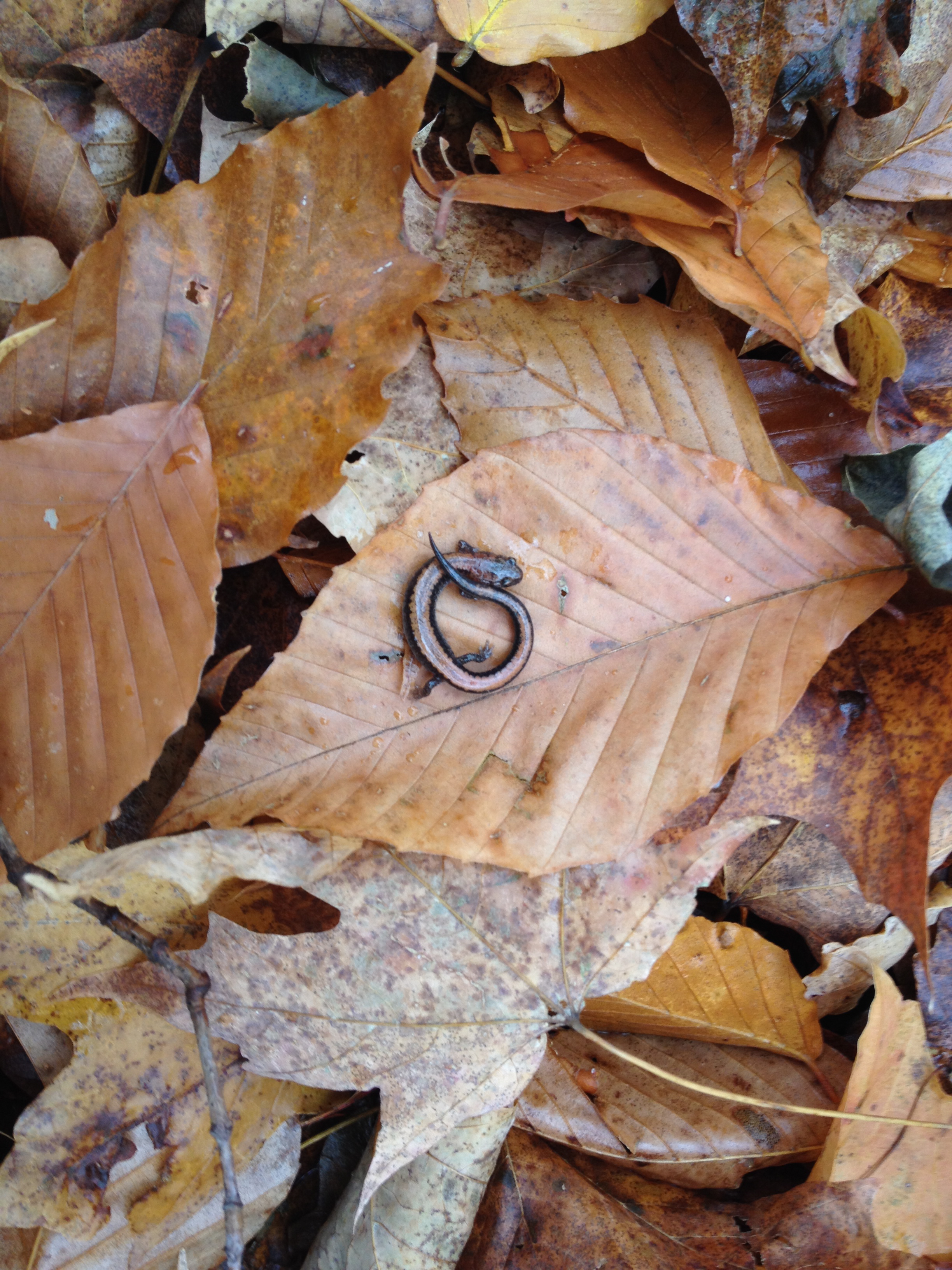
Salamander on fall leaves.

Salamander on fall leaves.


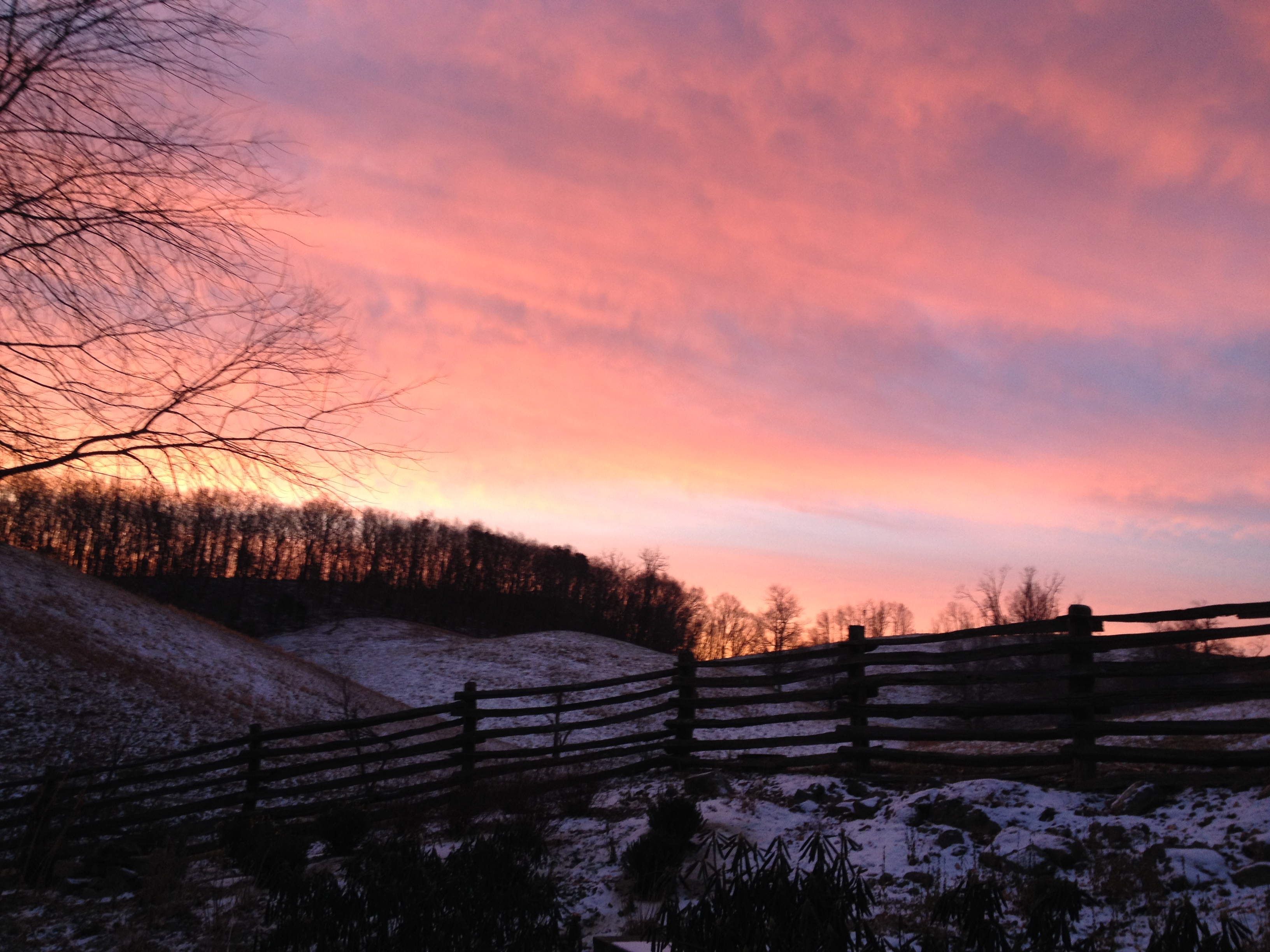
I started looking through my digital photos, quickly, because the whole idea of choosing an image, the opposite of an egg head,  made me nervous. A lovely salamander appeared, coiled like a rune or a Buddhist symbol on overlapping, damp leaves. So lovely, but perhaps indecipherable when reduced in size. I stopped at a beautiful purpley red sunset. A cliché?

Sunset in Vinegar Hollow, Highland County, Virginia.

Sunset in Vinegar Hollow, Highland County, Virginia.

A sunset should never be taken for cliché, but, out of context, brought into Facebook as avatar, no, I would not want to reduce the beauty of any sunset to the level of cliche–the danger of representation at the hands of an inept human. Then the pond at Seven Fields appeared. Countless times I have tried to catch reflections in this pond:  the crooked tree, the branches, the necks of the geese. I love this tree and this pond, but reduced, perhaps not the tribute I would most wish.

Pond, trees, and ducks.

Pond, trees, and geese at spring-fed pond, Seven Fields, Enfield, Ithaca, New York.


Then I moved into photos taken on a recent trip to Scotland to see younger son, the golfer, who was studying at St. Andrews, Scotland for a semester.

The historic golfing landscape of the Old Course at St. Andrew. (Photo credit: David Fernandez)

The Old Course at St. Andrews, Scotland. (Photo credit: David Fernandez)

While the golfer was studying, writing gobbets, my husband and I roamed the Kingdom of Fife, happening upon Falkland Palace, and there she was, the one I am calling the Falconress, the work of Scottish sculptor Trevor Leat, who creates large, expressive sculptures made from many varieties of willow that he grows organically. Some of his large pieces are burned at festivals, like Edinburgh’s Hogmanay celebration.

Trevor Leat's willow falconress.

Trevor Leat’s willow falconress.


Mary Queen of Scots spent a few happy years at the palace as a young woman. We saw her tennis court (she was an avid player) and her ornately carved bed. However, after seeing her death mask, it was a relief to go outside, though it was a rainy, misty day in mid-October. Tall dark-brown stalks of giant delphiniums tilted against a long stonewall. Giant cedars towered luminously, blue-green in the mist. A small greenhouse glowed with climbing geraniums in all shades of red. Two large garden beds were entirely planted with pale lavender-grey phacelia, a species good for soil improvement the sign said. Falkland has received awards for being one of the most floriferous villages in Scotland. The perennial beds of Falkland Palace must be one its glories in summer.


Close up of the woven willow.

The many hues of  the sculpture’s weathered willow branches.


The gallery of sculptures, posted on Leat’s website and available elsewhere, shows that he is drawn to archetypal forms, like the stag and the human female. Leat’s female figures have flowing lines and generous proportions, and their earthen colors, golden browns, beiges, and greens, glow in an outdoor landscape.  Although his women are tall and robust, their arms taper to delicate wisps. Apparently some of the sculptures bud out in spring, I suppose because some of the willow branches are still green enough or root into the ground a bit. Willow sculptures in the outdoors transform gradually, broken down by sun and rain, often just lasting five years.


The falconress trails a verdant gown.

The falconress leaves a verdant train in her wake.


A history of Falkland Palace states that the Stewart monarchs used the palace to practice falconry, so it is fitting that Leat’s sculpture of the Queen shows her in the attitude of falconress. A brief perusal of the life of Mary Queen of Scots is enough to put one off a royal life for an eternity. The intrigue, the double dealings, the difficult men, it was all dastardly and over the top. She handled the beheading, apparently, with equanimity and grace, thankful perhaps that her life was finally over. During her imprisonment she was allowed to fly a merlin in and out her window. This must have been a pleasure, being so close to a wild creature, a vicarious experience of freedom. One can imagine her listening to the swoosh of feathers through the air at take off and her watching the bird disappear into the sky.

I have never been attracted to falconry, though I am a great fan of T. H. White’s The Once and Future King, where the art of falconry figures,  and The Goshawk, an account of White’s tempestuous relationship with a young hawk he tried to “tame,” his first, and last, attempt at being a falconer.  For a current account of falconry practiced in North America, see Rachel Dickinson’s book Falconer on the Edge:  A Man, His Birds, and the Vanishing Landscape of the American West. White’s Merlyn is a great fictional character. He advised (my paraphrase):  when you are sad, learn something. This is good advice.

Some historians speculate that falconry began between 4000 and 6000 BC.  A Japanese historical narrative of 355 AD, Nihon-shoki, states the first falconer in Japan was a woman, whose daughter followed in her footsteps. Women in 19th century England were said to outshine men in proficiency. The word “falconress” is not in the OED, however. The only use of the word I have come across is in a poem by Robert Duncan called “My Mother Would Be a Falconress.” The poet compares the relationship between mother and child to that of the falconress and her falcon. It’s a dark, moody poem reflecting some of the strangeness of the relationship at the heart of falconry–and at the heart of parenting. Nevertheless, Leat’s sculpture appeals to me. Both bird and woman appear poised for flight. She is both sinew and grace. How lovely to be made of willow!

A final view of Trevor Leat's falconers.

A final view of Trevor Leat’s falconress.