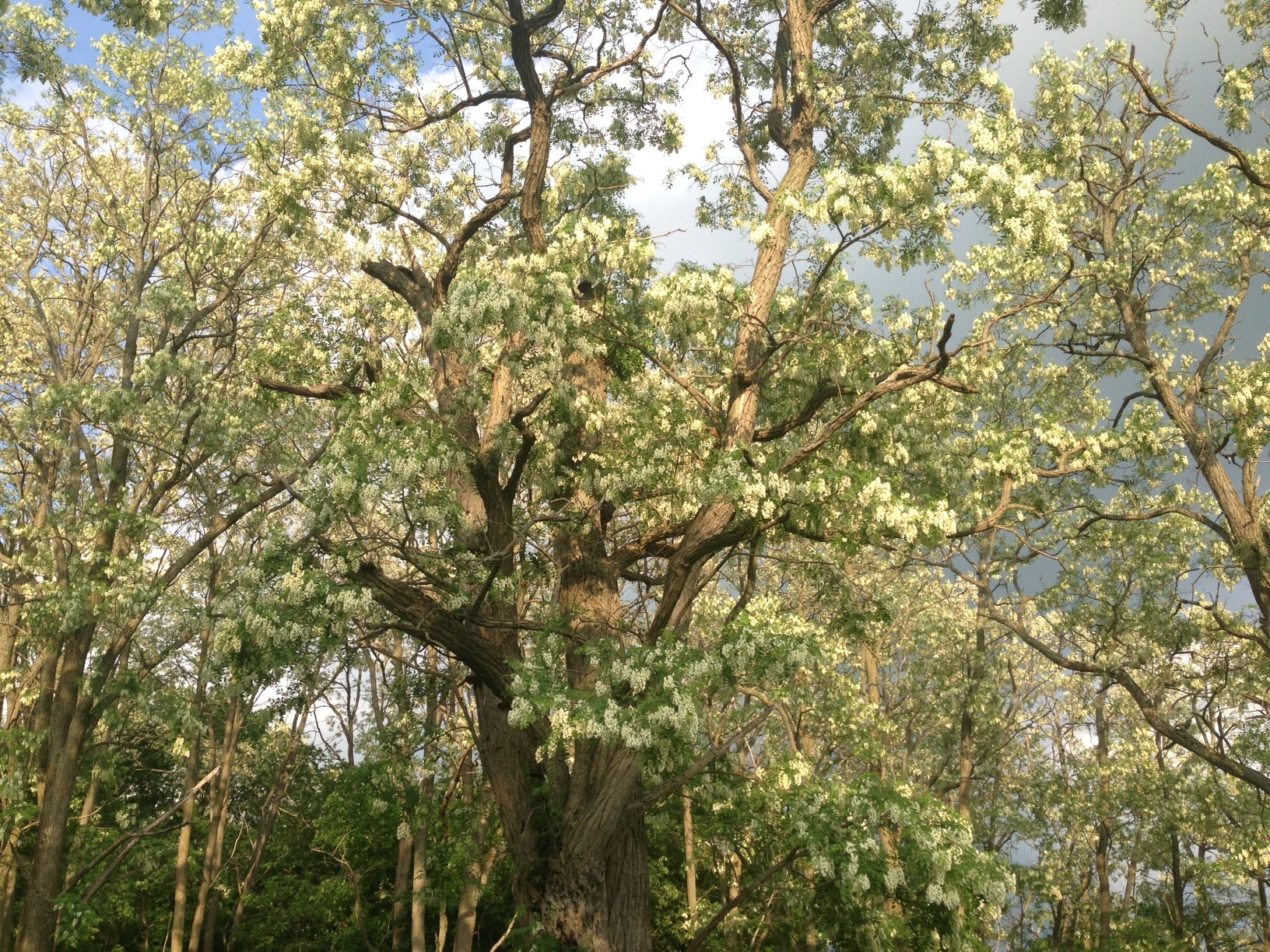
The “Locust-Tree of Virginia”: May-June, Ithaca, New York

SpreadingBlackLocustCW

Black Locust at Seven Fields in Enfield, NY (Photo credit: Charlotte Whalen)

In 2007 black locust trees (Robinia pseudoacacia L.)  in Ithaca, New York, flowered profusely. I walked about admiring them, did some research, and wrote an essay, which I stored on my computer because I had nowhere to send it. It has happened again. The flowering of all of the black locusts in Ithaca in 2013 is noteworthy, divine in fact I would say.

Now that I have a blog, which is in part for me a place to admire, explore, and lament upon (not too often I hope) topics that interest me as a naturalist and writer, I have updated my previous piece, and in doing so experienced the black locust in unexpected ways.

Botanists have long studied and described noteworthy flowering patterns in trees. One pattern for a flowering individual is the production of flowers over an extended period, while another pattern is the production of many flowers all at once over a short period of time. The latter is called mass flowering. A plant’s flowering “strategy” makes a difference when it comes to attracting pollinators. Pollination is necessary to ensure survival of the species that relies on seed production to reproduce.
IMG_3469

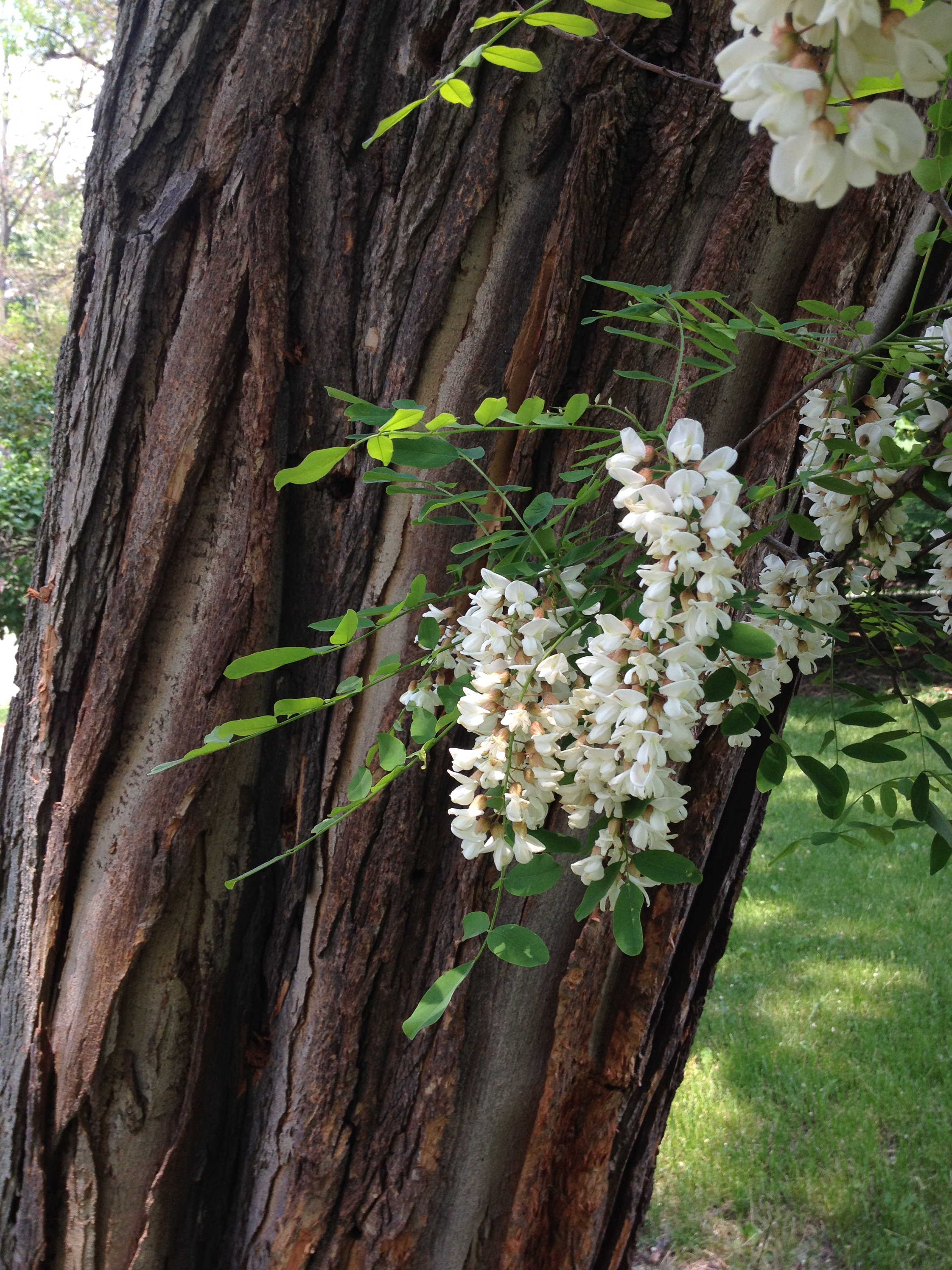
Black Locust Blossoms and Trunk

Sometimes all the individuals in a population of a species inhabiting a wide area flower all at the same, and this is also called mass flowering. The term is often particularly applied to the very tall dipterocarp trees of Southeast Asia, which display communal, synchronous flowering. What is unusual in this behavior is that many different species of dipterocarp trees flower at the same time. It is an interspecies rather than an intraspecies phenomenon. (An analogy might be that it’s like a group of ethnically diverse people in 10 counties in New York State deciding to get married at the same time? I have not thought this analogy through, but offer it as a stimulus to further thought on the reader’s part.)

An even more unusual, and different, case of mass flowering occurs in bamboos, which wait a long time to flower (sometime 100 years), flower all at once, and then die, which is not a good time for the panda bears.

The case of the black locust in 2007, and now in 2013, doesn’t fit any of these scenarios—because the flowering period is normal, i.e., not a short burst or a long burst. It is simply a very good year for flowering and all the black locusts are into it. Whether the physiological basis relates to optimal conditions in the fall (when many flower buds are “set” in plants), or to optimal conditions in the spring, is beyond my botanical knowledge at this point. What I have observed now is that ALL the black locust trees are flowering, from gaunt, misshapen “elders” to graceful, young “adolescents.”
IMG_3468

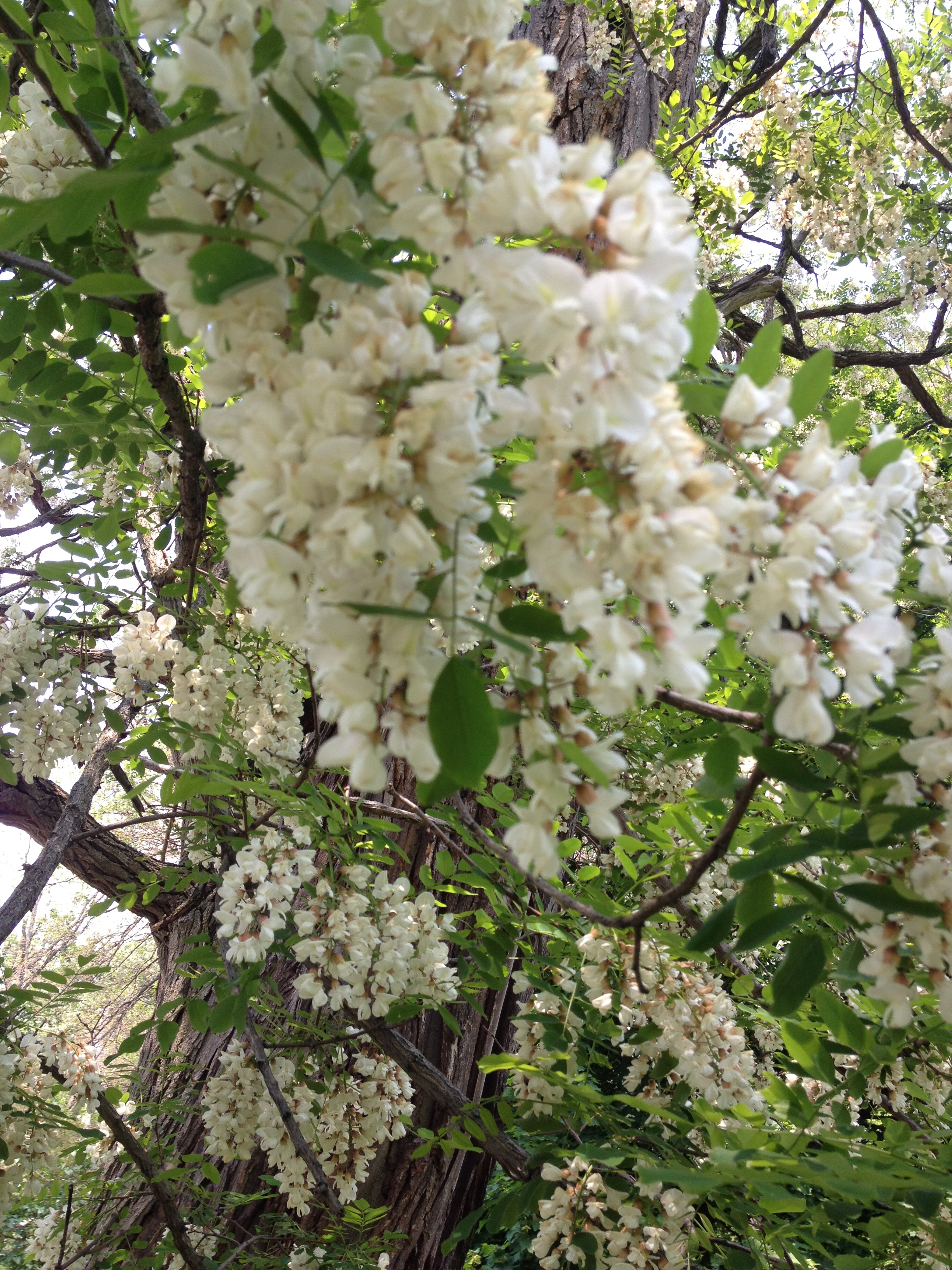
Note profusion of black locust blossoms

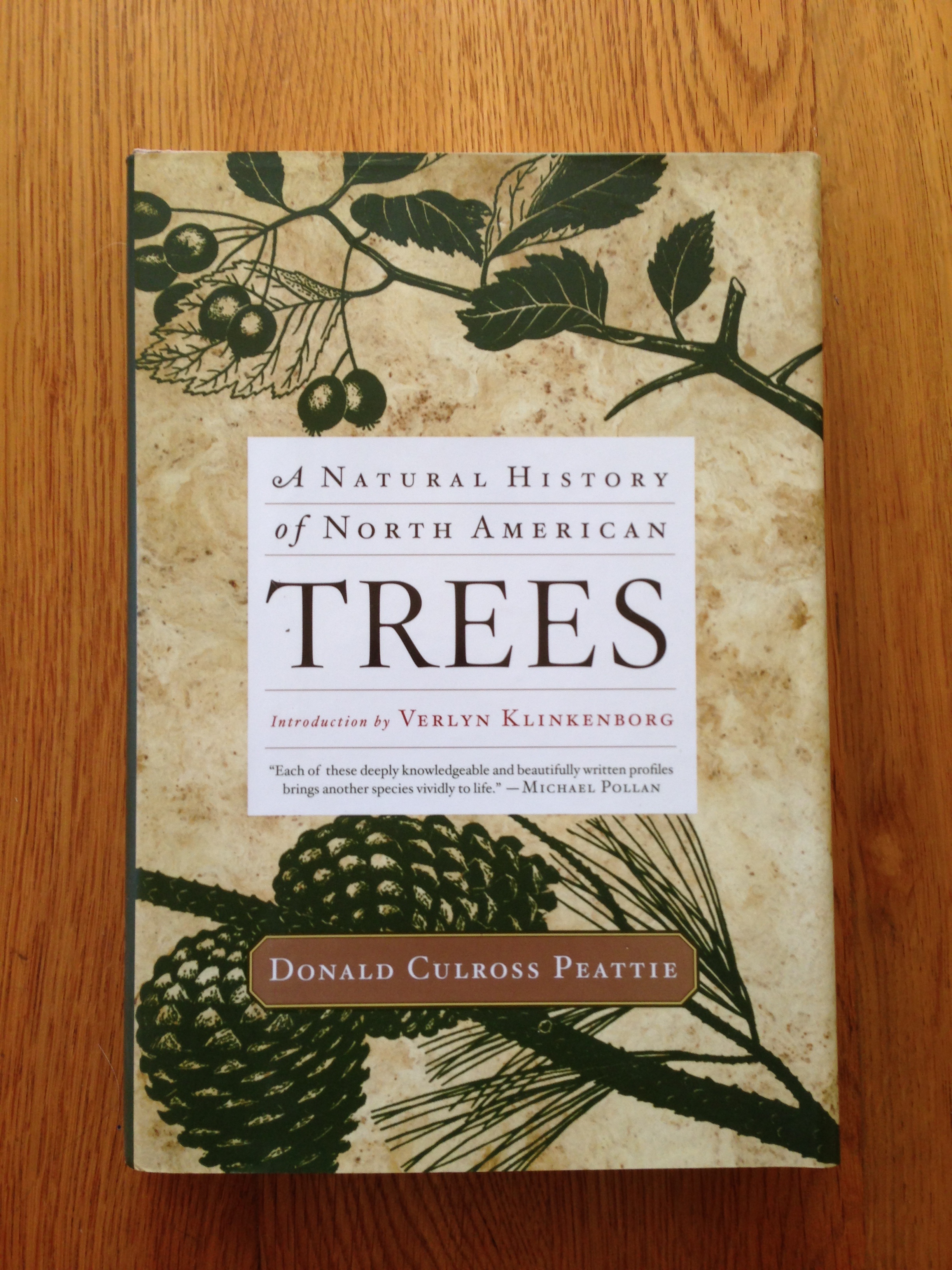
The black locust is a true American hero. Native to the southern Appalachians and the Ozarks, it was the first North American tree species to find its way to Europe via seeds sent from Louisiana by either Jean Robin, herbalist to Henry IV of France, or his son Vespasien Robin, between 1601 and 1636. Donald Culross Peattie, one of the very best writers about North American trees, gives an informative account in his A Natural History of North American Trees, originally published in two volumes in the 1950s and reprinted by Houghton Mifflin with an introduction by Verlyn Klinkenborg in 2007. Everyone in the United States should have a copy–and read it. The trees of North America have sustained an immeasurable part of American culture and civilization.
PeattieCover

Photo credit: Charlotte Whalen

Peattie, who made an interesting transition in his educational life, from being a student of French poetry at the University of Chicago to being a student of the botanist Merritt Fernald at Harvard, describes the ways in which the history of trees and people intersect. America could not have sustained itself without native trees offering support to the early colonists, who were a curious mixture of the privileged and the down and out, according to Peattie. Not a handy lot as far as the building of shelters.

He writes that the early settlers at Jamestown had no idea about how to construct a log cabin (that was an innovation we owe to the Swedish apparently).  A century after the founding of Jamestown, the early Virginians were still struggling. Peattie quotes Mark Catesby, a British naturalist, who described what was going on at the time: “ ‘ Being obliged to run up with all the expedition possible such little houses as might serve them to dwell in, till they could find leisure to build larger and more convenient ones, they erected each of their little hovels on four only of these trees (the Locust-tree of Virginia), pitched into the ground to support the four corners; many of these posts are yet standing, and not only the parts underground, but likewise those above, still perfectly sound’” (Peattie, p. 336).  The black locust, a tree that supported a country in its imperfect infancy: hovels supported by posts of stout heartwood.

Black locust trunks are almost entirely heartwood, which is of very high quality in terms of stiffness, durability and strength. Peattie writes, “It is the most durable of all of our hardwoods; taking White Oak as the standard of 100%, Black Locust has a durability of 250%.” Unfortunately, in this country a little boring beetle (Megacyllene robiniae) has ruined the reputation and usefulness of black locust lumber. Populations in Europe are free of the infection, however.

Contentious William Cobbett became the great black locust seed entrepreneur of the early 1800s. He started a plantation on Long Island to supply the British Navy with treenails.The wood makes supremely durable treenails, which were used extensively at the time in shipbuilding. In water, they swelled into a tight fit and never rusted. The winning of the War of 1812 has been attributed to the strength of the winner’s treenails.  Farmers today still fight over a good source of black locust posts for fences. Read Peattie to find out why Cobbett had to flee the United States and why he took the coffin, and corpse, of Thomas Paine with him.

In my research I found a Hungarian website with an article by Bela Keresztesi, Director-General of the Forest Research Institute at Frankel Leo University in Budapest. He writes that black locust and poplar are tied for second place as most extensively planted in the world (eucalyptus is in first place). There are about a million hectares of manmade black locust forests on the planet (a fact I gathered in 2007, but have not verified in 2013).

But what is new in 2013 for me and the black locusts? Although having lived more than 30 years in Ithaca, my heartwood was formed in Virginia. Maybe that is why I feel such an affinity to the “Locust-tree of Virginia.”  I do know from my experience growing up in Vinegar Hollow in Highland County, Virginia, that locusts often seed themselves into groves. In other words, the peas from their pods (they are a leguminous species) don’t stray too far from the parent trees. The seedlings grow up in near proximity to the parents, and thus groves are formed. The farm in Vinegar Hollow has a very old locust grove, with trees gaunt and blasted by time and weather, and a young grove high on Stark’s Ridge where slender young trees vie for the sky light. I remember walking in the old grove with my father. He loved the locust trees. I see his fingers touching the places where sheep rubbed their rumps against the deeply ridged trunks. He pointed out to me how the lanolin of their wool burnished the bark. That is the grove that will live in my memory forever.

In 2013 I decided to do less Internet research and more gathering of information from direct experience, having been influenced by a recent reading of naturalist Robert Michael Pyle’s essay “The Rise and Fall of Natural History,” whose subtitle is “how a science grew that eclipsed direct experience.” He laments the loss of bodily experience outdoors in the company of other species in a nonmanufactured landscape. Somehow I had to get closer to the black locusts of Ithaca.
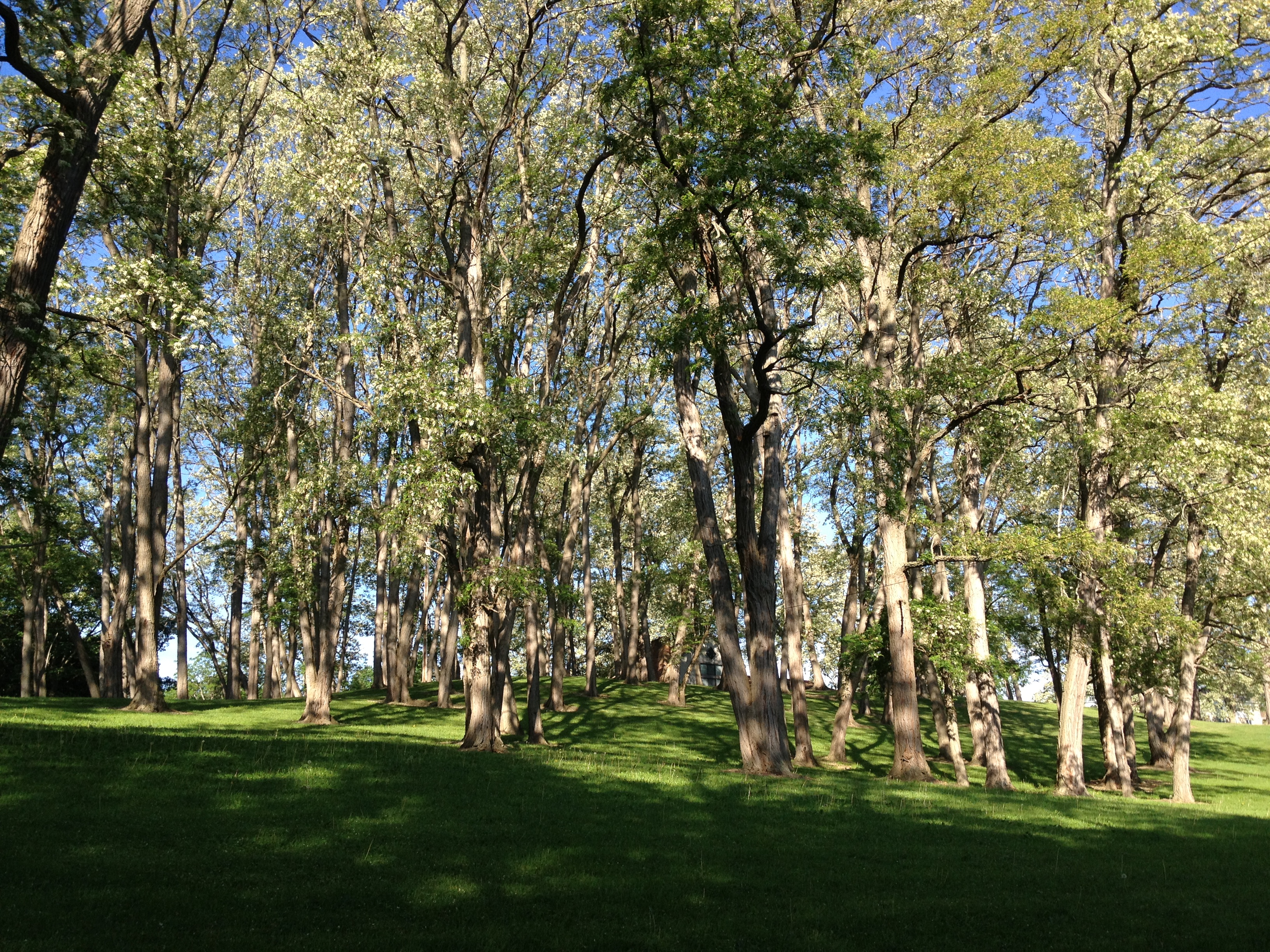
IMG_3522

Black Locust Grove on a Bright Morning (near corner of Bundy Road and 96).
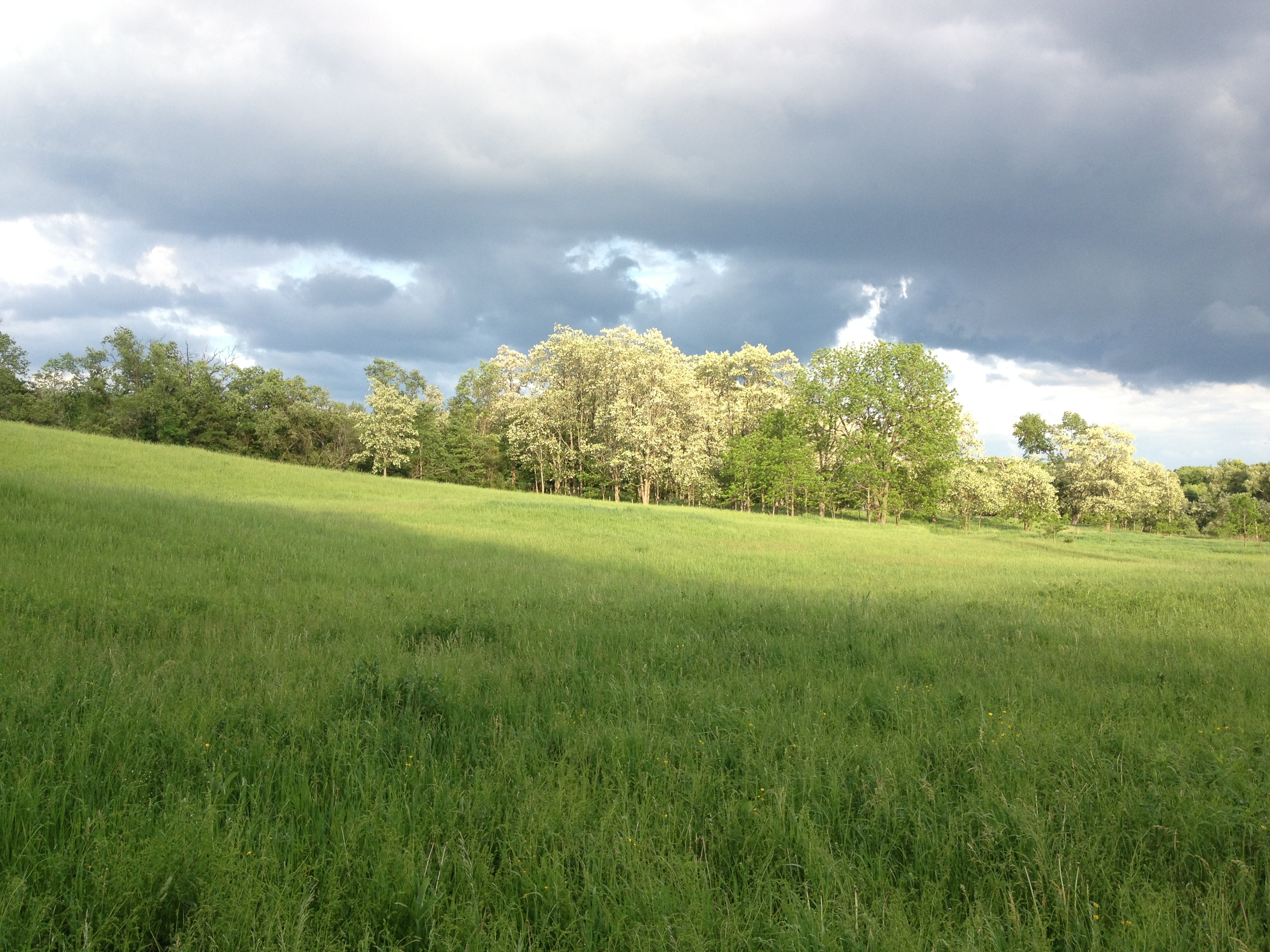
IMG_3541

Black Locust trees from a distance at Seven Fields in Enfield, NY

There is a grove that I have admired for years at the corner of 96 and Bundy Road. This past Saturday morning I decided to try a little paparazzi-style photography. At 7:30 am I drove up a long driveway to get an overview of the grove, realized it was a personal residence, and so retreated to the main highway, 96, and parked in a pull off area and clambered into a ditch and up a steepish hillside, and thence to a closer view. The light played over the grass at ground level and the trunks of the trees, creating sinuous bands of dark and light. Graceful and commanding, the trees owned that hillside and the landscape. The land was theirs, and the sky also, it seemed as from my vantage point the branches grew up, up, and up into the blue sky and white clouds. I stood there in awe, though I was awkwardly situated, worried that I might have touched poison ivy in the ditch. I don’t mean to undercut the beauty of my direct experience; it was exhilarating, but a case of poison ivy causes me to lose my sanity so I had to cautious. That was Saturday, early morning.

The end of the story concerns another kind of first-hand experience. Sunday night my husband came home with an armful of branches full of racemes of black locust flowers. Their fragance filled our kitchen. David was late for dinner as usual because he had been in the country mowing. Tractoring along the hedgerow beneath the black locust trees, hungry, he grabbed clusters of blossoms and ate them.  Caution set in quickly, however. Worried that he might be poisoning himself, he consulted Google on his cell phone and found that locust blossoms are edible! Our dinner of rice and leftovers took on a festive air. We threw handfuls of the blossoms on everything. Douglas, who is 20, refused to eat any on principle, but Charlotte, who is over 20 and interested in herbal remedies, began ingesting flowers enthusiastically. She even found a recipe for black locust soup! They say one way of understanding a species is to eat it—with reverence and with love.
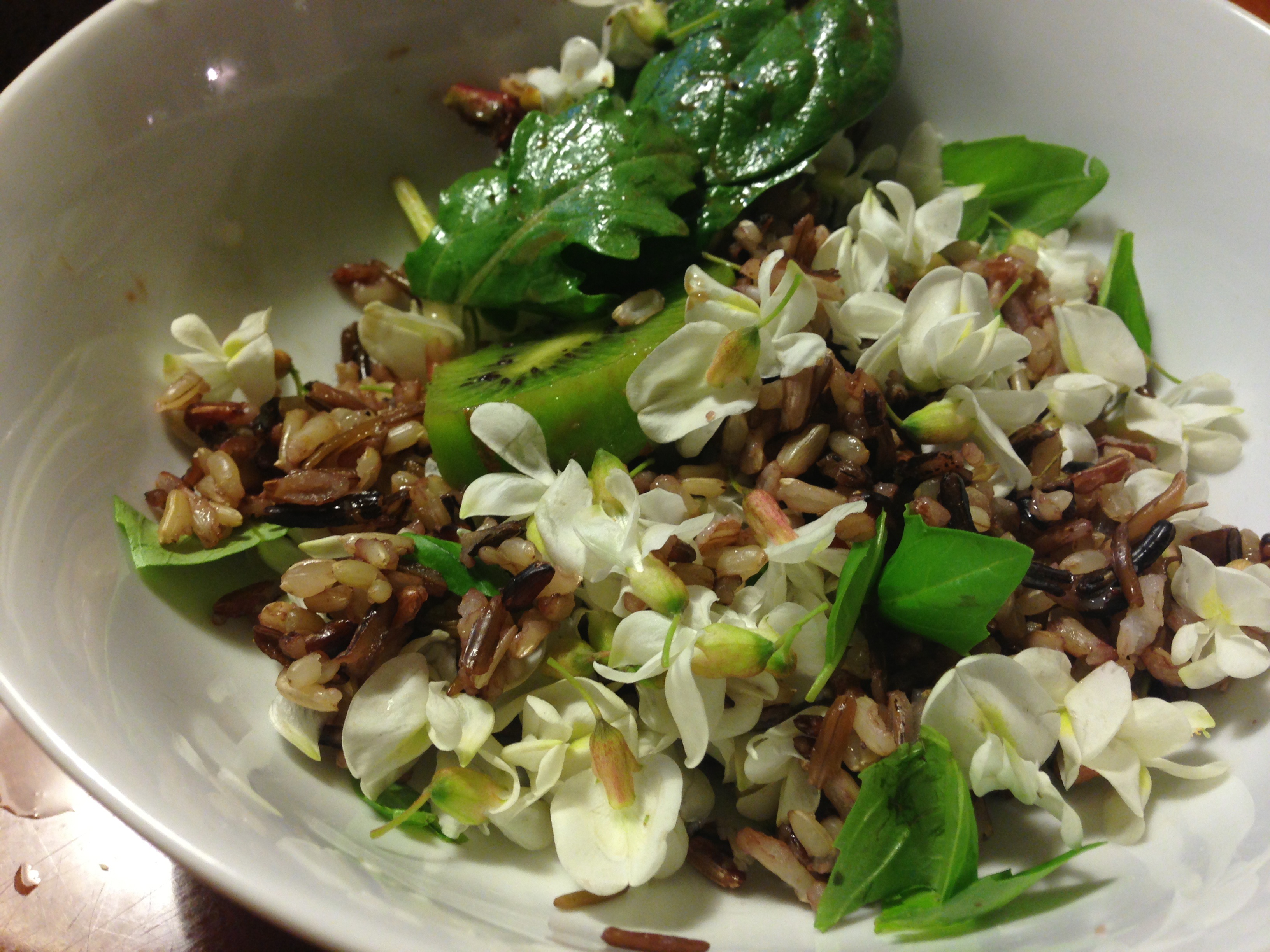
BlackLocustFlowerSalad

Black Locust Flower Salad (Photo credit: Charlotte Whalen)

BlossomsReady

Black Locust Blossoms (Photo credit: Charlotte Whalen)
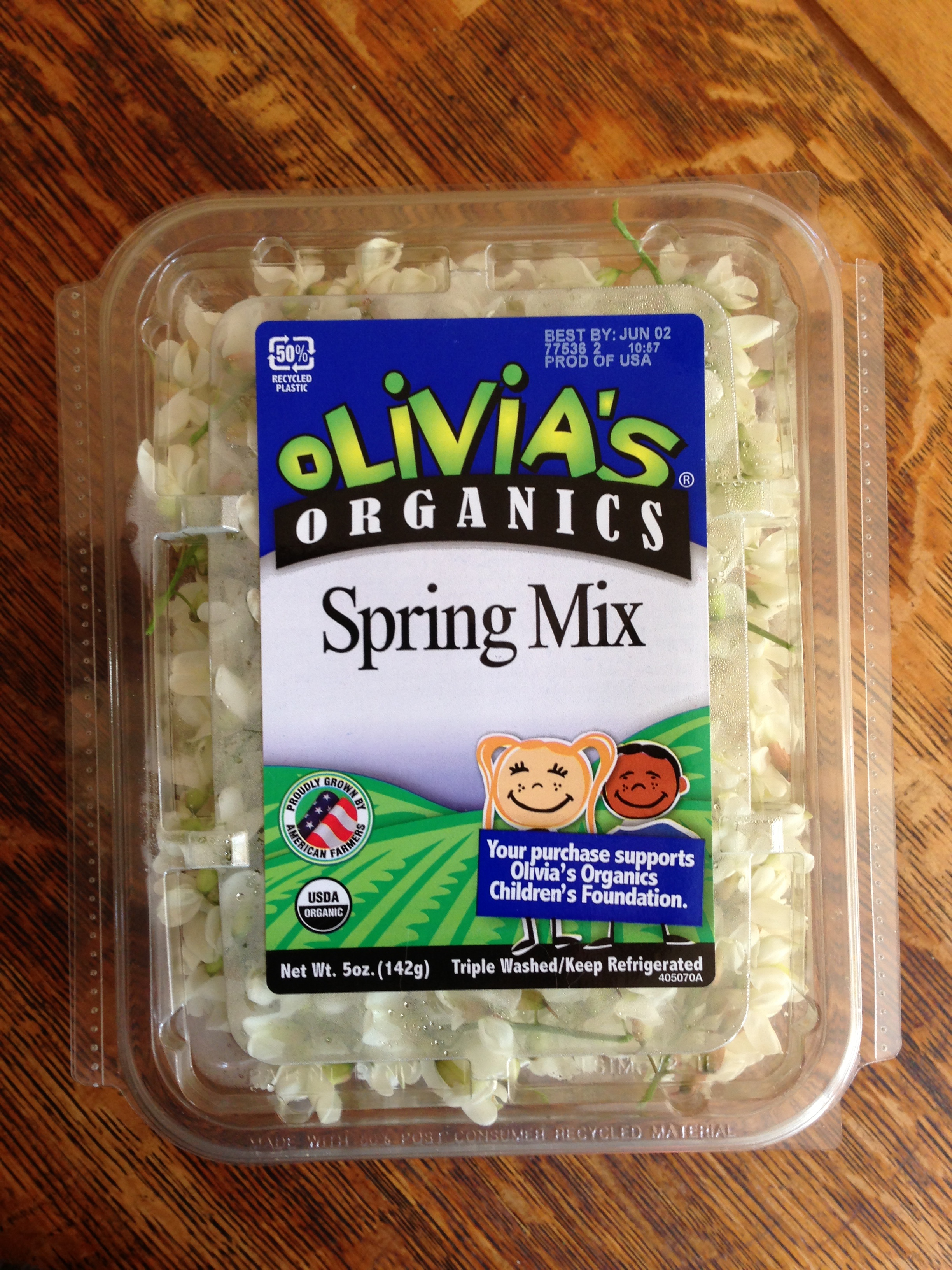
BlossomsSpringMix

Black Locust Blossoms Nicely Packaged for Future Use (Photo credit: Charlotte Whalen)

The next thing I must do is wander at night in a locust grove with a flashlight. Peattie writes that “Among the Locust’s numerous familiar charms, most famous is the so-called sleep of the leaves. At nightfall the leaflets droop on their stalklets, so that the whole leaf seems to be folding up for the night.” He has more to say on the subject, and I will too after some direct experience!

Note:  The noted naturalist Marcia Bonta (read her column “Flowering Trees of Spring” available on her website, http://www.marciabonta.com) writes about a fine display of black locust flowering on her Pennsylvania mountain top in 1999, the finest then in 27 years.
Taking Measurements on a Cucumber Magnolia Tree

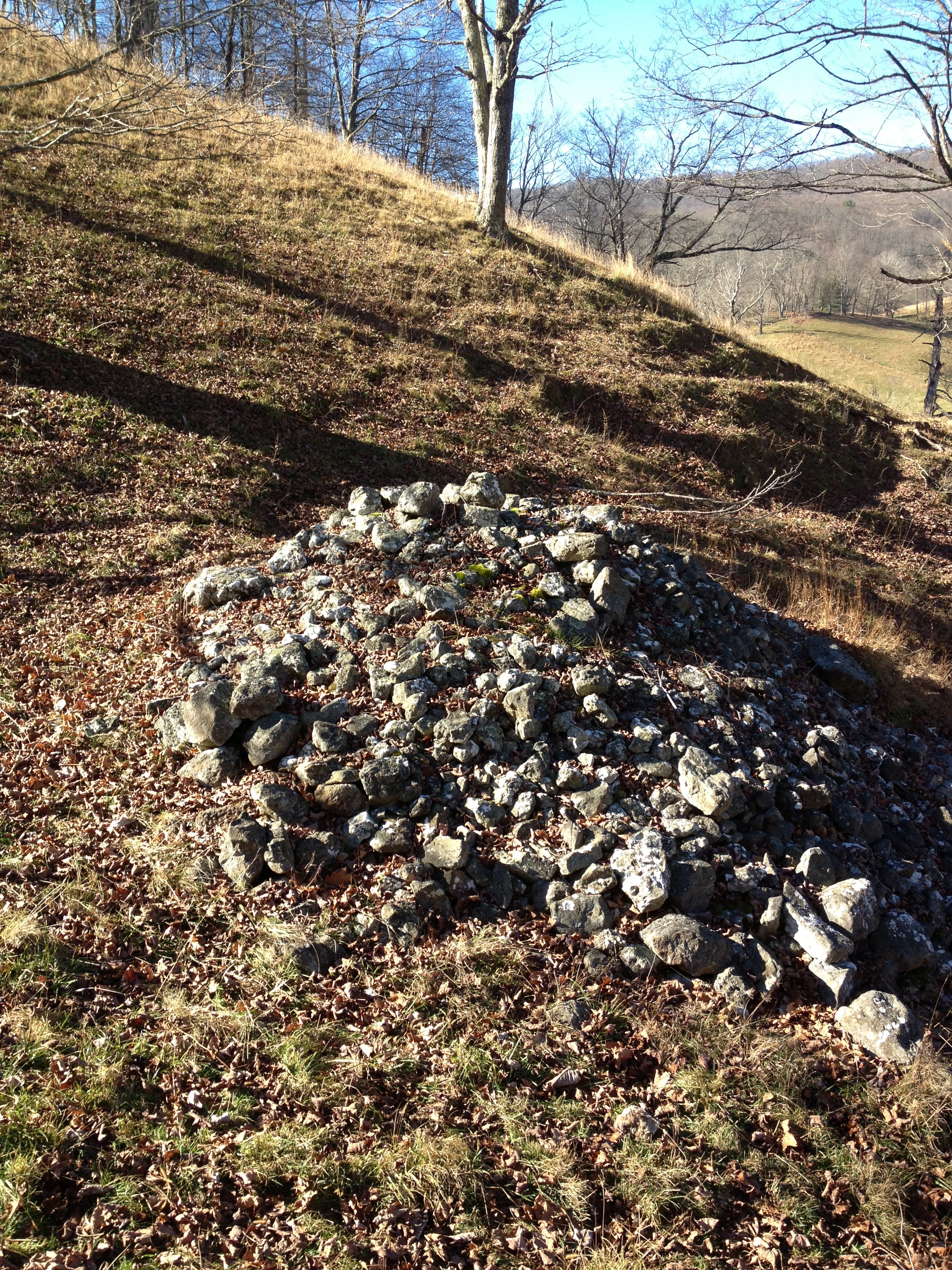
Old rockpile on the flank of Stark's Ridge.

Old rockpile on the flank of Stark’s Ridge.


“I found a ball of string. Let’s go to Stark’s Ridge and measure the cucumber tree.”

I looked at the ball of string my husband held in his hand. The string looked frail, dusty, and old, like so many of the things in my parents’ abandoned farmhouse. A ball of string, however, is always useful.

“And I found this metal tape measure,” he adds. It is the hard, roll-out kind that’s too stiff for wrapping around a tree.

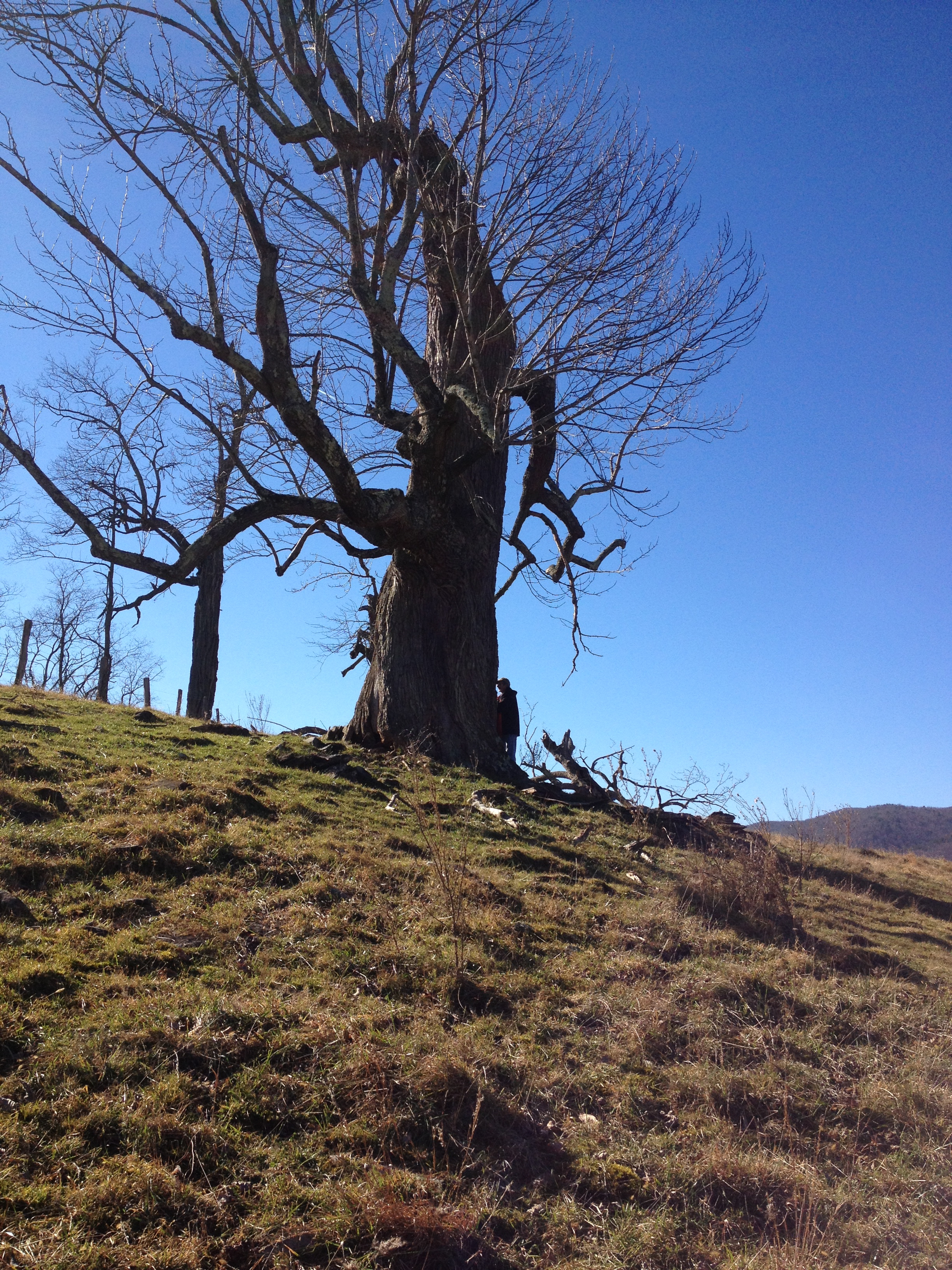
Violent windstorms in July 2012 had toppled trees out of the Earth in Highland County, Virginia, like toothpicks. The other old giant cucumber tree had lost its top, and a young giant had fallen over, its root bundle exposed to the air. Only a few cucumber trees remain on Stark’s Ridge, an elevated mountain crest full of limestone outcroppings.


Cucumber Tree

Cucumber tree with small figure of head measurer to the right of the trunk.


“Sure,” I said. My husband knows trees. He grows them from skinny little whips, He prunes them, watching their identifying features develop– leaves, flowers, buds, and bark. I think he has forgotten that I measured the tree a few summers ago and reported my measurement to him. However, I am willing to watch his methodology because I know that repeated measurements yield better data.

Getting to the top of Stark’s Ridge requires exertion, if not downright huffing and puffing. The top of the ridge, thankfully, is long, narrow, and pretty flat, interrupted only by the occasional beautiful rock pile and locust tree.  The pair of old giants stands on a gentle promontory, or undulation, of the ridge. From their trunks, one has a grand view of Vinegar Hollow and folds and folds of blue hills stretching for miles to the south and east. The view to the west is the solid flank of Back Creek Mountain.


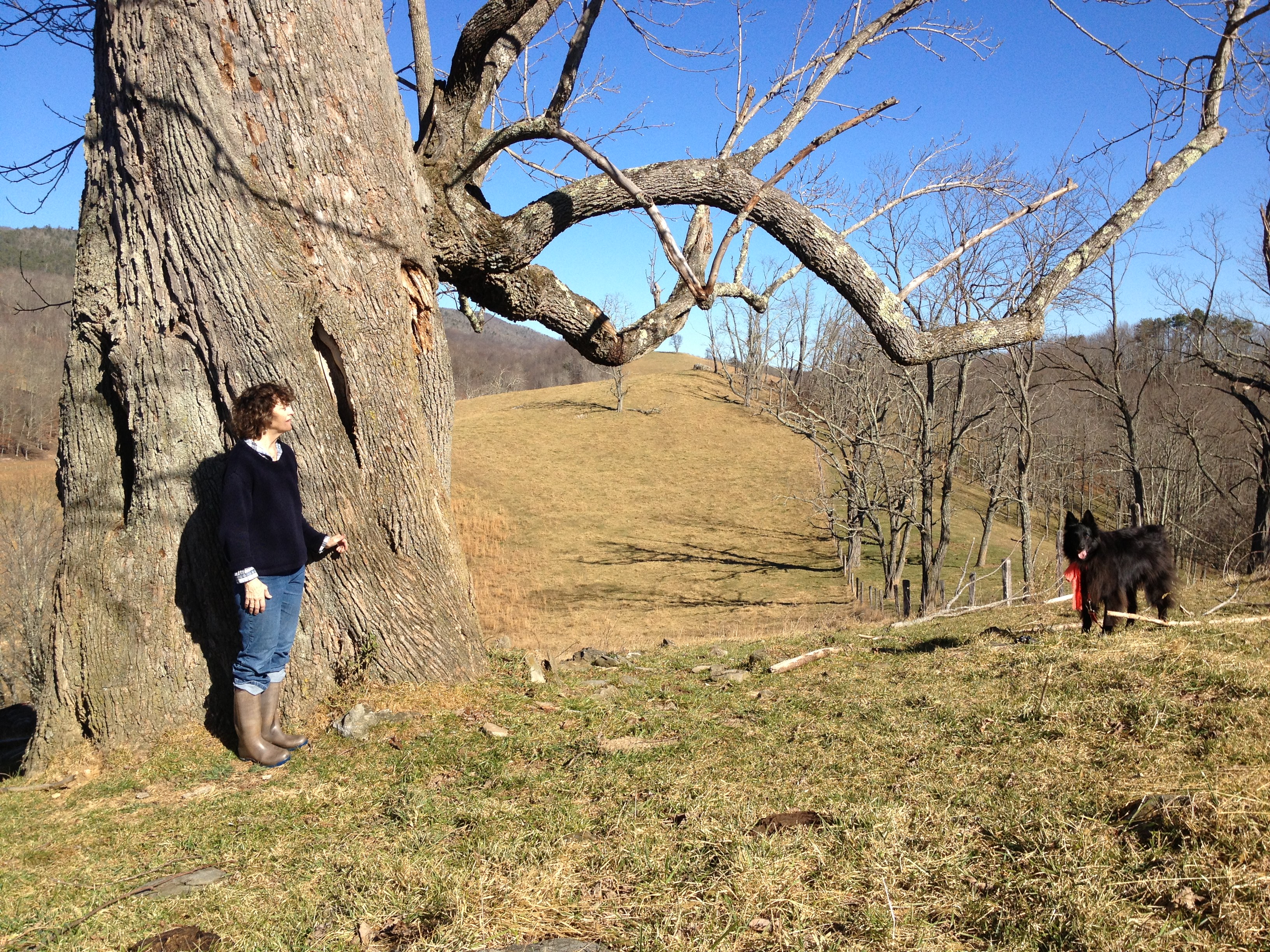
Author measures herself against the tree. Belle the dog observes.

Author measures herself against the tree. Belle the dog observes.

In recent years I have approached the old cucumber giants with the acknowledgement that they were dying, losing long limbs faster than they were growing new leaves. The Latin, or scientific name, for the cucumber tree is Magnolia acuminata L. (L. stands for Linnaeus, the Swedish botanist who invented binomial classification). As an aging personage, akin to an old tree myself, I am interested in wrinkled, hardened beings. In order to understand the cucumber tree better, I consult my mother’s copy of Charles Sprague Sargent’s Manual of the Trees of North America in Two Volumes. The back book jacket advertises the fact that Charles Sprague Sargent is “the greatest dendrologist America has ever produced.” It further asserts that these two volumes allow the tree lover to identify any native tree in the United States through keys. Do not believe that such an assertion is easily followed.

The keys for identification of the mountain magnolia that C. S. Sargent presents are based on flower color: the cucumber tree keys out first based on its flower color. It has greenish petals vs. the canary yellow petals/white petals/pale yellow or creamy white petals of other native magnolias. Of course, there are no magnolia flowers in November. Keys are beguiling because they make identification look so straightforward, but horribly frustrating to those observers who are out of season with the keys’ chief identifying characteristics. The cucumber tree is named for its aromatic gherkin-like fruits, from which, when ripe, bright red seeds dangle on white elastic threads.

Measuring begins. I tie Belle the dog to a branch of the tree that has fallen on the ground to keep her out of the way. Trees are usually measured at breast height (dbh, diameter at breast height). My husband ties one end of the frail string to a piece of hard bark that protrudes from the cucumber tree at his breast height. He continues wrapping it around the stupendous girth of the tree adjusting its placement for dbh at each step, because there is a two-foot slope difference from one side of the tree to the other.  Then he calls for my assistance.

“Now we need to measure the string.”

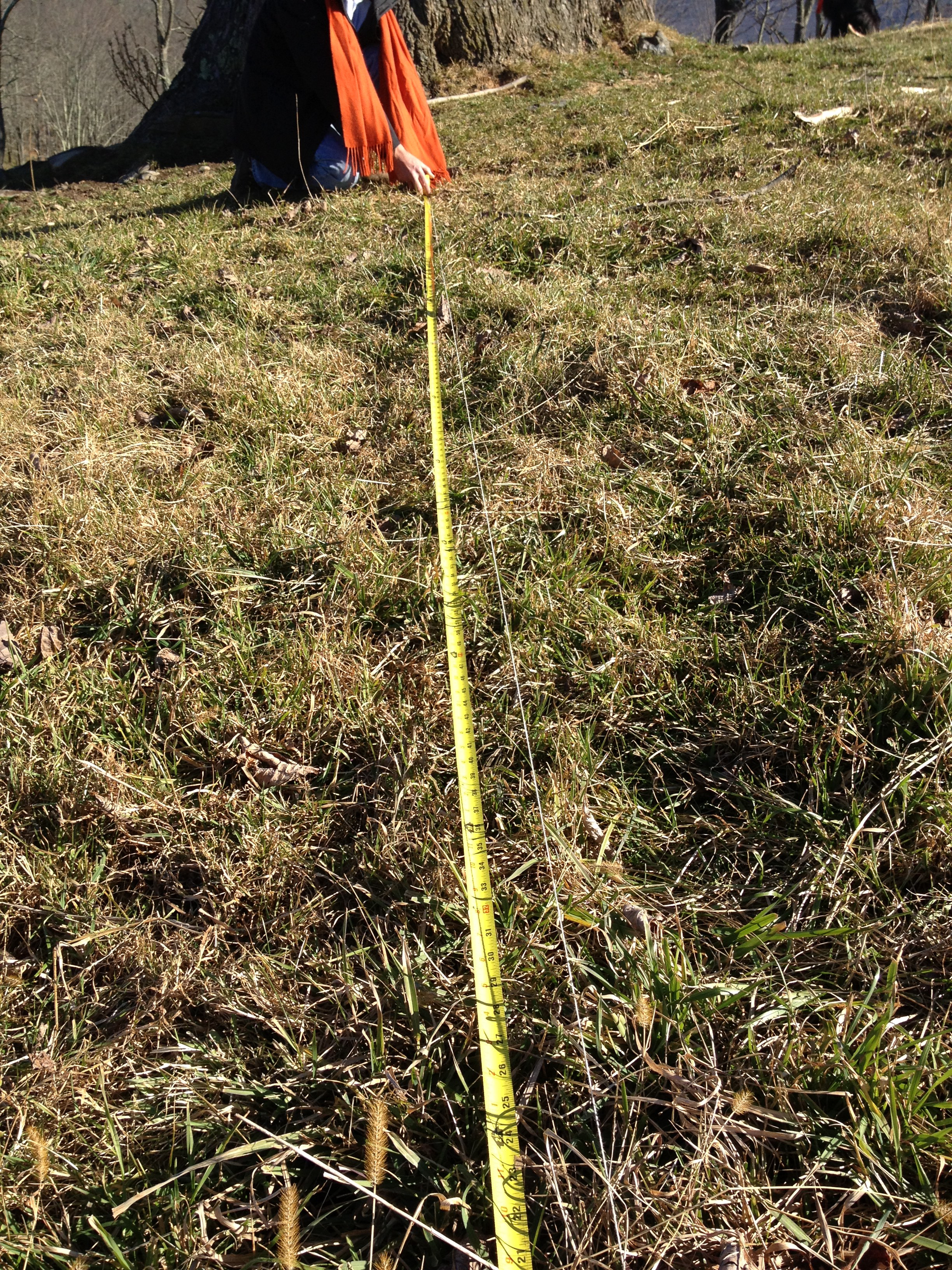
We searched for somewhat level ground so that he could stretch his string forth in a straight line. He tapped a little stick in the ground to secure the end of the string. Then he stretched the metallic tape measure alongside the string. The tape ended about two-thirds the length of the string—15 feet. A readjustment of the tape measure along the string yielded another 7 feet! So—the giant measured 22 feet in circumference. My husband, through a quick mental calculation, translated that to 7-foot diameter. Charles Sprague Sargent allows  3-4 feet as the usual diameter for mature cucumber trees in North America.


Measuring the string

Measuring the string


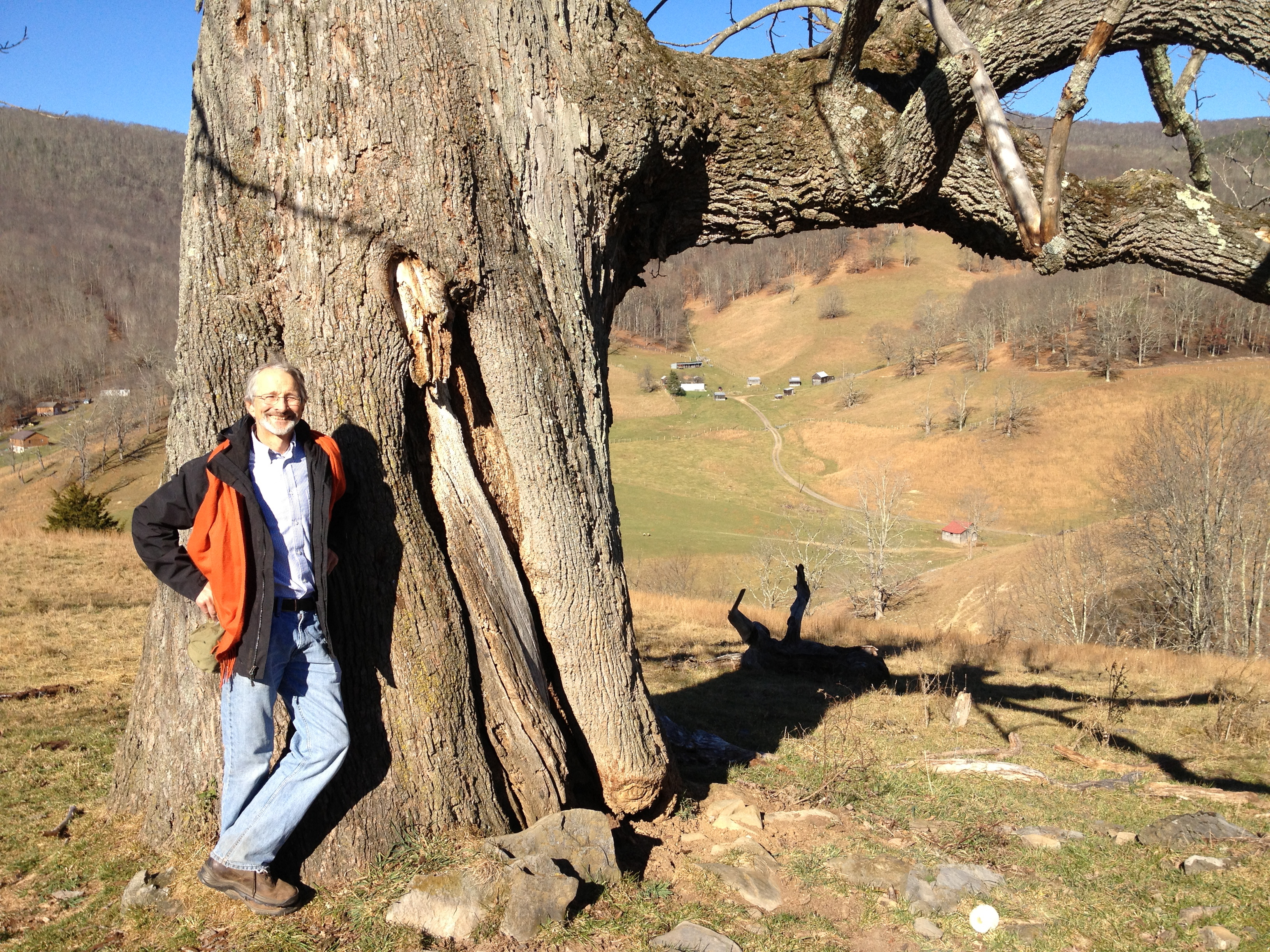
My measurement, taken two years ago with my husband’s orange plastic nurseryman’s tape, was 21-foot circumference. (I simply wrapped the tree with the bright orange tape, broke the tape at the full circle point, put the length in my pocket, and brought it back to Ithaca to measure with a yardstick. I don’t think I corrected my dbh for slope.) I am happy that this tree came in at 22 feet around. I was sure that it was a tree for the books. A champion. Sargent describes the ideal shape of the tree as “pyramidal.” However, because cucumber trees are weak wooded, such a tree on a mountain ridge has suffered many weather-related assaults that have twisted its growth patterns, and led to loss of limbs and subsequent clumps of dense younger growth in remaining limbs. It reminds me of the Little Prince’s baobab tree in Saint-Exupery’s book of the same name.


Head measurer David Fernandez stands by tree. Vinegar Hollow visible in the background.

Head measurer David Fernandez stands by tree. Vinegar Hollow visible in the background.


I am happy that we have spent this time circling the tree, honoring its girth and its presence in this small hollow. There are other cucumber tree lovers out there. Please see this thread posted on the Native Tree Society by Will Blozan (http://www.nativetreesociety.org/fieldtrips/west_virginia/cucumbertree/speaking_of_cucumbertree.htm). A scroll through the thread offers some wonderful photographs (particularly one of a tree pruner’s shadow joined into the shadow of the tree) and information on the tree and its medicinal properties.

Spring’s Pinks

IMG_0699


The surprise of spring in Ithaca, New York is color. Winter’s tones here are the off-whites of the sky, the greys and browns of bark, and the beiges of field stubble and beech leaves that shiver all through the season. Sometimes there’s a blue sky, in the shade that my mother always called copen-blue. Copen? To prepare you for what lies ahead in the way of my attempts at slightly nuanced color descriptions, I provide a definition of the color “copen” : “a variable color averaging a moderate blue that is redder, lighter, and stronger than pompadour, bluebird, azurite blue, or Dresden blue and greener, lighter, and stronger than luster blue” (Merriam-Webster’s online). A ha! I thought so.

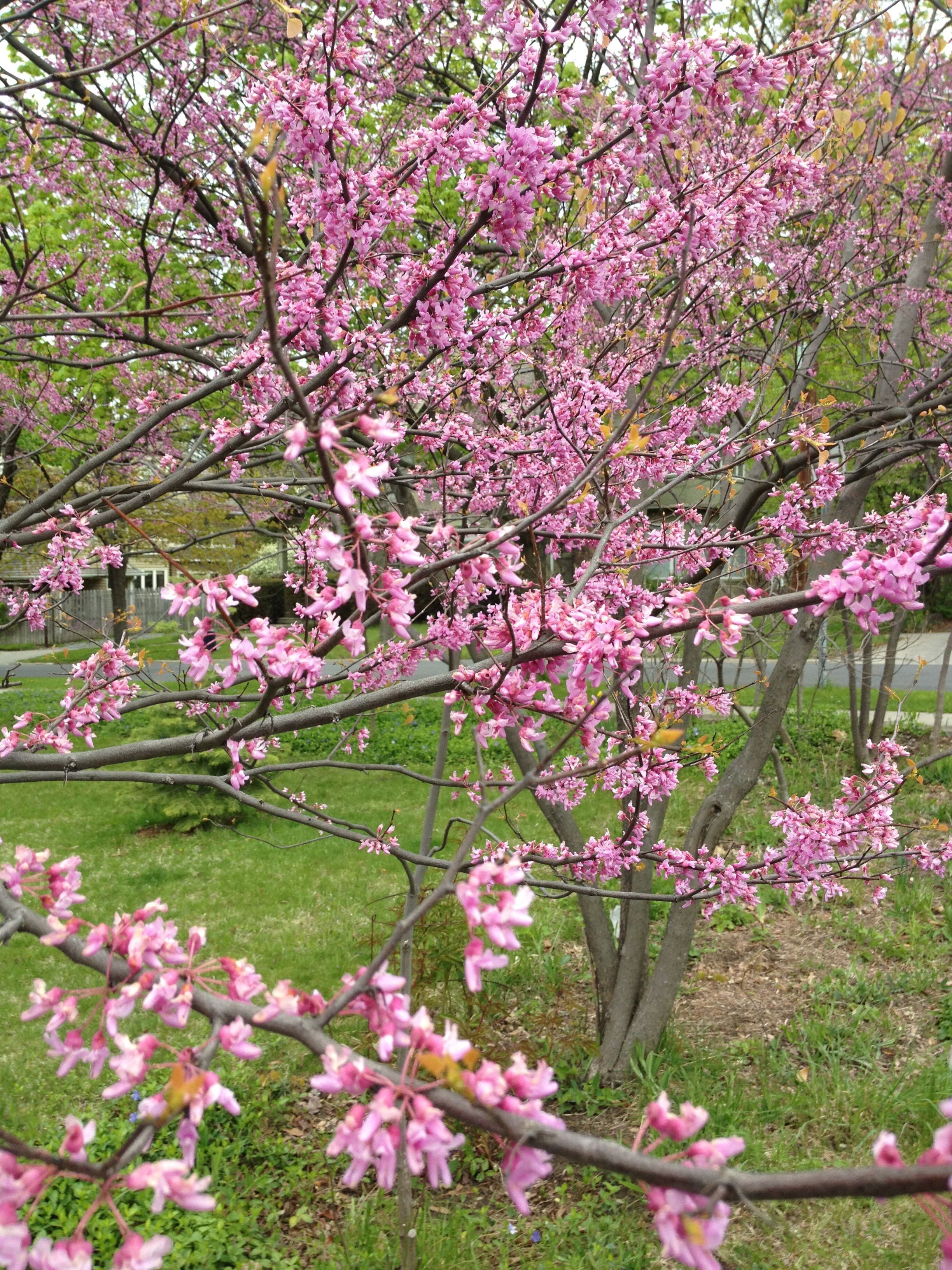
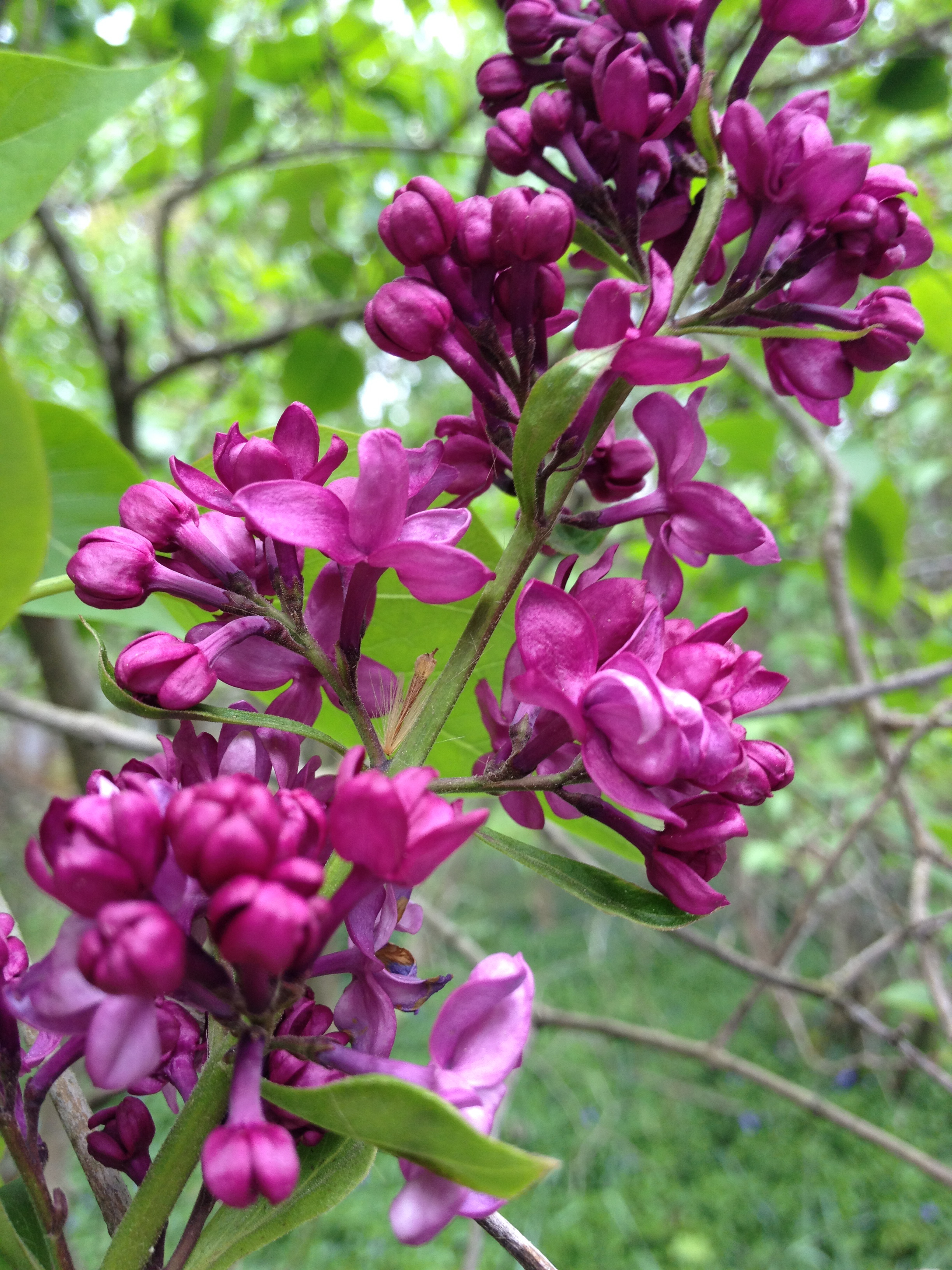
Recently, taking a walk around the block with my dog, I stumbled into a swath of pink-flowering shrubs. I felt as if I was seeing pink for the first time. Suddenly, in a short section of sidewalk bumpy with tree roots and littered with the odd soda can and wrinkled dusty plastic wrapper, I was rubbing shoulders with spring pink in four shades —the redbud (Cercis canadensis) and lilac (Syringa sp.) to my right, and the dogwood (Cornus florida rubra) and honeysuckle (Lonicera sp.) to my left.

Redbuds are one of the glories of eastern North America. Its pink is unique and mysterious, especially as the flowers are clustered tightly against the grey bark and appear well before any leaves. Often called a rosy pink or a purple-pink, it is definitely more complex than such simple names suggest. I would call it a French-blue pink.


Redbud

Redbud


There’s a hint of blueberry in its shade, and in fact the hooded little pea flowers can only be pollinated by long-tongued bees, such as blueberry bees and carpenter bees. The pink-flowering dogwood is a peachier, orangier pink. Perhaps with a tinge of apricot. I would like to offer my pink descriptions with the same beguiling eloquence as those writers of wine descriptions. Continuing in that vein, perhaps I could add that the dogwood’s pink has a hint of apple? While there are those who consider the honeysuckle weedy, old fashioned, and invasive, various bushes in my neighborhood offer pinks that vary from pale, uncomplicated pink to a coppery sort of pomegranate pink. Some may criticize me for including the lilac in my cast of pink-hued characters, however a lilac in bud is pinkish-reddish rather than lavenderish (and lilacs are often in an between state, half in bud and half in full flower).


Lilac

Lilac

Honeysuckle

Honeysuckle


We enjoy these shades of pink courtesy of chemical compounds called anthocyanins that can be present in all parts of a plant, but are particularly apparent in flowers, which contain little to no chlorophyll (the compound that makes the plant kingdom green). Such colors protect plants from sun stroke, signal pollinators, and offer diners antioxidants.  In comparison to anthocyanin, pink is a lovely word. It has the soft, comforting sound of the letter “p,” and the zippy verve of the letter “k.” According to etymologists, it is an old word whose first use occurred between 1565 and 1575, but its origin is unknown. At some point its history became connected to a garden flower known as the cottage pink or China pink, belonging to the Old World genus Dianthus, whose flowers come in various shades of white-speckled pink and red and  have frilled edges–thus the naming of pinking shears. How nice to take a walk around the block, thinking about different shades of pink, practicing the art of discernment!

Enthused with this bit of fieldwork in the neighborhood, I came home to my garden and made a bouquet of tulips in different hues of rose to continue my exploration of spring’s pinks under a copen-blue sky.


Tulips

Tulips

Williwaw

I learned a new word recently. Williwaw. I like words that describe the earth’s atmosphere and geography.  It is a wind, and winds often have unusual names, like haboob or black bora. The williwaw belongs to the group known as katabatic winds, those whose swoosh is accelerated by gravity. Most specifically, a williwaw is a violent wind (120 mph or so) that blows down from the lofty mountains and glaciers looming over the Straits of Magellan. Here, in Fireland or Tierra del Fuego, at the end of the world, British sailors used the word to describe the ferocious winds that battered their little boats.


dreamstime_xs_14517561


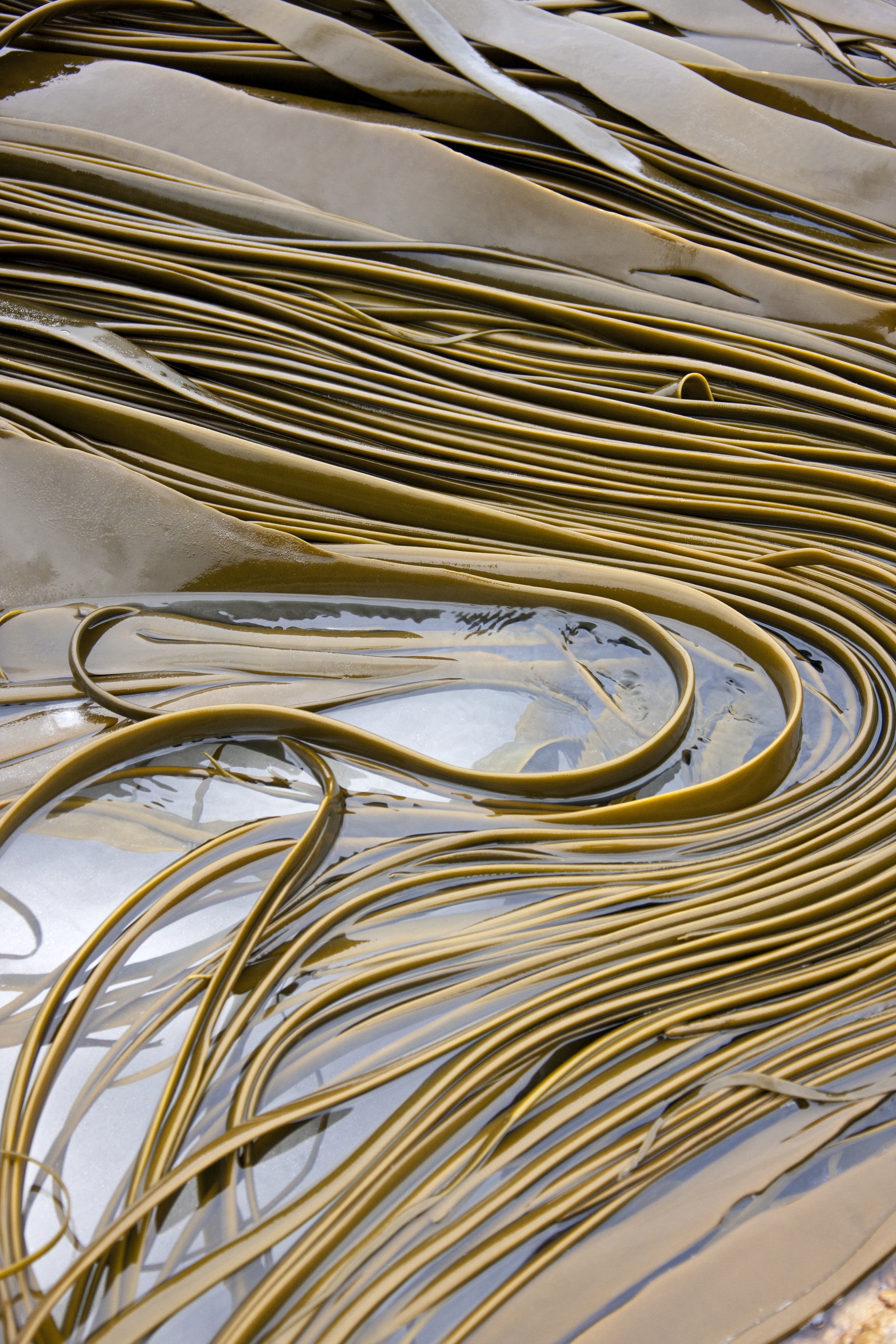
A williwaw understood figuratively is “a state of great turmoil” according to several dictionaries and certainly it is a good word to describe Darwin’s culture shock meeting the Fuegians of Tierra del Fuego. The “calm naturalist” of the early chapters loses his dispassionate, even-handed stance. Chapter X is full of exclamation points as he describes the behavior of the “savages” or indigenous people. Readers become part of the strange, sad, and moving story of how three Fuegians were stolen from their home by Darwin’s captain, taken to England, dressed in European clothes, taught English, introduced to the King and Queen of England, where they carried themselves well, and then returned to the shores of their rugged, williwaw-swept landscape with tea cups, wine glasses, tablecloths, and seeds to spread civilization among their “savage” relatives. In order to further our understanding of Darwin’s account of “the Fuegian story,” the students and I read excerpts from Lucas Bridge’s Uttermost Part of the World: A History of Tierra del Fuego and the Fuegians and Nick Hazlewood’s Savage: the Life and Times of Jemmy Button. The Fuegians are extinct now, except for portions of their gene pool represented in the current population of South America, but they live on in books and the work of professional historians and students. In our reading we have learned how tough women can be. The Fuegians were dependent on the sea for much of their food, and the women ran that show. They paddled the bark canoes and they fished with plaited ropes made from their own hair. Men were barely able to paddle and they couldn’t swim. Nomads, the Fuegians carried their fire by boat, nestling it on a plinth of rock and sand. At night the woman would paddle close to shore, unload the man and children, and if unable to safely beach the canoe, paddle out hundreds of meters to a kelp bed, tie the canoe up with kelp fronds, and then swim back to shore in icy waters, completely naked. Darwin describes a naked woman nursing her infant in a canoe while sleet slashes down upon them. We, the students and I, are impressed by the physical fortitude of these Fuegian women (so far a cry from the near-contemporaneous delicate young women of Downton Abbey).  I admire the knowledge gained, the sensory experience earned, as the Fuegian women swam through icy kelp beds toward the fire on shore in the land of williwaws.


Kelp fronds

Kelp fronds

The Young Woman and the Zorillo!

It’s 7:20 am and I am rushing to work because I have a handout to prepare for my Darwin class. The roads are clear but a layer of fluffy snow covers the tree branches as billowy fast-moving clouds move across a blue sky. I proceed down Fall Creek Drive to the Stewart Avenue Bridge over Fall Creek gorge. There just completing her walk over the bridge is a stunning young woman, probably a graduate student walking up to Cornell. I gasp at how beautifully dressed she is for so early in the morning. She wears stiletto-heeled black leather boots that fit her slender calves tightly, ending at the knees where curly fringes dangle. Legs in black tights disappear beneath a short black mini skirt. Then a black jacket with postmodern styling. Silver buttons? Something sparkles. A generous swath of diaphanous black scarf tumbles artfully around her neck, intermixed with her own glossy black hair. A beautiful face beautifully made up. She strides along  eating something. It is hard to capture all the details at 10 miles per hour but my impression is that she is unwrapping a chocolate, but it could be a cough drop. So nicely put together, she looks the picture of confidence.


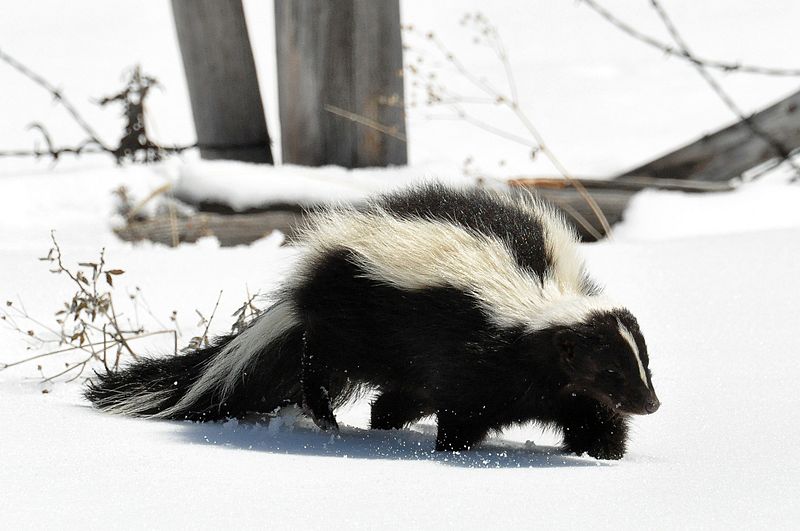
Striped Skunk (Mephitis mephitis, photo courtesy Dan and Lin Dzurisin, Wiki Commons)

Striped Skunk (Mephitis mephitis, photo courtesy Dan and Lin Dzurisin, Wiki Commons)


Then, I see a skunk maybe 15 or so paces behind her on the bridge’s sidewalk, fretful turning this way and that, appearing to feel indecisive about whether to follow in the direction of the young woman or retreat and go back to the other side of the bridge. Maybe it has just realized how deep the gorge lies below. A slightly bedraggled skunk, it still is striking for the amount of white on its back. Suddenly it runs quickly, extremely quickly for a skunk, who usually find little reason to get out of anyone’s way. In my rear view mirror I see that the skunk is now just a few feet behind the young woman. It looks as if the skunk is chasing her. How will this story end? There is no place for me to turn around, just as there is no place for the young woman and the skunk to get away from each other easily. Did the insouciant seeming young woman lose her insouciance? Did the skunk overtake her and pass by, following other urgent interests? I pose various fictional endings to myself, some amusing, others dreadful and fantastical, but am most interested in what I cannot know–the true ending of this true story.

Curiously the students and I had just been talking about skunks a propos of Darwin. We have been admiring Darwin’s lovely temperament–how unbiased and good-natured he is in his observations and encounters throughout his long voyage on the Beagle. He is painstaking in his descriptions of the Diodon (puffer fish) and the Aplysia (sea slug) and so on. He is curiosity itself–except when he comes across a skunk, which in South America is called the Zorillo: “We passed the night in Punta Alta, and I employed myself in searching for fossil bones, this point being a perfect catacomb for monsters of extinct races….In riding back in the morning we came across a very fresh track of a Puma, but did not succeed in finding it. We saw also a couple of Zorillos, or skunks,–odious animals, which are far from uncommon. …Conscious of its power, it roams by day about the open plain, and fears neither dog nor man….Certain it is, that every animal most willingly makes room for the Zorillo” (The Modern Library edition, p. 72). And so he did–Darwin, the most tenacious naturalist of all times, made way for the Zorillo. I continue to speculate on the seemingly inevitable encounter between the young woman and the skunk that I have described. Did nonchalance meet nonchalance? In other words, perhaps nothing of note occurred after I rounded the corner beyond the bridge.

My Sword Garden!

Rex Fernandez the cat detects signs of life in amaryllis bulb

Rex Fernandez the cat detects signs of life in amaryllis bulb


The Red Lion is out! He has sprung, finally. It is a brief moment, considering the year of care that he required of me in order strengthen him for this burst of movement upward. Though, I confess that I was not thinking of him every day of this past year. And he is not the only Red Lion. I have others and I am loyal to them all, and to his relatives who go by other names—Vera, Clown, and Novella.  They are everywhere in my house—six in the dining room, three in the study, three in the kitchen, three in the alcove, and eight in the basement, where four on the washer and four on the dryer gyrate to the sudsing and tumbling of clothes to no ill effect apparently. They comprise my bevy of amaryllis bulbs, and they are too many–a true plethora, a surfeit, a glut. Why so many amaryllis? It’s not my fault. My husband runs a landscape design/garden center business. In early January he brings home the amaryllis bulbs that did not sell during the Christmas season.  We give them away to friends, but still there are more. I pot up the orphans because I cannot resist what I know they will do with just a little soil, water, and light.  I moisten potting soil in my biggest mixing bowl and pot up the fat brown bulbs, taking care to stuff down their wiggily spongy roots (unlike the roots of tulip and daffodil bulbs, amaryllis roots remain living all year, whether potted or unpotted). The bulb planter then becomes a bulb watcher, looking for signs of life. Just when one is ready to state that this is the bulb that will not do it, just then it does! The tip of a green sword emerges. From then on the bulb watcher should not leave the premises. The large flowering bud at the tip of the green sword opens in a ballet dance of shimmering, iridescent seductive curves. Individual flowers join petal tip to petal tip, forming ring-like umbels.


The Red Lion

The Red Lion

The Red Lion posing!

The Red Lion posing!


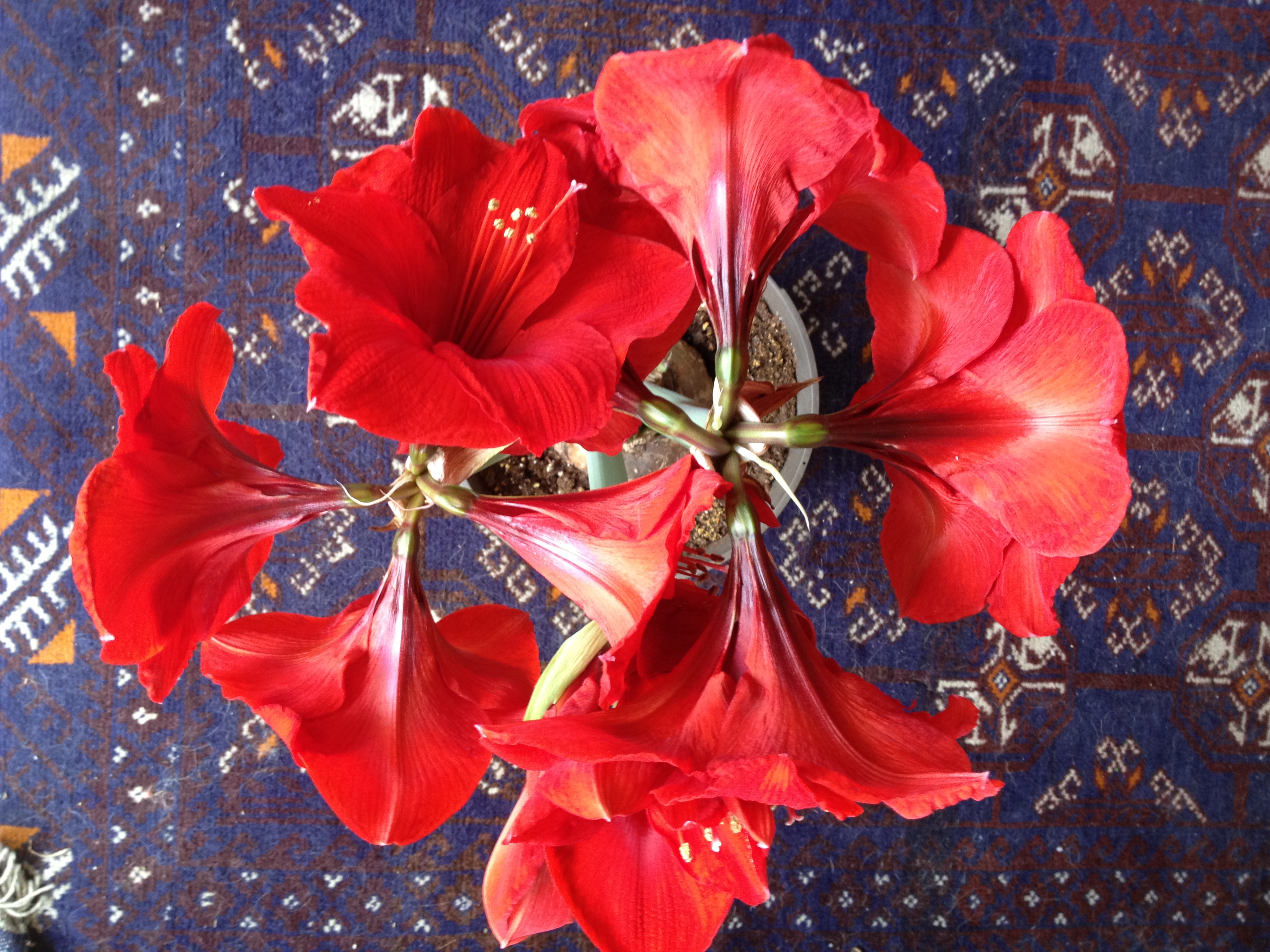
I carry the Red Lion from room to room, hoping to find the perfect spot for the perfect photograph, but my efforts do not do justice. Several writer photographers have done so, however—Starr Ockenga, author of Amaryllis, and Ken Robbins, author of A Flower Grows—in very different ways. Ockenga ordered 90 kinds of amaryllis bulbs and spent a year documenting their growth in her greenhouse. Robbins follows the growth of just one bulb in hand-tinted photographs. Finally, standing on a table, I view the Red Lion from above.


Red Lion seen from above

Red Lion seen from above


The scientific name of the amaryllis is Hippeastrum, or horse star. In 1837 the Honorable Reverend William Herbert, Dean of Manchester named the genus thusly perhaps after a holy water sprinkler, whose shape had its antecedents in a medieval weapon used by knights, known as the “morning star.” The common name, amaryllis, has a more troubling origin. A lovely nymph named Amaryllis fell in love with a handsome shepherd named Alteo, who was impervious to her love. He said that all that he desired was a flower—one that was new to the world. Amaryllis wished to comply with this desire. She consulted the Oracle of Delphi who advised her to dress in white, plant herself at his doorstep, and pierce her heart with a golden arrow for 30 nights. She did this. When Alteo finally opened his door, there was a red flower. Her blood, so slowly dripped, had become the amaryllis.


The Red Lion again!

The Red Lion again!


The Scottish poet and garden writer Muriel Stuart (1885-1967) writes in her book Fool’s Garden (1936) that “There is a sex appeal in flowers, no less than in human beings. Unguessed, unexplained, but present, shown by the garden lover’s preference for rose or magnolia, for orchid or gillyflower, for tree or rock plant. Strong and irrestible, the wherefore they know not, the mysterious drawing power is there, some potency distilled from stem or stamen, curved petal-lip or watching eye. And so we are drawn to certain flowers by some sex appeal of growth and colour, no less than to certain people by hand or eye, or wayward toss of hair or turn of chin. Show me a garden and I will show you the gardener’s soul” (p. 195). Stuart, more English than Scottish, wrote poems, whose themes were sexual politics and horticulture, that were admired by Thomas Hardy. Her gardening book is full of sweet stories about the “whimsies” that she and co-worker, her young son Adam, contrived in their garden, one being a special “sword garden,” for plants whose leaves are “swordy and austere.” Their vision was a garden full of “stately spears” and “tiny daggers” and “lance lifters.” Muriel  writes that she and Adam, the fools of her title, learned much in the planting of their “unorthodox” garden.

It occurs to me that my collection of amaryllis is a sword garden–and what could have more sex appeal than the Red Lion? For me, however, the sex appeal is not so much in the flower, but in the tip of green just beginning to show itself from the brown bulb, like the spire of a cathedral in a dull place. Every year when it’s warm enough I carry the tired bulbs outside to replenish themselves in the shade. The slugs, leaving trails of silvery slime, nibble them to shreds,  and the resident groundhog and rabbit may feast a little as well. I splash water on them in the droughts of August. By fall their tattered leaves have yellowed, but the bulbs are plump again with stored food reserves made by the leaves. Just as frost arrives, I carry them inside and wait for the tip of the green spire to appear. Many gardeners consign amaryllis bulbs to the compost pile, but they can live and flower for 75 years. Perhaps I will be nurturing my fool’s garden of amaryllis for some time to come.

An Homage to Charles Dickens on his 200th Birthday

Some of my Dickens

Some of my Dickens


On February 7, 2012 I am on my way to work to meet an 8 am class with Ithaca College first-year writing students when I hear on NPR that it is Charles Dickens’ 200th birthday. My students and I are going to be discussing another great writer with initials C. D., the one with the haunted eyes and the flowing beard, Charles Darwin. We are reading The Voyage of the Beagle: Journal of Researches into the Natural History and Geology of the Countries Visited During the Voyage of H.M.S. Beagle Round the World. We call it The Voyage. I share with my students the news that Dickens birthday parties are being held worldwide, and some of them look pleased. We had discussed their tastes in literature. About half loved Great Expectations, and the other half shook their heads.

The NPR story featured an interview with Claire Tomalin, author of a new biography of Dickens called Dickens: A Life. Tomalin tells the interviewer that Dickens wrote extremely fast, and his books were published with little to no revision by him or by editors. No revision??? Revision is one of the core values of writing instructors.  So this I do not share with my students. Tomalin says that there is “bad writing” in Dickens’ books, but it is outweighed by the good. I muse that if Dickens had been as energetic a reviser as a writer, he might have found himself at square zero, i.e., no books, but more to the point, in his day sheer volume was one way of satisfying reading appetites. There were no motion pictures. While it may not be accurate or fair or useful to say that a picture is worth a thousand words, Dickens painted many scenes with thousands of words. He wrote fast, and that was the method to his madness.


Another Dickens from my library

Another Dickens from my library


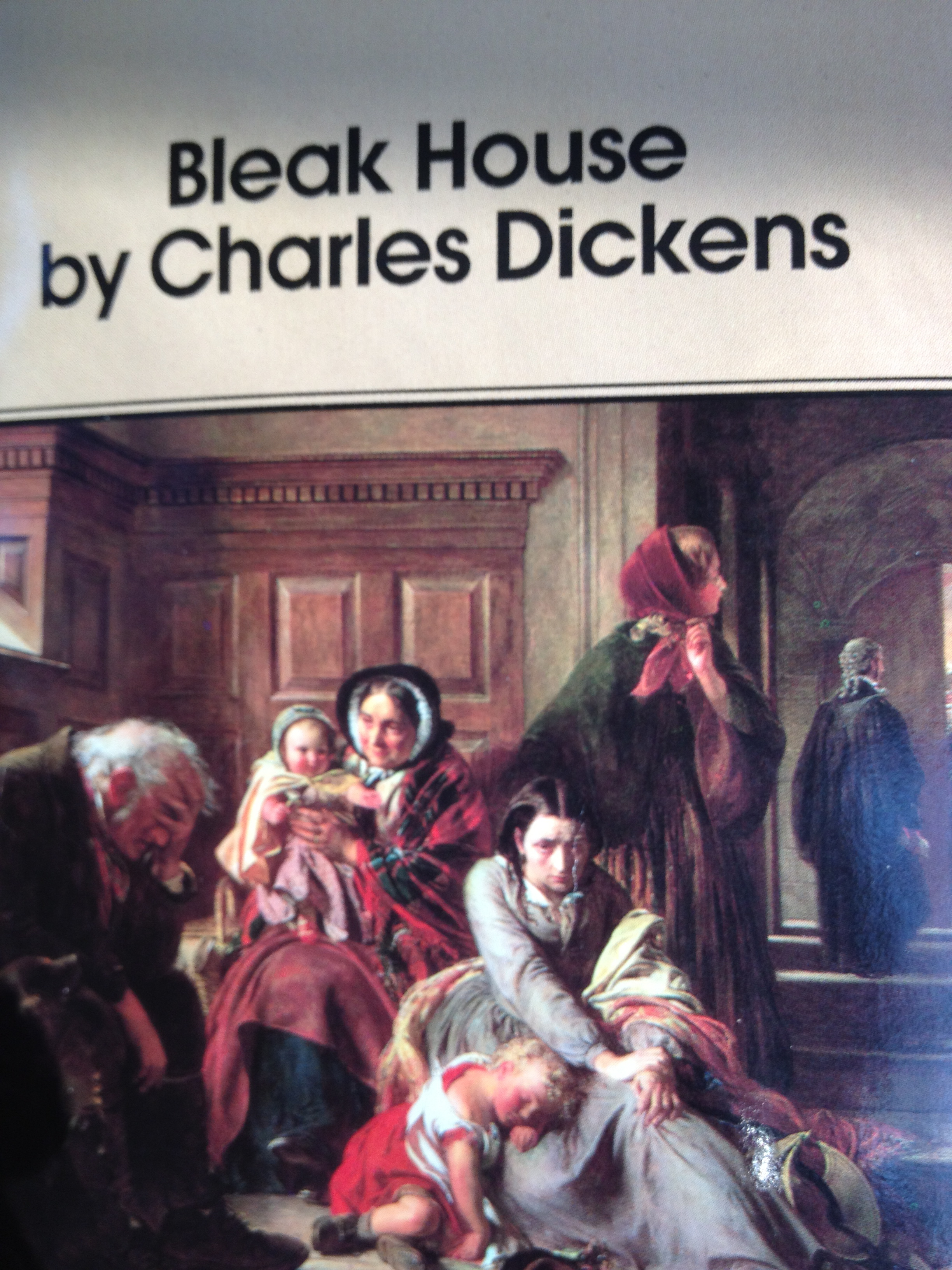
After class, hurrying off to make my appointment with a propane deliverer in Aurora, 30 miles up Cayuga Lake from Ithaca, I make a dash-by stop at my local library to get a Dickens on tape for my own little Dickens birthday party. No David Copperfield. No Great Expectations. Bleak House! Oh no. I remember one of my academic debacles in college. An English major, I signed up for a semester-long Dickens course. A young visiting professor from UPenn got us off to a fast start. We were to read an entire small Dickens novel per week and a half of one of the big ones, like Bleak House, per week. I was a fast reader and I liked Dickens, especially his lengthy sentences, his word pictures. I started copying out sentences and passages that I liked as I read. My stack of note-cards grew almost as tall as Bleak House was thick. I fell behind. I stopped going to class. I foundered in the wealth of his words, like a pony in spring clover. I either failed the course, which I don’t think occurred because there are no F’s on my transcript, withdrew (but there are no W’s), or the professor had a medical emergency and the class was terminated (a faint possibility according to my memory because I remember a sense of guilt that she, the professor, had foundered because students like me couldn’t keep up). I had kept up with Henry James, but Dickens….


IMG_0171

I slip the CD into the player and prepare to re-engage with Bleak House. The Prologue is witty but dryish; when I start to drift a little I am brought to attention by the mention of a woman dying of spontaneous combustion. What? It’s too late to figure that out because the first chapter is beginning. I am attentive. The slate-blue waters of Cayuga Lake and low gray clouds are on my right and the rolling folds of Lansing fields on my left as the first chapter begins. It’s a very beautiful beginning, very grand, suitable for a big book. A slender book would not need such a beginning. The sun is dead. Fog swirls out of the nooks and crannies of England’s landscape and seascape, descending  into the heart of London, to surround the High Court of Chancery. Dickens invokes the fog, and mud, and foul weather to begin his passionate assault on this high court, “most pestilent of sinners.”  He repeats the word “fog” over and over, but it does not feel overused. We know that when it’s foggy, fog is everywhere, and fog is fog. There are not that many other words for it. Just one or two. Then Dickens uses one of the synonyms so beautifully near the end of this opening passage. We are now in the presence of the Lord High Chancellor, who sits in the court “with a foggy glory around his head.” And his minions–they are “mistily engaged” in their miserable tasks. For me, the attachment of “mistily” to the human activity is stunningly effective. Nature and chancery are one. He has brought the fog from all over England to the fingertips of these workers in a befuddled, and often malignant, bureaucracy. I reach Aurora, but I am still in the first chapter of Bleak House because I replay the opening chapter again and again. Maybe some books should be written fast, but read slowly.


IMG_0198

Exploring Country Roads in Highland County, Virginia

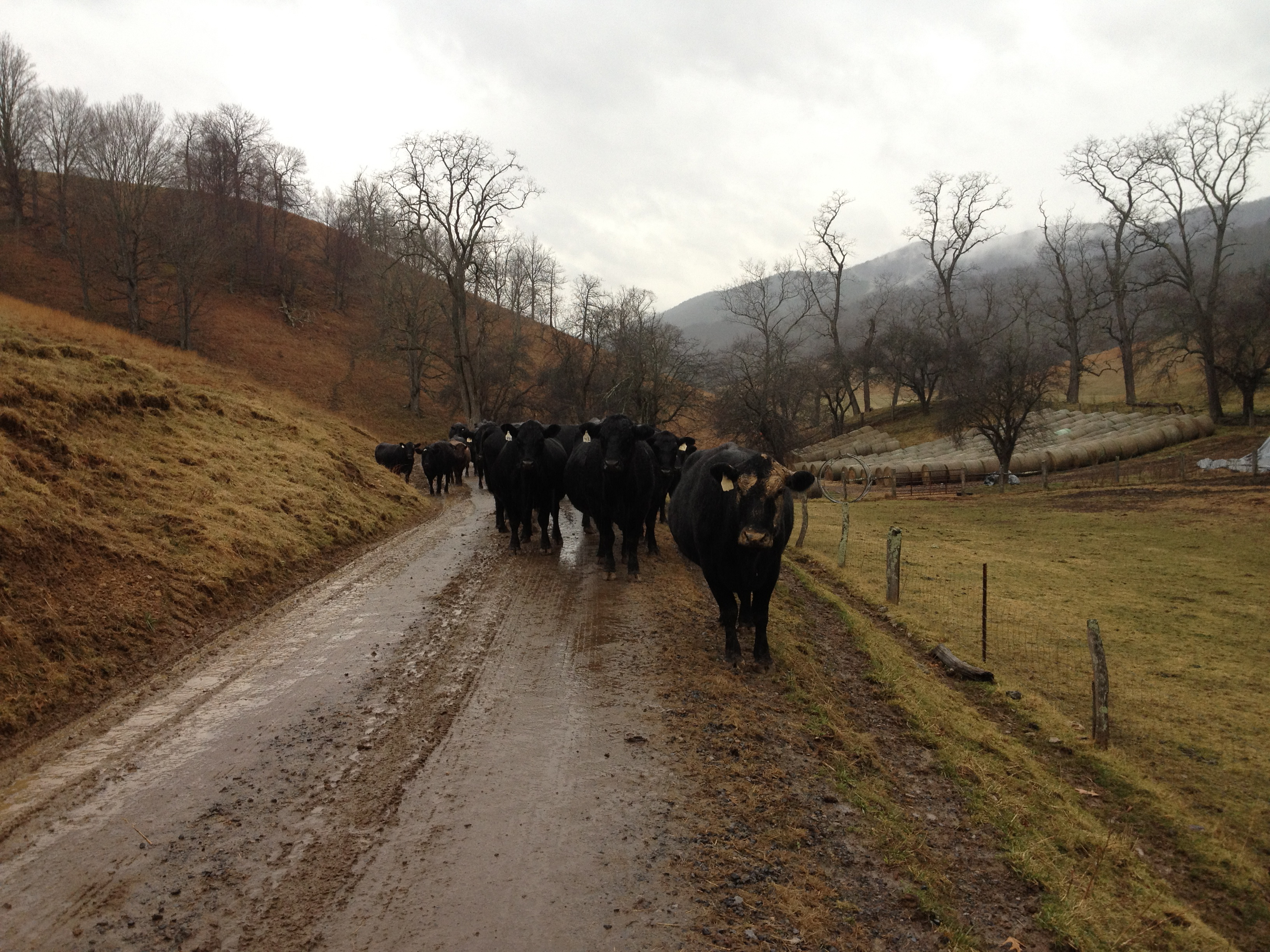
Cattle coming up to Vinegar Hollow's End

A traffic jam at Vinegar Hollow’s End

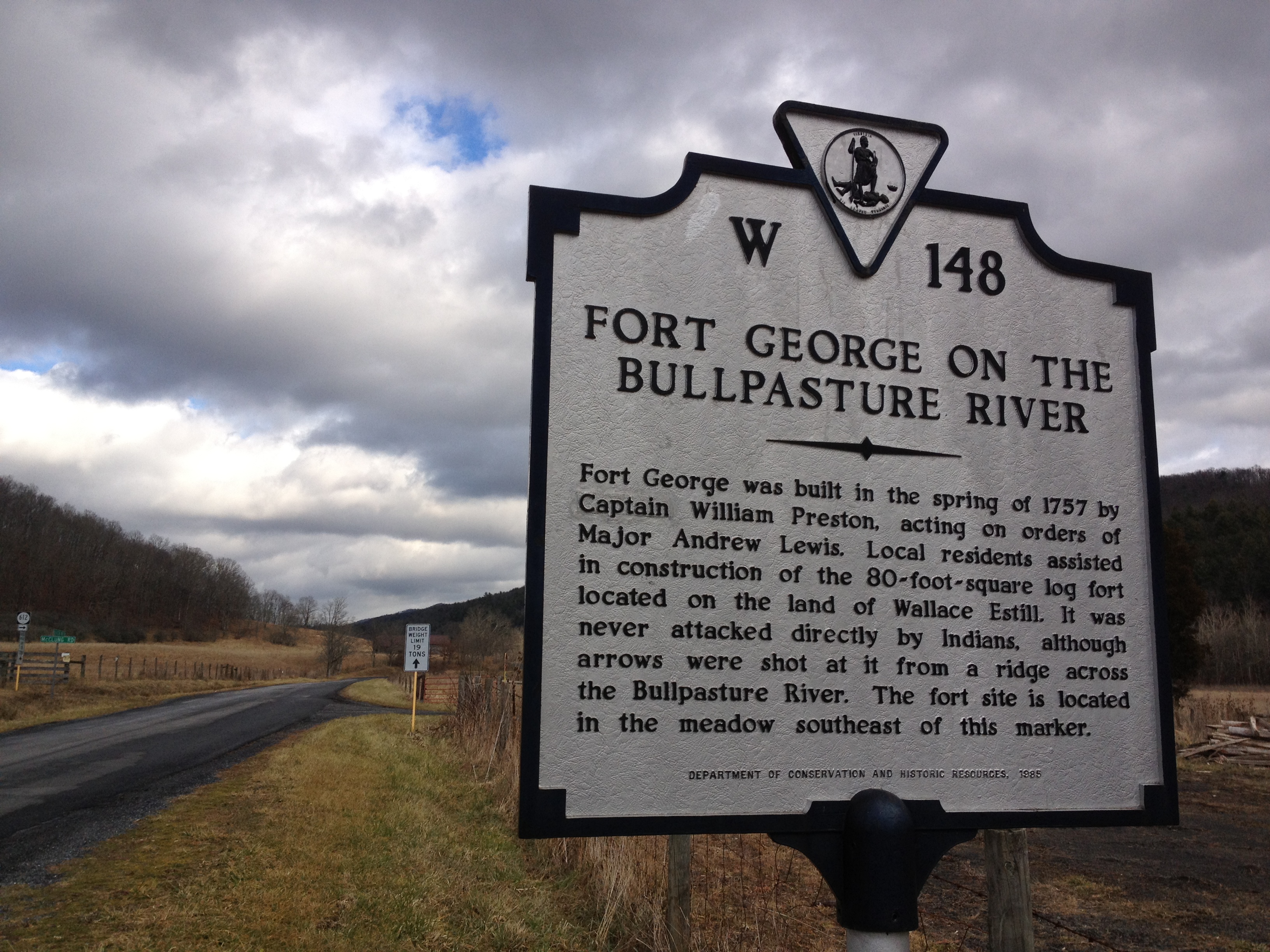
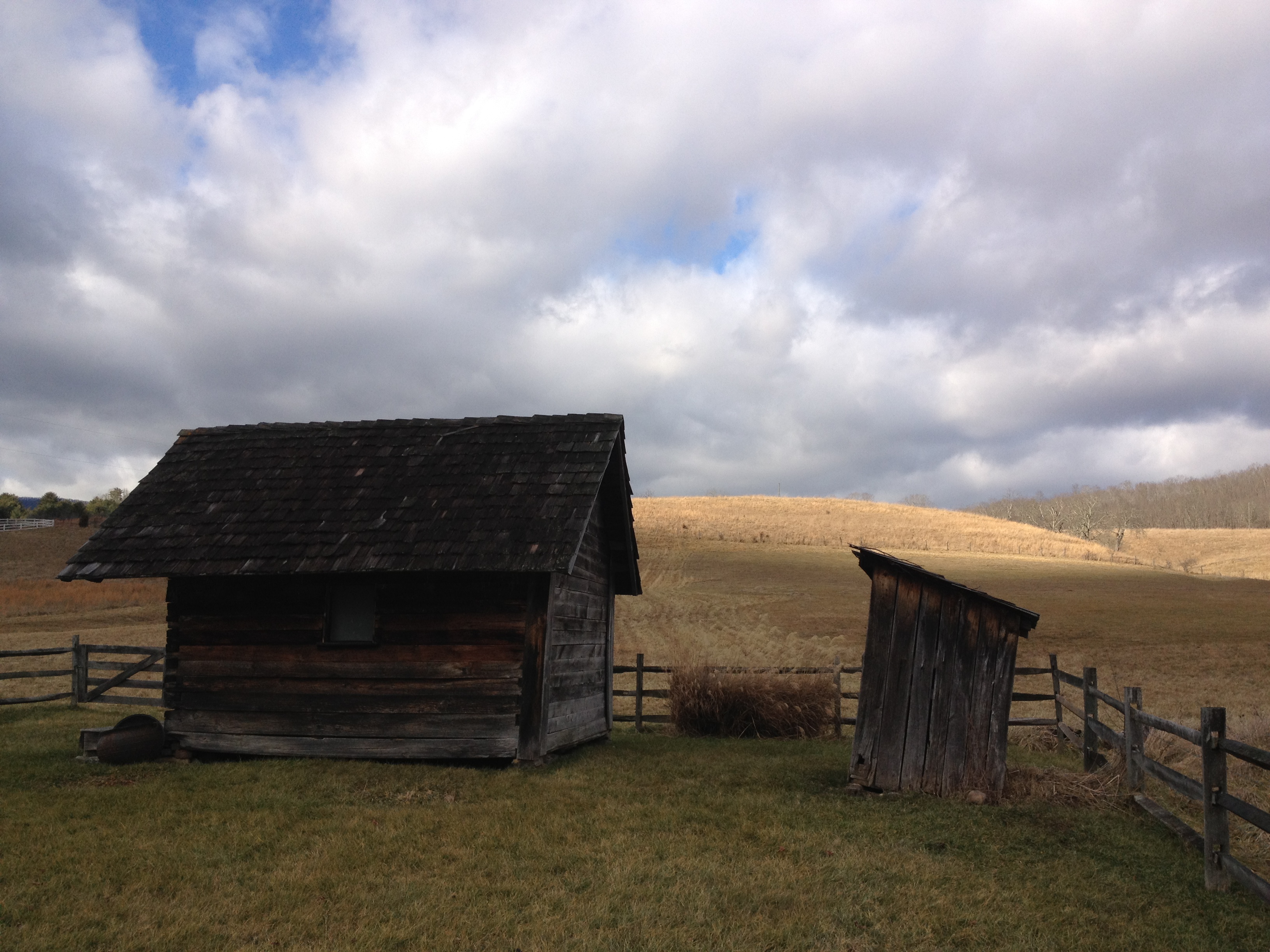
On New Year’s Day, 2012 I begin the year in Mustoe, Highland County, Virginia, tucked back in Vinegar Hollow, invisible from Mustoe proper, invisible from any other habitation for that matter. The day opens glowery, but not too cold, and glints of sunlight cause the landscape to sparkle in places. It will be a good day for a drive once we get past the cattle ambling up to the barn for their morning drink from the water trough near the house. When the cows are ambling, and they rarely do more than amble,  it is best to slow down and amble as well. I wanted to show my husband the road, which I had discovered in the summer, that follows the loops of a lovely river named Wallawatoola by American Indians, but renamed Bullpasture, Cowpasture, and Calfpasture by early settlers. The Bullpasture is big, Cowpasture less big, and the Calfpasture so modest that I always miss it. In McDowell, one takes Bullpasture River Road to Williamsville, following as it curves back on itself to become Cowpasture River Road, and then hopefully one makes the jog to Calfpasture River Road, the last loop of the river. Along the way I am charmed by an historical marker that notes the site of an early fort in a nearby field. The brave little fort was “never attacked directly by Indians” but faced the onslaught of arrows from a ridge across the Bullpasture River! I try to imagine the arrows flying, some falling into the river no doubt, almost 300 years ago. Each flight of arrow is a part of history never to be repeated, except by someone like me romancing over the message from the past found on the marker. Missing the jog to Calfpasture River Road, we take the road to Sugar Grove, in love with our journey among straw-colored stubbley fields and deep purple folds of mountain ridges in the distance. Here and there straw turns to gold as the sun pierces the cloudcover. Habitations, for humans and their livestock, in various stages of repair, catch at the heart.


IMG_0039IMG_0045

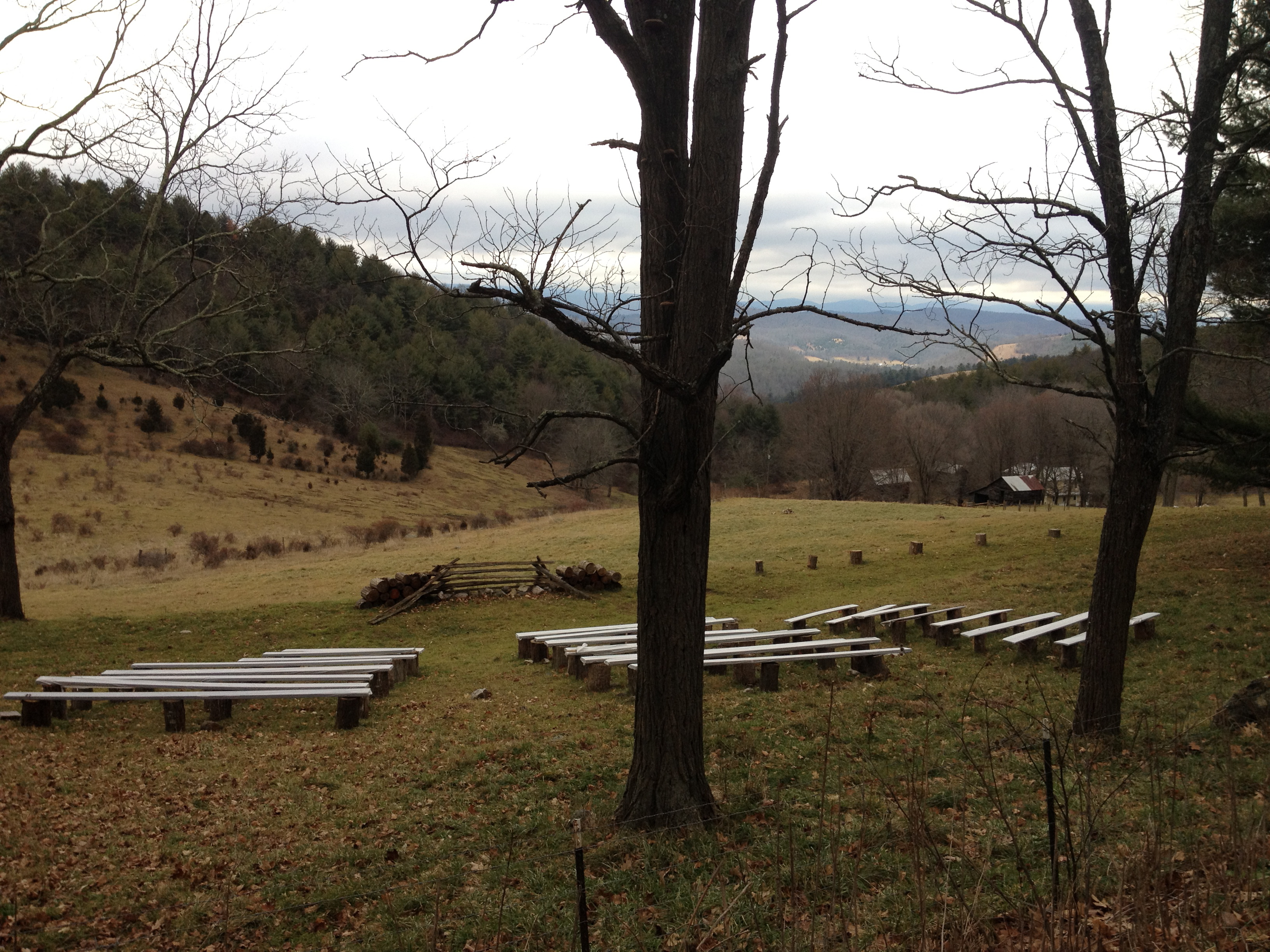
Somewhere along the road to Sugar Grove we take Crummetts Run Road to head back towards Monterey and Mustoe. Crummetts Run Road presents extraordinary views, especially near an outdoor rustic  amphitheatre situated in a field at the edge of a mountain, a place for people to be moved towards spiritual thoughts, as it seems that this must be the intent of its placement here on a high mountain fold with a view to the west. The empty seats are haunting. What souls have sat there in the past and who will sit there in the future? In that instant, pulled into the distance, I allow myself to feel there for an eternity. We do not need to take such a narrow view of where we are.
IMG_0062

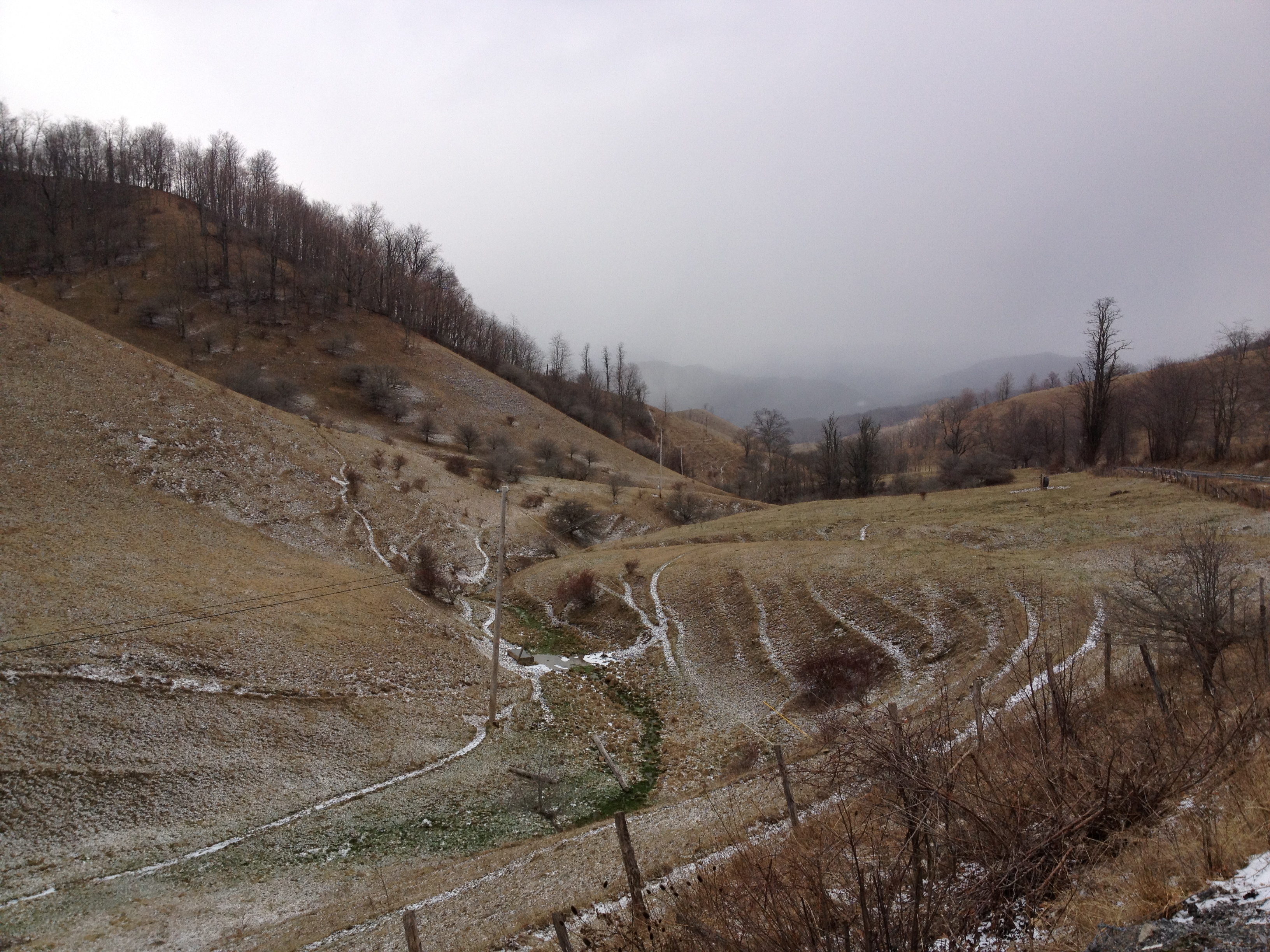
The next day it is time to leave Mustoe and head north to Ithaca. At the border of Highland County, Virginia and Pendleton County, West Virginia, we take Snowy Mountain Road. Snowflakes swirl out of a snowcloud, turning the deep purple of far mountain ridges to lavender. In the valley bottom there is still the bright green of algae and stream-loving vegetation growing yet in winter’s cold. Going over Snowy Mountain comforts my sense of departure, as its windings and views carry us from one kingdom to another, a trip we make more often than we realize–from moment to moment, day to day, year to year and  so on into the unmeasurable.


IMG_0093