Spring’s Pinks

IMG_0699


The surprise of spring in Ithaca, New York is color. Winter’s tones here are the off-whites of the sky, the greys and browns of bark, and the beiges of field stubble and beech leaves that shiver all through the season. Sometimes there’s a blue sky, in the shade that my mother always called copen-blue. Copen? To prepare you for what lies ahead in the way of my attempts at slightly nuanced color descriptions, I provide a definition of the color “copen” : “a variable color averaging a moderate blue that is redder, lighter, and stronger than pompadour, bluebird, azurite blue, or Dresden blue and greener, lighter, and stronger than luster blue” (Merriam-Webster’s online). A ha! I thought so.

Recently, taking a walk around the block with my dog, I stumbled into a swath of pink-flowering shrubs. I felt as if I was seeing pink for the first time. Suddenly, in a short section of sidewalk bumpy with tree roots and littered with the odd soda can and wrinkled dusty plastic wrapper, I was rubbing shoulders with spring pink in four shades —the redbud (Cercis canadensis) and lilac (Syringa sp.) to my right, and the dogwood (Cornus florida rubra) and honeysuckle (Lonicera sp.) to my left.

Redbuds are one of the glories of eastern North America. Its pink is unique and mysterious, especially as the flowers are clustered tightly against the grey bark and appear well before any leaves. Often called a rosy pink or a purple-pink, it is definitely more complex than such simple names suggest. I would call it a French-blue pink.
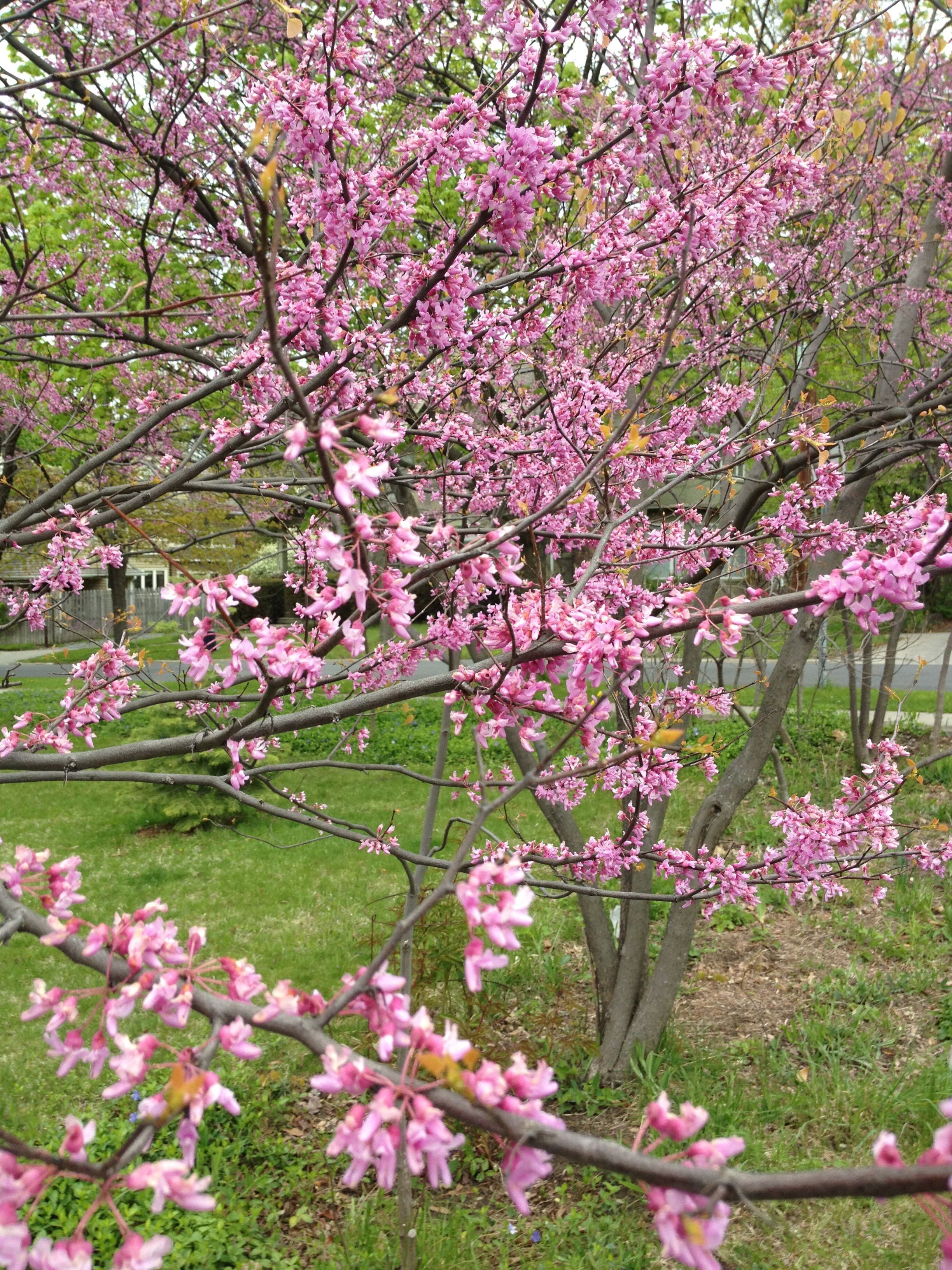
 

Redbud

Redbud


There’s a hint of blueberry in its shade, and in fact the hooded little pea flowers can only be pollinated by long-tongued bees, such as blueberry bees and carpenter bees. The pink-flowering dogwood is a peachier, orangier pink. Perhaps with a tinge of apricot. I would like to offer my pink descriptions with the same beguiling eloquence as those writers of wine descriptions. Continuing in that vein, perhaps I could add that the dogwood’s pink has a hint of apple? While there are those who consider the honeysuckle weedy, old fashioned, and invasive, various bushes in my neighborhood offer pinks that vary from pale, uncomplicated pink to a coppery sort of pomegranate pink. Some may criticize me for including the lilac in my cast of pink-hued characters, however a lilac in bud is pinkish-reddish rather than lavenderish (and lilacs are often in an between state, half in bud and half in full flower).
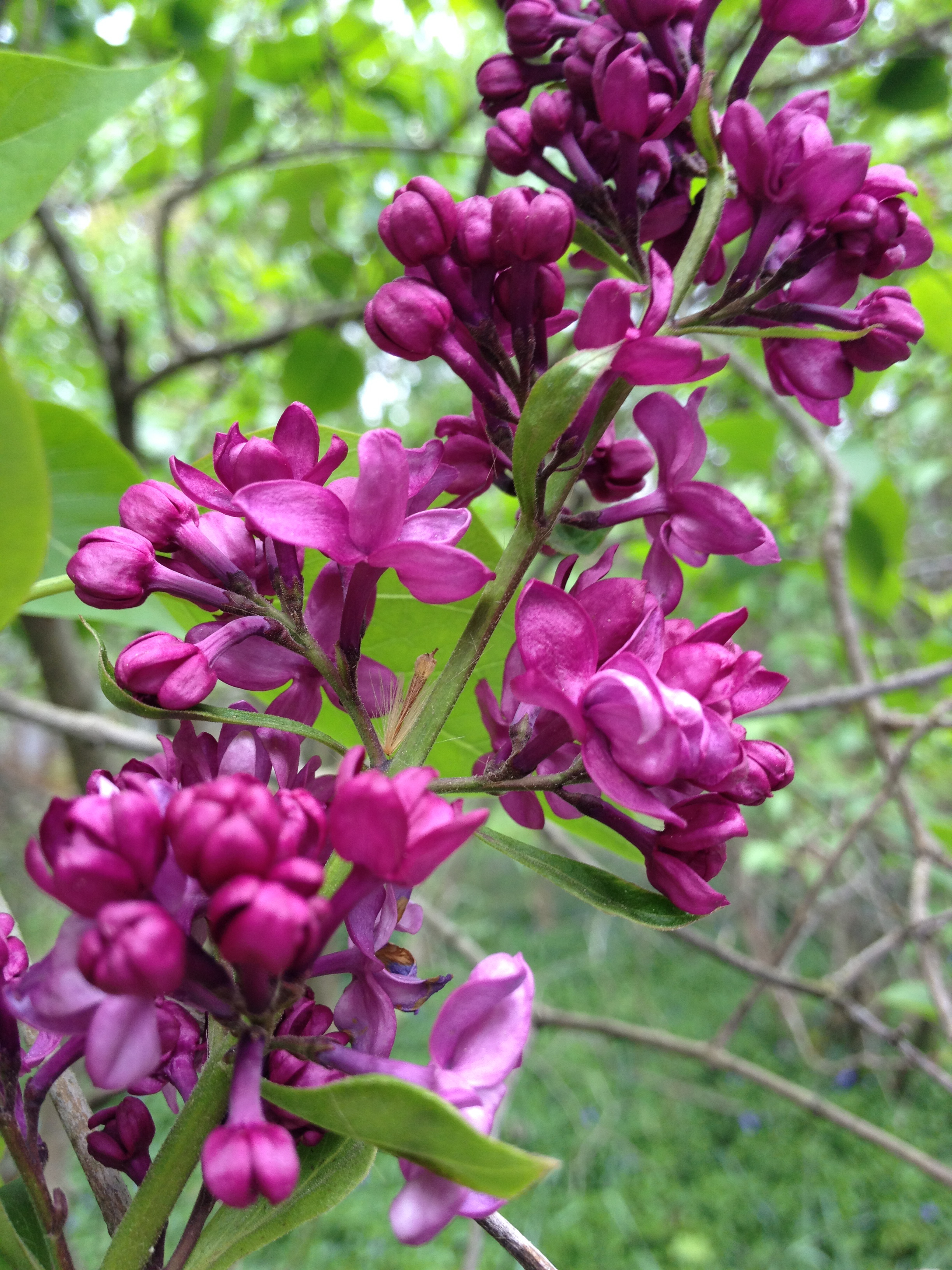
 

Lilac

Lilac

Honeysuckle

Honeysuckle


We enjoy these shades of pink courtesy of chemical compounds called anthocyanins that can be present in all parts of a plant, but are particularly apparent in flowers, which contain little to no chlorophyll (the compound that makes the plant kingdom green). Such colors protect plants from sun stroke, signal pollinators, and offer diners antioxidants.  In comparison to anthocyanin, pink is a lovely word. It has the soft, comforting sound of the letter “p,” and the zippy verve of the letter “k.” According to etymologists, it is an old word whose first use occurred between 1565 and 1575, but its origin is unknown. At some point its history became connected to a garden flower known as the cottage pink or China pink, belonging to the Old World genus Dianthus, whose flowers come in various shades of white-speckled pink and red and  have frilled edges–thus the naming of pinking shears. How nice to take a walk around the block, thinking about different shades of pink, practicing the art of discernment!

Enthused with this bit of fieldwork in the neighborhood, I came home to my garden and made a bouquet of tulips in different hues of rose to continue my exploration of spring’s pinks under a copen-blue sky.


Tulips

Tulips

Williwaw

I learned a new word recently. Williwaw. I like words that describe the earth’s atmosphere and geography.  It is a wind, and winds often have unusual names, like haboob or black bora. The williwaw belongs to the group known as katabatic winds, those whose swoosh is accelerated by gravity. Most specifically, a williwaw is a violent wind (120 mph or so) that blows down from the lofty mountains and glaciers looming over the Straits of Magellan. Here, in Fireland or Tierra del Fuego, at the end of the world, British sailors used the word to describe the ferocious winds that battered their little boats.


dreamstime_xs_14517561


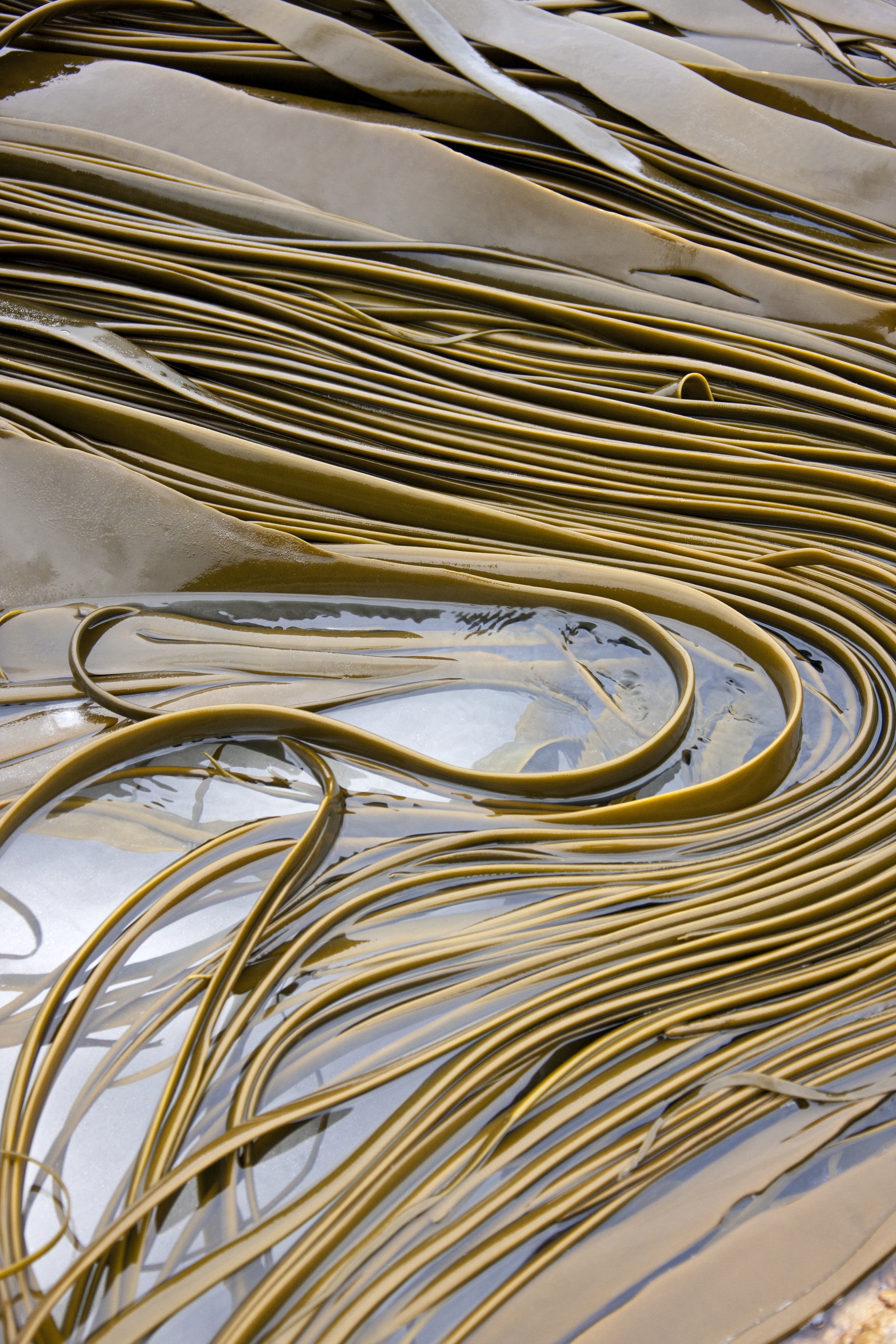
A williwaw understood figuratively is “a state of great turmoil” according to several dictionaries and certainly it is a good word to describe Darwin’s culture shock meeting the Fuegians of Tierra del Fuego. The “calm naturalist” of the early chapters loses his dispassionate, even-handed stance. Chapter X is full of exclamation points as he describes the behavior of the “savages” or indigenous people. Readers become part of the strange, sad, and moving story of how three Fuegians were stolen from their home by Darwin’s captain, taken to England, dressed in European clothes, taught English, introduced to the King and Queen of England, where they carried themselves well, and then returned to the shores of their rugged, williwaw-swept landscape with tea cups, wine glasses, tablecloths, and seeds to spread civilization among their “savage” relatives. In order to further our understanding of Darwin’s account of “the Fuegian story,” the students and I read excerpts from Lucas Bridge’s Uttermost Part of the World: A History of Tierra del Fuego and the Fuegians and Nick Hazlewood’s Savage: the Life and Times of Jemmy Button. The Fuegians are extinct now, except for portions of their gene pool represented in the current population of South America, but they live on in books and the work of professional historians and students. In our reading we have learned how tough women can be. The Fuegians were dependent on the sea for much of their food, and the women ran that show. They paddled the bark canoes and they fished with plaited ropes made from their own hair. Men were barely able to paddle and they couldn’t swim. Nomads, the Fuegians carried their fire by boat, nestling it on a plinth of rock and sand. At night the woman would paddle close to shore, unload the man and children, and if unable to safely beach the canoe, paddle out hundreds of meters to a kelp bed, tie the canoe up with kelp fronds, and then swim back to shore in icy waters, completely naked. Darwin describes a naked woman nursing her infant in a canoe while sleet slashes down upon them. We, the students and I, are impressed by the physical fortitude of these Fuegian women (so far a cry from the near-contemporaneous delicate young women of Downton Abbey).  I admire the knowledge gained, the sensory experience earned, as the Fuegian women swam through icy kelp beds toward the fire on shore in the land of williwaws.


Kelp fronds

Kelp fronds

The Young Woman and the Zorillo!

It’s 7:20 am and I am rushing to work because I have a handout to prepare for my Darwin class. The roads are clear but a layer of fluffy snow covers the tree branches as billowy fast-moving clouds move across a blue sky. I proceed down Fall Creek Drive to the Stewart Avenue Bridge over Fall Creek gorge. There just completing her walk over the bridge is a stunning young woman, probably a graduate student walking up to Cornell. I gasp at how beautifully dressed she is for so early in the morning. She wears stiletto-heeled black leather boots that fit her slender calves tightly, ending at the knees where curly fringes dangle. Legs in black tights disappear beneath a short black mini skirt. Then a black jacket with postmodern styling. Silver buttons? Something sparkles. A generous swath of diaphanous black scarf tumbles artfully around her neck, intermixed with her own glossy black hair. A beautiful face beautifully made up. She strides along  eating something. It is hard to capture all the details at 10 miles per hour but my impression is that she is unwrapping a chocolate, but it could be a cough drop. So nicely put together, she looks the picture of confidence.


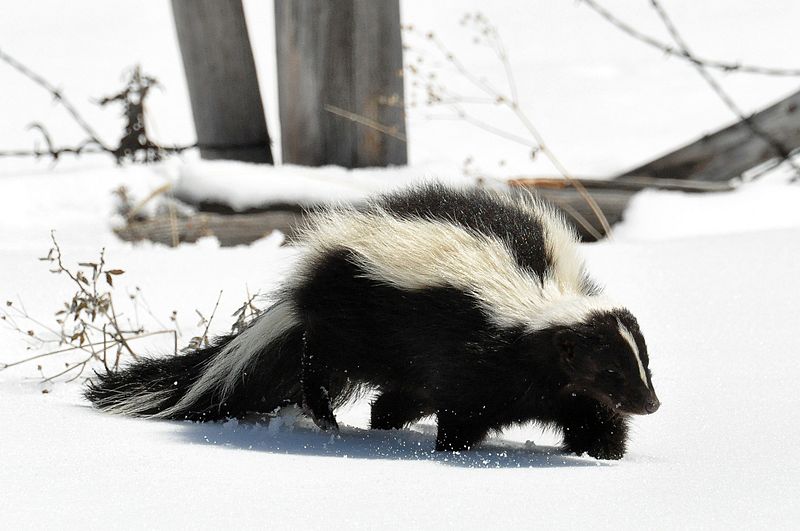
Striped Skunk (Mephitis mephitis, photo courtesy Dan and Lin Dzurisin, Wiki Commons)

Striped Skunk (Mephitis mephitis, photo courtesy Dan and Lin Dzurisin, Wiki Commons)


Then, I see a skunk maybe 15 or so paces behind her on the bridge’s sidewalk, fretful turning this way and that, appearing to feel indecisive about whether to follow in the direction of the young woman or retreat and go back to the other side of the bridge. Maybe it has just realized how deep the gorge lies below. A slightly bedraggled skunk, it still is striking for the amount of white on its back. Suddenly it runs quickly, extremely quickly for a skunk, who usually find little reason to get out of anyone’s way. In my rear view mirror I see that the skunk is now just a few feet behind the young woman. It looks as if the skunk is chasing her. How will this story end? There is no place for me to turn around, just as there is no place for the young woman and the skunk to get away from each other easily. Did the insouciant seeming young woman lose her insouciance? Did the skunk overtake her and pass by, following other urgent interests? I pose various fictional endings to myself, some amusing, others dreadful and fantastical, but am most interested in what I cannot know–the true ending of this true story.

Curiously the students and I had just been talking about skunks a propos of Darwin. We have been admiring Darwin’s lovely temperament–how unbiased and good-natured he is in his observations and encounters throughout his long voyage on the Beagle. He is painstaking in his descriptions of the Diodon (puffer fish) and the Aplysia (sea slug) and so on. He is curiosity itself–except when he comes across a skunk, which in South America is called the Zorillo: “We passed the night in Punta Alta, and I employed myself in searching for fossil bones, this point being a perfect catacomb for monsters of extinct races….In riding back in the morning we came across a very fresh track of a Puma, but did not succeed in finding it. We saw also a couple of Zorillos, or skunks,–odious animals, which are far from uncommon. …Conscious of its power, it roams by day about the open plain, and fears neither dog nor man….Certain it is, that every animal most willingly makes room for the Zorillo” (The Modern Library edition, p. 72). And so he did–Darwin, the most tenacious naturalist of all times, made way for the Zorillo. I continue to speculate on the seemingly inevitable encounter between the young woman and the skunk that I have described. Did nonchalance meet nonchalance? In other words, perhaps nothing of note occurred after I rounded the corner beyond the bridge.

My Sword Garden!

Rex Fernandez the cat detects signs of life in amaryllis bulb

Rex Fernandez the cat detects signs of life in amaryllis bulb


The Red Lion is out! He has sprung, finally. It is a brief moment, considering the year of care that he required of me in order strengthen him for this burst of movement upward. Though, I confess that I was not thinking of him every day of this past year. And he is not the only Red Lion. I have others and I am loyal to them all, and to his relatives who go by other names—Vera, Clown, and Novella.  They are everywhere in my house—six in the dining room, three in the study, three in the kitchen, three in the alcove, and eight in the basement, where four on the washer and four on the dryer gyrate to the sudsing and tumbling of clothes to no ill effect apparently. They comprise my bevy of amaryllis bulbs, and they are too many–a true plethora, a surfeit, a glut. Why so many amaryllis? It’s not my fault. My husband runs a landscape design/garden center business. In early January he brings home the amaryllis bulbs that did not sell during the Christmas season.  We give them away to friends, but still there are more. I pot up the orphans because I cannot resist what I know they will do with just a little soil, water, and light.  I moisten potting soil in my biggest mixing bowl and pot up the fat brown bulbs, taking care to stuff down their wiggily spongy roots (unlike the roots of tulip and daffodil bulbs, amaryllis roots remain living all year, whether potted or unpotted). The bulb planter then becomes a bulb watcher, looking for signs of life. Just when one is ready to state that this is the bulb that will not do it, just then it does! The tip of a green sword emerges. From then on the bulb watcher should not leave the premises. The large flowering bud at the tip of the green sword opens in a ballet dance of shimmering, iridescent seductive curves. Individual flowers join petal tip to petal tip, forming ring-like umbels.


The Red Lion

The Red Lion

The Red Lion posing!

The Red Lion posing!


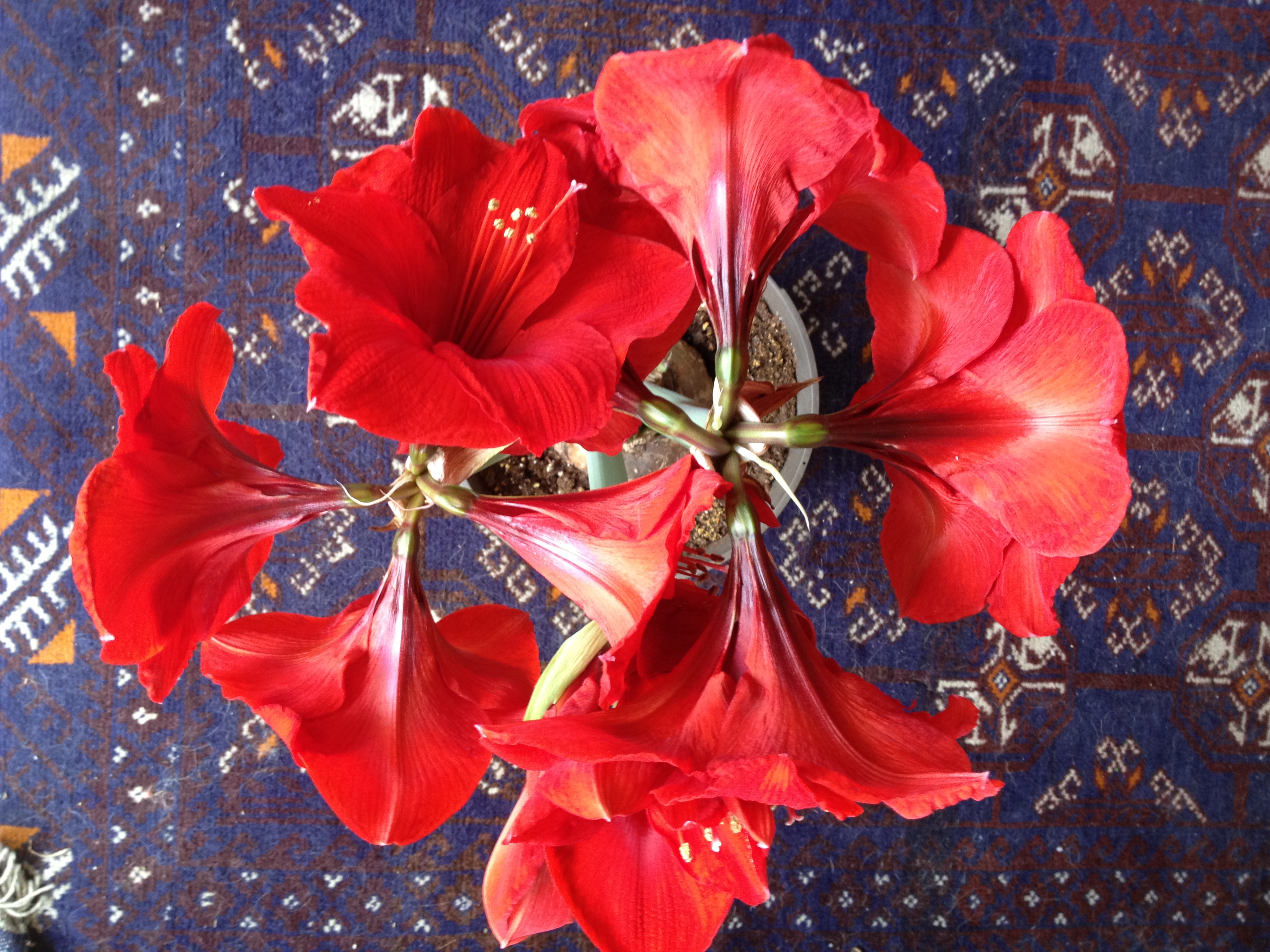
I carry the Red Lion from room to room, hoping to find the perfect spot for the perfect photograph, but my efforts do not do justice. Several writer photographers have done so, however—Starr Ockenga, author of Amaryllis, and Ken Robbins, author of A Flower Grows—in very different ways. Ockenga ordered 90 kinds of amaryllis bulbs and spent a year documenting their growth in her greenhouse. Robbins follows the growth of just one bulb in hand-tinted photographs. Finally, standing on a table, I view the Red Lion from above.


Red Lion seen from above

Red Lion seen from above


The scientific name of the amaryllis is Hippeastrum, or horse star. In 1837 the Honorable Reverend William Herbert, Dean of Manchester named the genus thusly perhaps after a holy water sprinkler, whose shape had its antecedents in a medieval weapon used by knights, known as the “morning star.” The common name, amaryllis, has a more troubling origin. A lovely nymph named Amaryllis fell in love with a handsome shepherd named Alteo, who was impervious to her love. He said that all that he desired was a flower—one that was new to the world. Amaryllis wished to comply with this desire. She consulted the Oracle of Delphi who advised her to dress in white, plant herself at his doorstep, and pierce her heart with a golden arrow for 30 nights. She did this. When Alteo finally opened his door, there was a red flower. Her blood, so slowly dripped, had become the amaryllis.


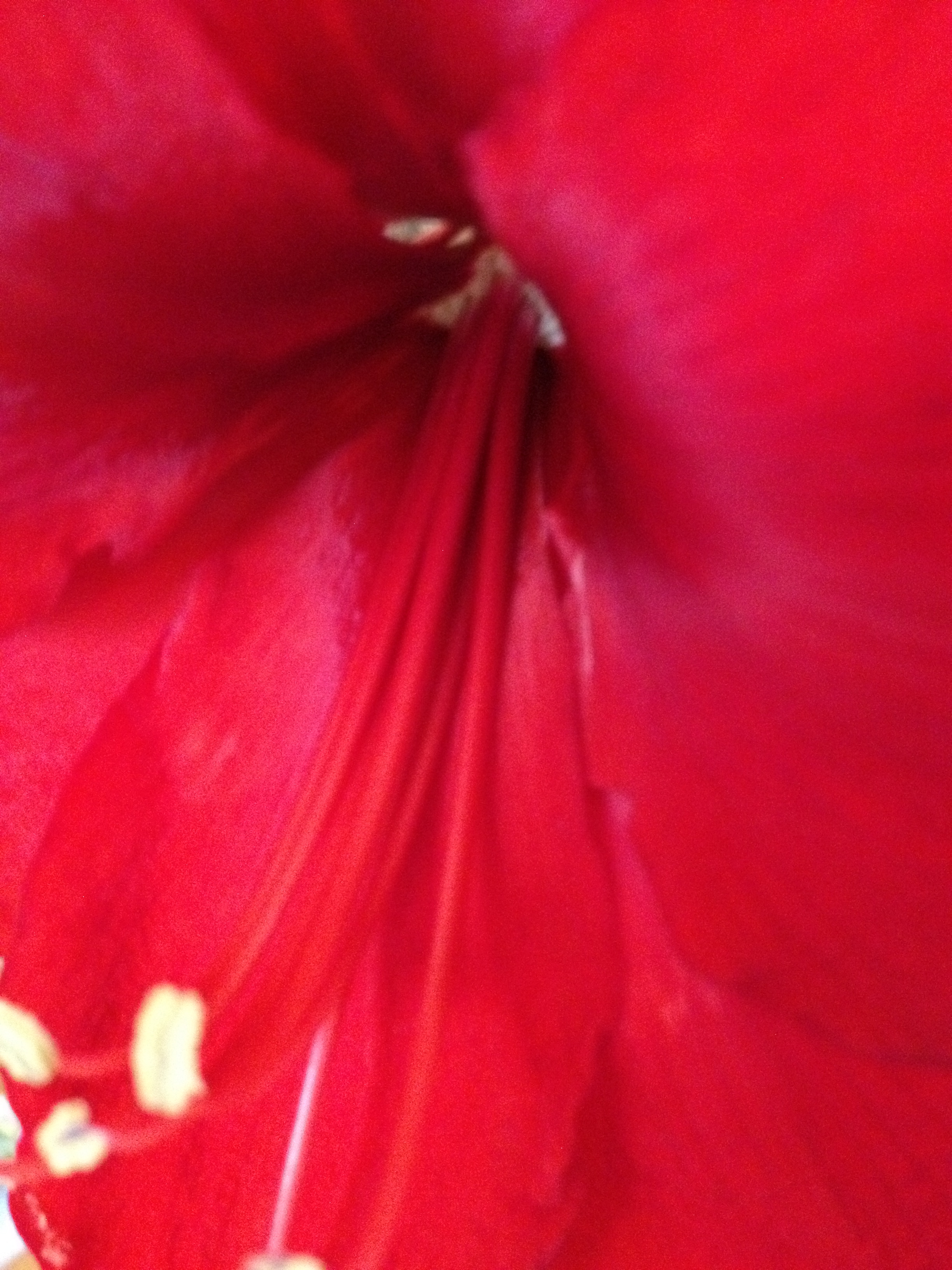
The Red Lion again!

The Red Lion again!


The Scottish poet and garden writer Muriel Stuart (1885-1967) writes in her book Fool’s Garden (1936) that “There is a sex appeal in flowers, no less than in human beings. Unguessed, unexplained, but present, shown by the garden lover’s preference for rose or magnolia, for orchid or gillyflower, for tree or rock plant. Strong and irrestible, the wherefore they know not, the mysterious drawing power is there, some potency distilled from stem or stamen, curved petal-lip or watching eye. And so we are drawn to certain flowers by some sex appeal of growth and colour, no less than to certain people by hand or eye, or wayward toss of hair or turn of chin. Show me a garden and I will show you the gardener’s soul” (p. 195). Stuart, more English than Scottish, wrote poems, whose themes were sexual politics and horticulture, that were admired by Thomas Hardy. Her gardening book is full of sweet stories about the “whimsies” that she and co-worker, her young son Adam, contrived in their garden, one being a special “sword garden,” for plants whose leaves are “swordy and austere.” Their vision was a garden full of “stately spears” and “tiny daggers” and “lance lifters.” Muriel  writes that she and Adam, the fools of her title, learned much in the planting of their “unorthodox” garden.

It occurs to me that my collection of amaryllis is a sword garden–and what could have more sex appeal than the Red Lion? For me, however, the sex appeal is not so much in the flower, but in the tip of green just beginning to show itself from the brown bulb, like the spire of a cathedral in a dull place. Every year when it’s warm enough I carry the tired bulbs outside to replenish themselves in the shade. The slugs, leaving trails of silvery slime, nibble them to shreds,  and the resident groundhog and rabbit may feast a little as well. I splash water on them in the droughts of August. By fall their tattered leaves have yellowed, but the bulbs are plump again with stored food reserves made by the leaves. Just as frost arrives, I carry them inside and wait for the tip of the green spire to appear. Many gardeners consign amaryllis bulbs to the compost pile, but they can live and flower for 75 years. Perhaps I will be nurturing my fool’s garden of amaryllis for some time to come.