Snow as Metaphor: Revealing and Concealing

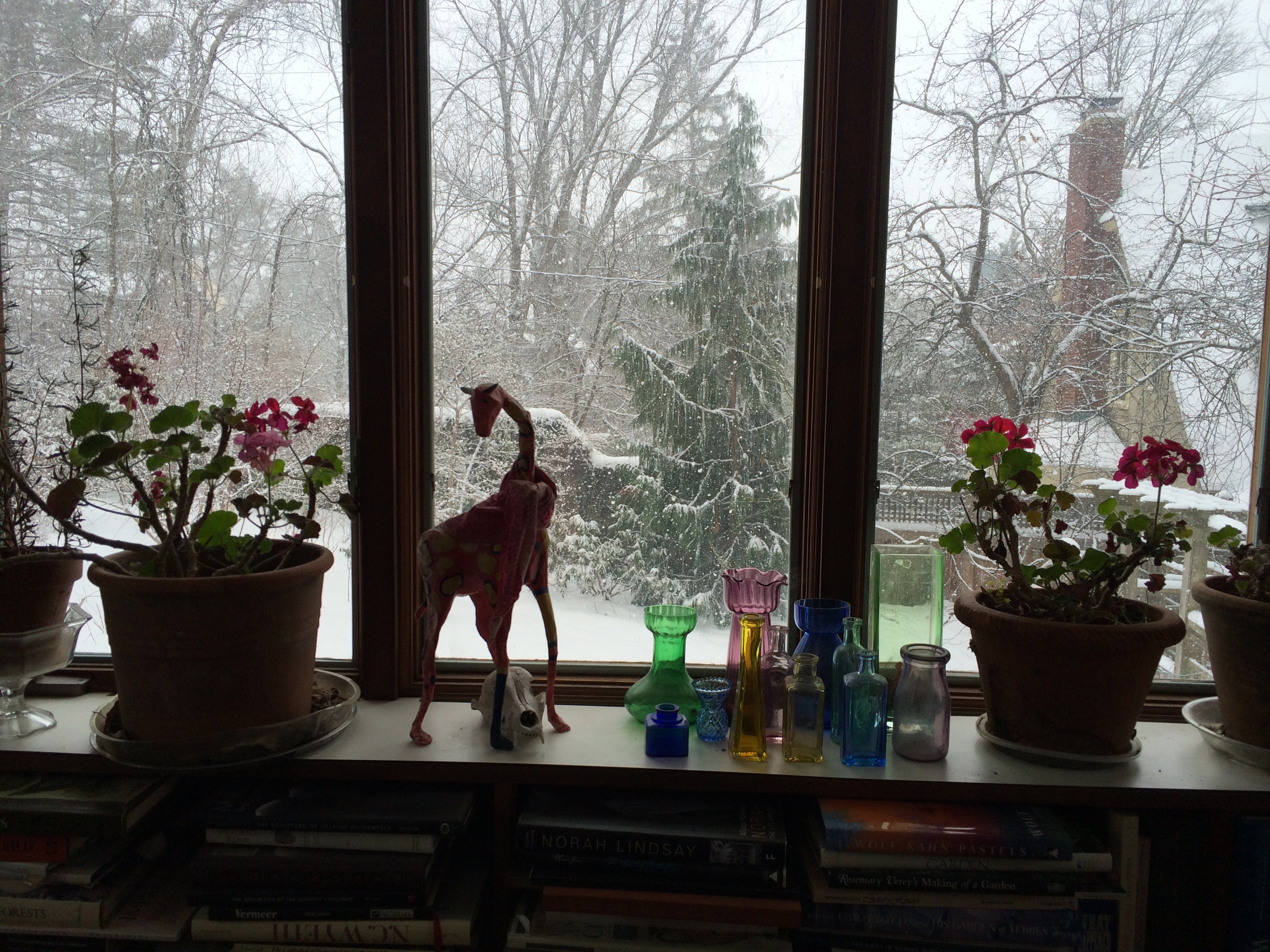
From the inside looking out on a cold morning in Ithaca.

From the inside looking out on a cold morning in Ithaca.

It was 1° in Ithaca, NY, this morning. It seemed cold but then I checked on my daughter’s temperature, she has recently moved to Saranac Lake, NY, and it was negative 15°  there. So I felt warmer but overindulged and longed to give some of this excess warmth to my daughter.

There was yet a new dusting of snow. Yesterday morning felt more like being in a snow globe turned upside down by an enthusiastic child, while today a cobweb mohair shawl covered surfaces and crevices. All this month I have been thinking of the cold and the snow, wanting to appreciate winter, understand how it helps us see or not see what is around us. (And if we feel a longing for what we cannot see, this perception should help us remember to love that which is missing when it is right in front of us.)

The garden bench is occupied.

The garden bench is occupied.

This reminded me of a favorite text that I used with my academic writing students at Ithaca College, Figures of Speech for College Writers, an anthology by Dona J. Hickey. The readings were all about metaphor, the central thesis being that metaphors are imperfect and paradoxical, concealing and revealing in one tiny phrase. The students and I found a lot to discuss in the essays chosen by Hickey.

The naturalist’s calling is to learn from first-hand experience. This is difficult at 1º,  but I have a dog who lives for just that, so off we go several times a day, around the block, if the roads are too bad to get to the country.

I see the tracks of a rabbit out early. I know her in summer, and now I see her hunched in the cold, feet making butterfly shapes.
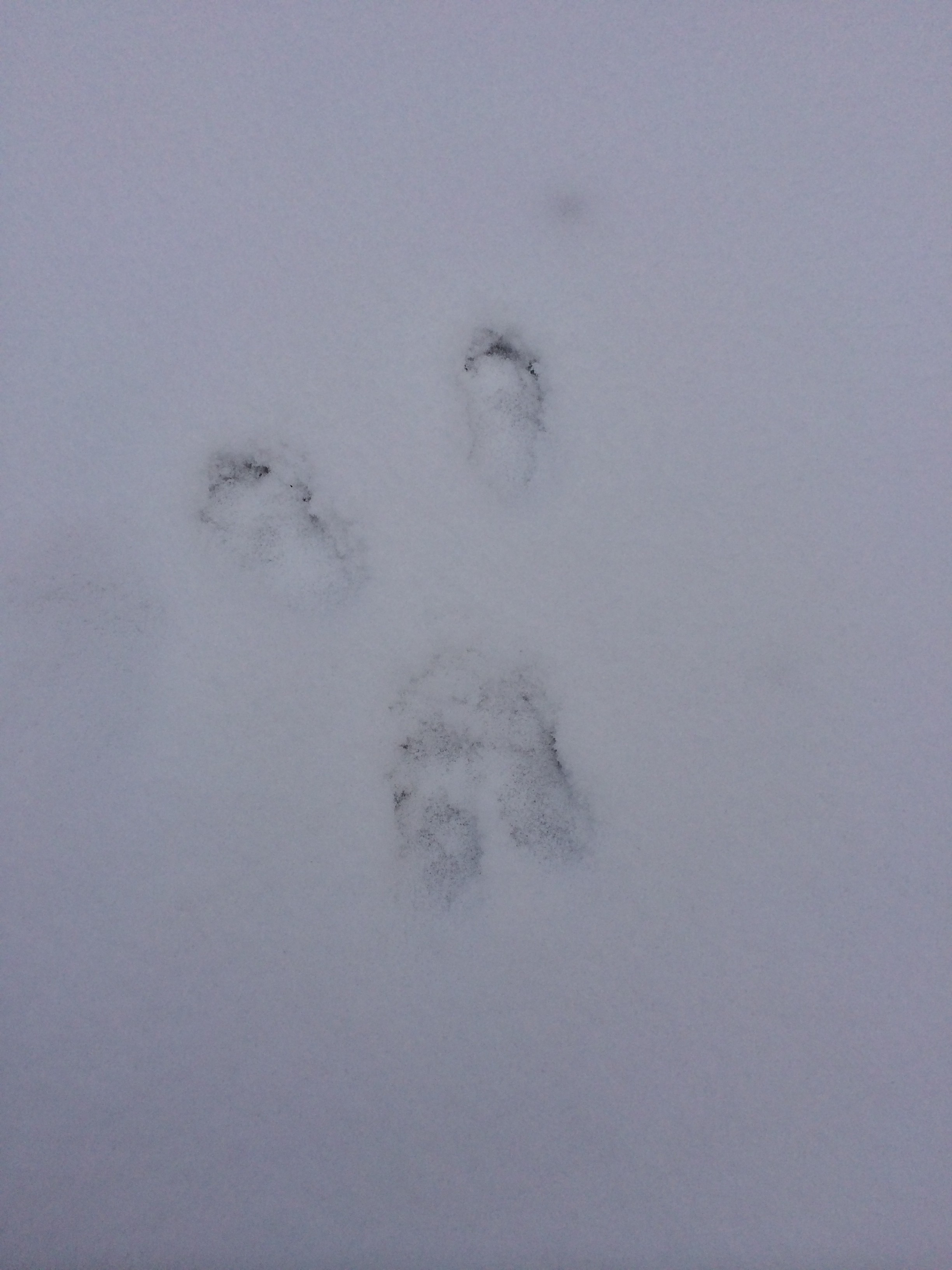
Butterfly-fly tracks of one of our neighborhood rabbits.

Butterfly-fly tracks of one of our neighborhood rabbits.


I see the brown-and-white skeletons of summer’s weeds against the winterwhite of early morning. The snow reveals their delicate structure clearly now. In summer they probably appeared nondescript, without definition, to most passers by.
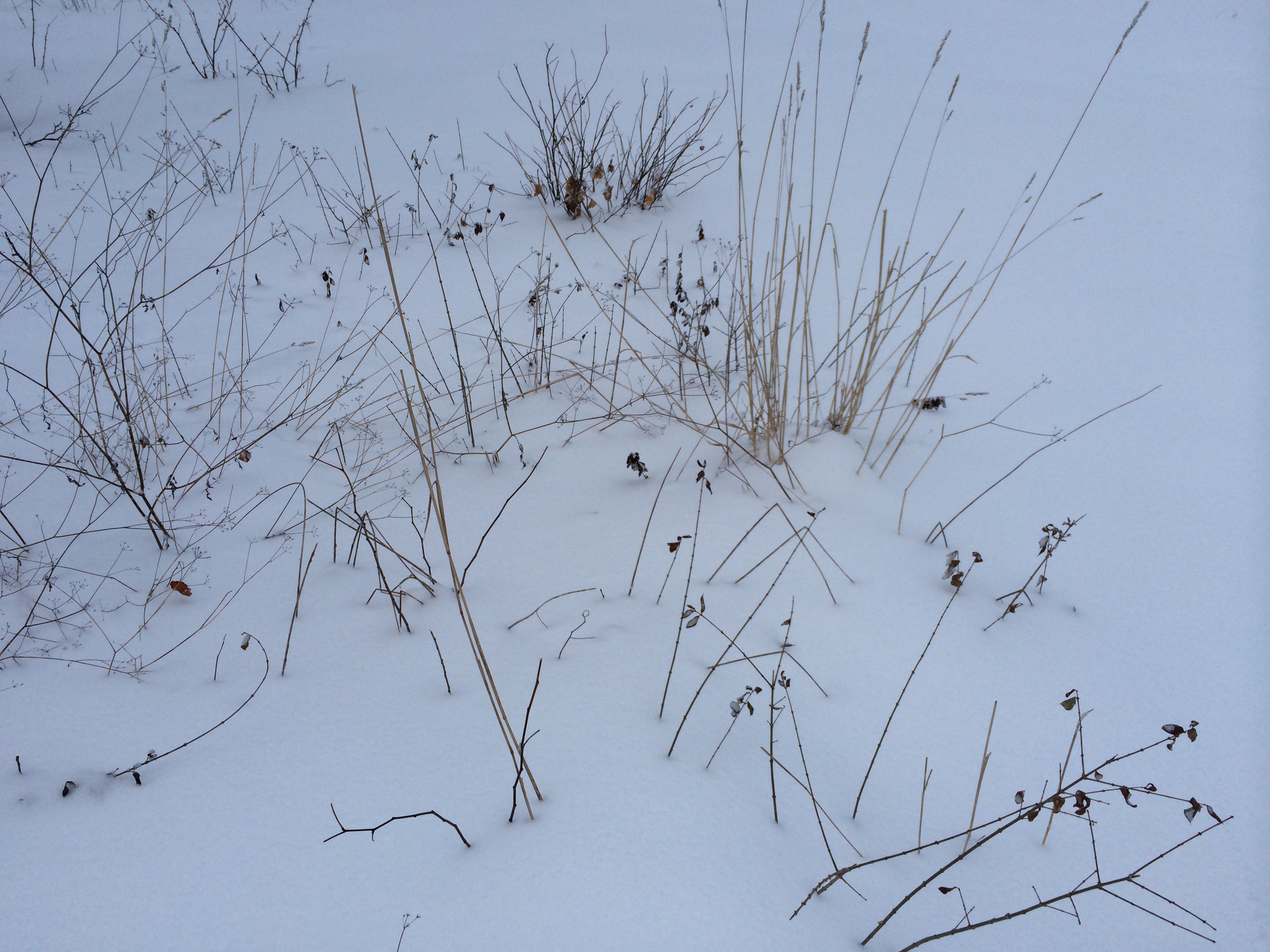
 

Winter weeds: a chiaroscuro.

Winter weeds: a chiaroscuro.

I see the five needles, bundled into a fascicle, of the white pine displayed as if for a textbook. I would not have noticed that fallen fascicle if not for the whiteness of the ground.
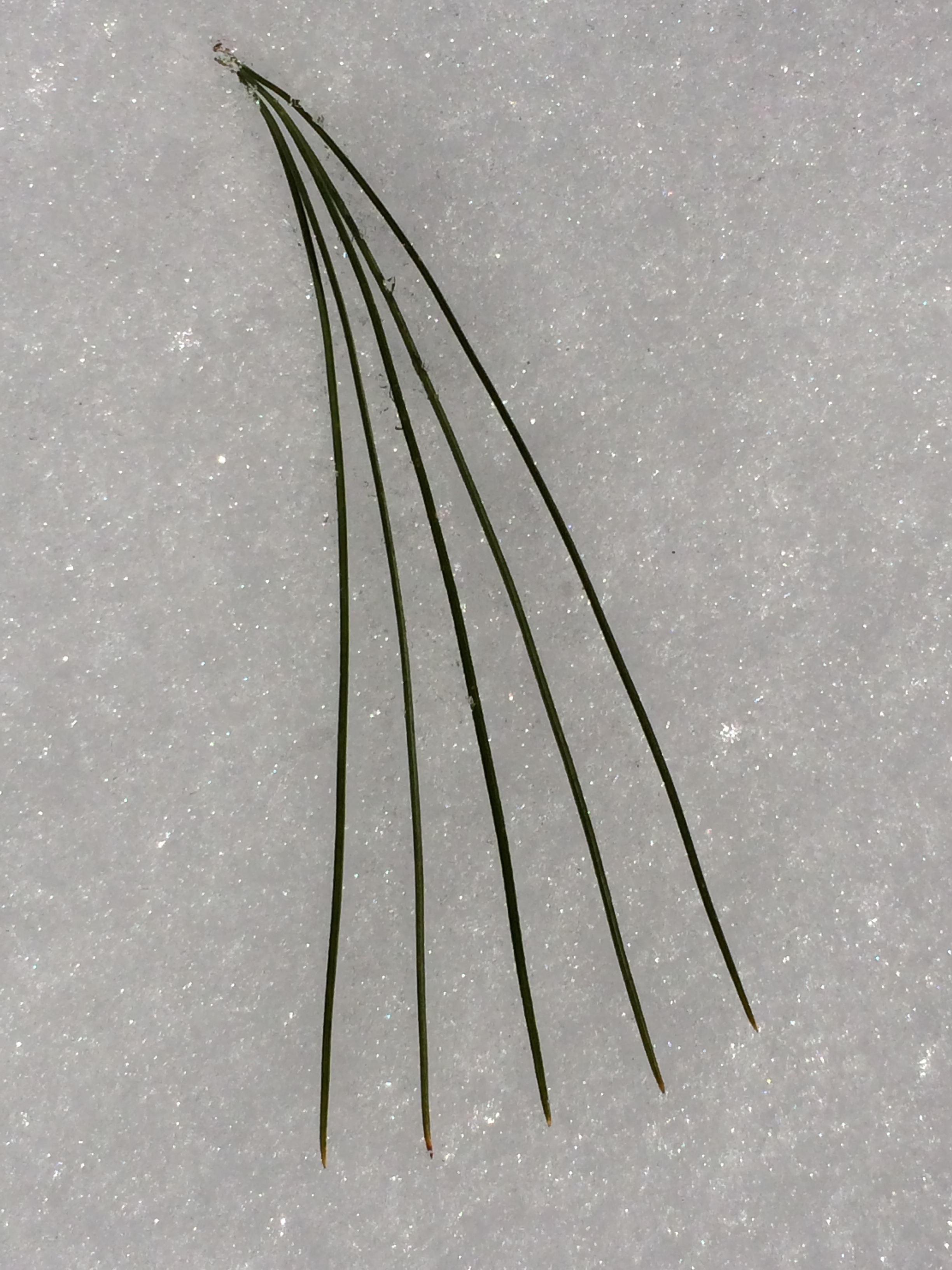
The white pine displays the characteristic 5-needle arrangement of a needle bundle (fascicle).

The white pine displays the characteristic 5-needle arrangement of a needle bundle (fascicle).

I see top hats on the golden-green furry buds of the star magnolia.
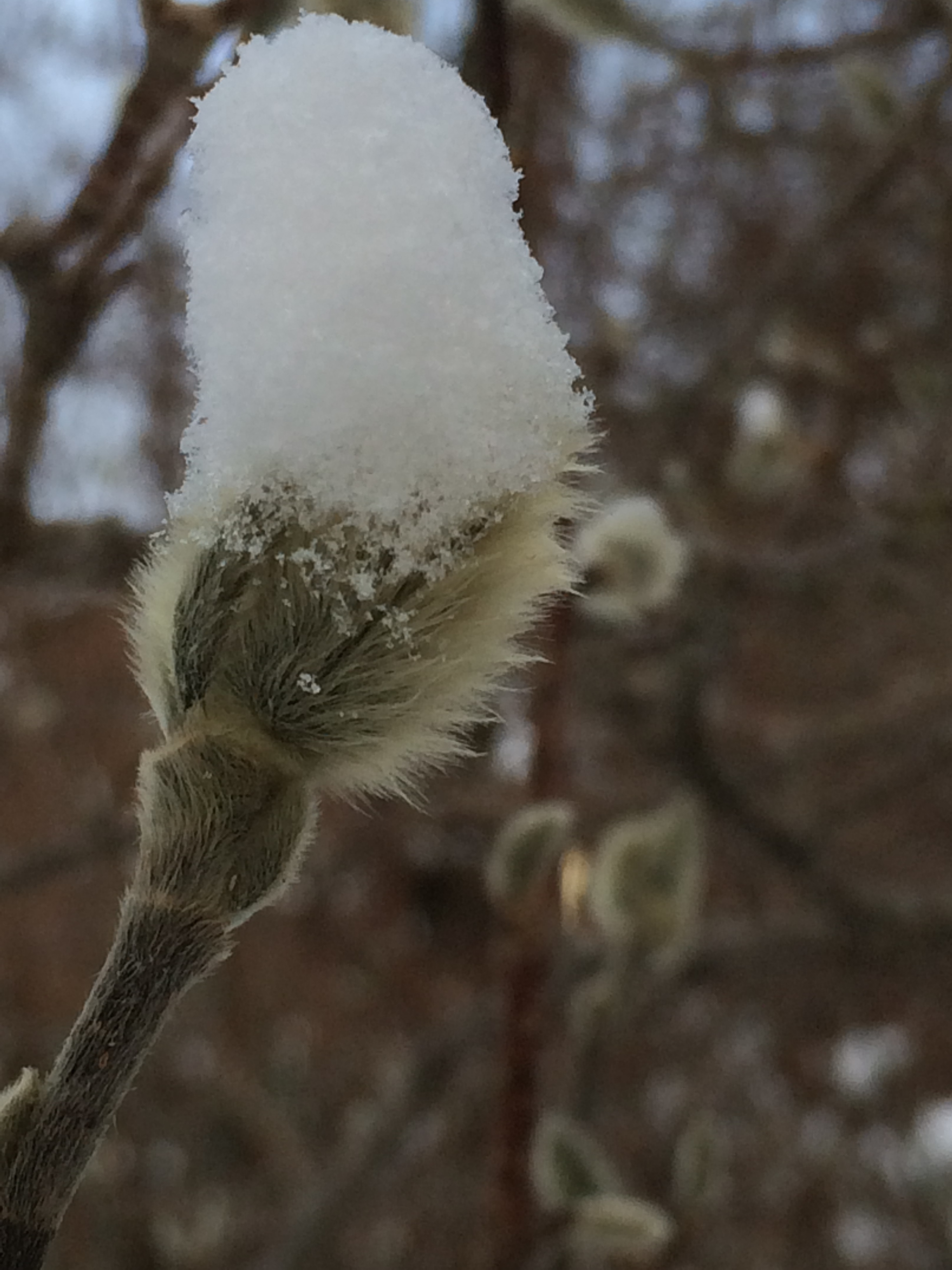
Snow-capped star magnolia bud.

Snow-capped star magnolia bud.

I see the graceful architectural sway of the main branches of the Weeping Alaska Cypress (Chamaecyparis nootkatensis pendula) that my husband planted to replace the magnificent multi-stemmed white oak cracked by lightning a few years ago. I was too busy then to document its life and death, but now every time I look at the cypress, I remember to weep for the white oak.
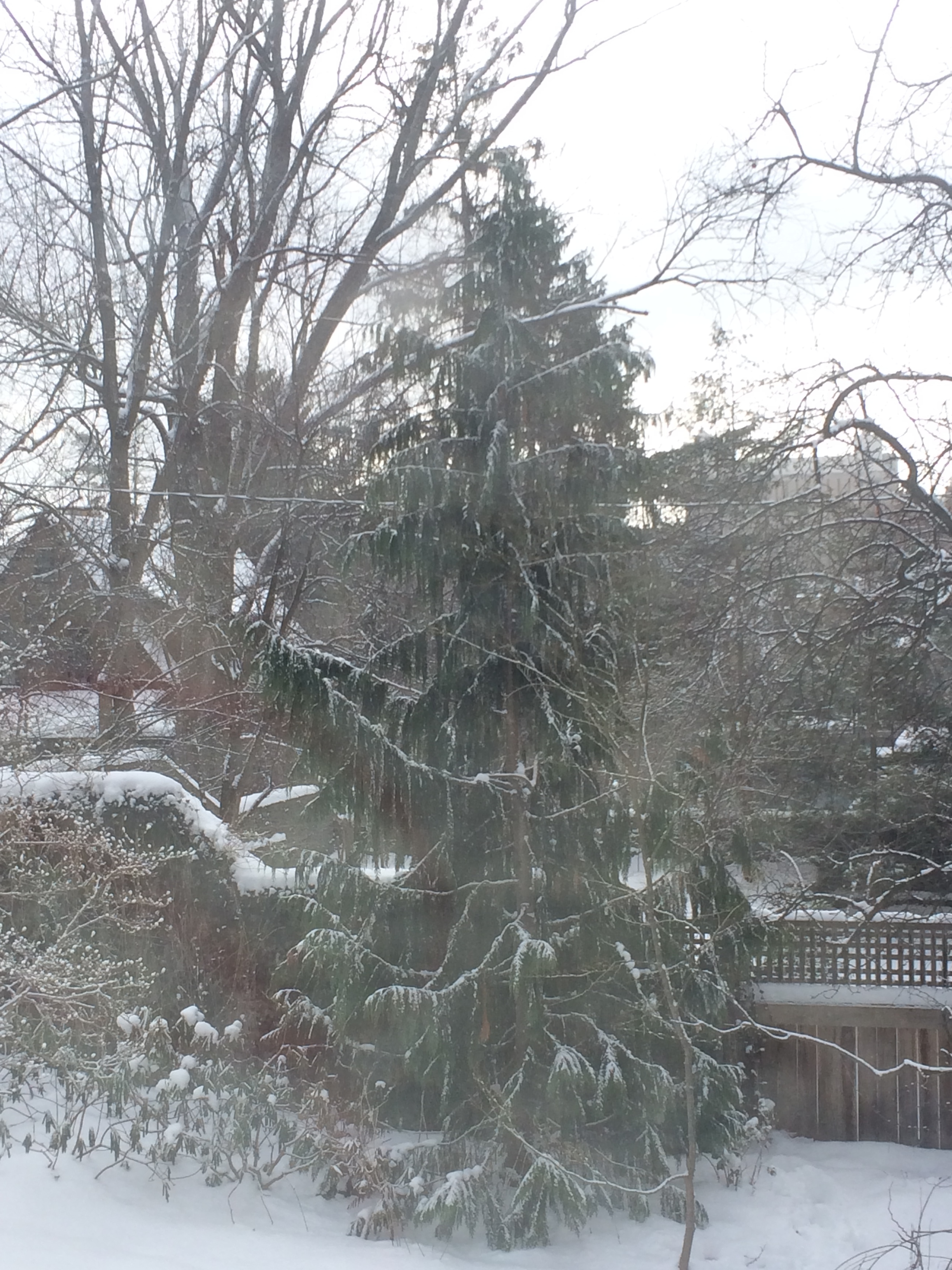
Snow revealing architectural elements of the graceful Weeping Alaska Cypress.

Snow revealing architectural elements of the graceful Weeping Alaska Cypress, with star magnolia to the far left.

I see a part of a tail in the driveway. There’s a tale here I am sure of something that happened in the night…..

A tail is lost....

A tail is lost….?

The naturalist does turn to literature to find answers to questions and deepen perceptions. This fall I stumbled on a wonderful book by Peter J. Marchand called Life in the Cold: An Introduction to Winter Ecology (4th edition), published by the University Press of New England. It is a somewhat academic text, but so clearly and elegantly written that I recommend it as pleasurable reading for anyone on a cold winter’s evening.
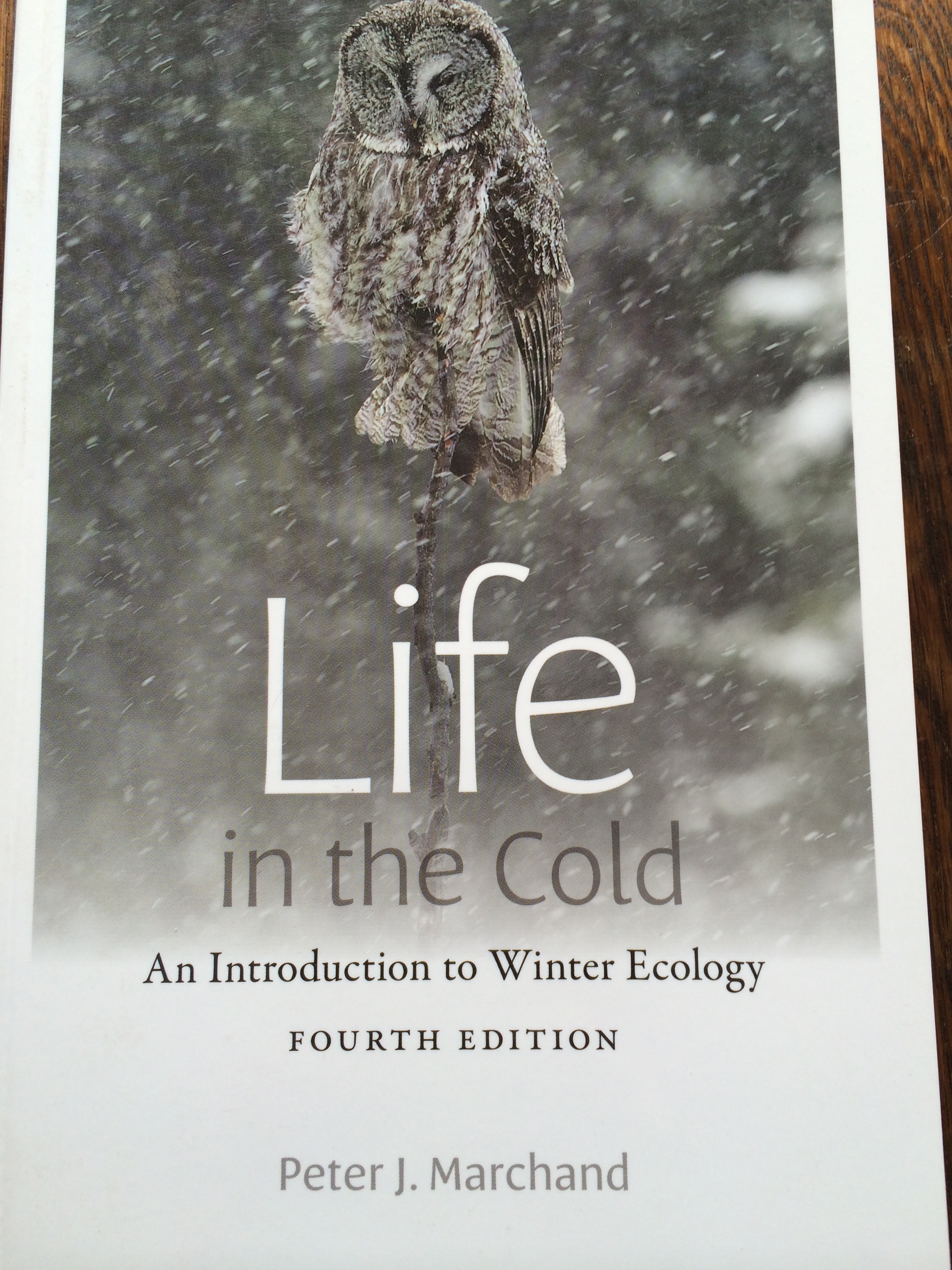
A revealing book on winter ecology.

A revealing book on winter ecology.

Last winter I wrote in one of my blogs about how trees adapt to winter, but now I am interested in Marchand’s chapter titled “Humans in Cold Places.” The take-home message is that humans do not have many adaptations for the cold, but they can increase their tolerance, as shown in studies that he describes of aboriginal Australians, the Kaweskar and Inuit peoples, Norwegian and Gaspe fisherman, Quebec City mailmen, Antarctic workers, Finnish outdoorsman, and Tibetan and Indian yogis. This latter group shows some of the greatest ability to exhibit cold hardiness. He writes:

A group of Tibetan Buddhists who live in unheated, uninsulated stone huts in the Himalayan foothills and who practice an advanced form of meditation known as g Tum-mo yoga, show an extraordinary ability to elevate skin temperature in their extremities by as much as 8° within an hour of assuming their meditative posture.

He cites an interesting study showing that yoga-trained army recruits demonstrated greater cold hardiness than physically trained recruits.

Marchand concludes the chapter:

By our cultural and technological ingenuity, we have inhabited the coldest places on earth. Biologically we remain essentially tropical beings.

Tropical? I consider myself more of a north-temperate being as truly tropical climates make me wan and lifeless. Maybe the 64 winters that I have lived through have caused some basic physiological adaptation, but it would be difficult for a researcher to gather data from my experience.

And there are those people who seem to be fatally attracted to cold temperatures. Rebecca Solnit’s new book The Faraway Nearby describes haunting stories of explorers and travelers in the Far North. For example, Peter Freuchen, a young Dutch/Jewish explorer, volunteered to stay in a tiny hut in northeastern Greenland for the winter of 1905/1906 to take meteorological data. He was only 20. His companions left, his dogs were eaten by wolves, and the hut’s interior space became smaller and smaller from the condensation of his breath into ice. Solnit writes:

Before winter and his task ended and relief came, he was living inside an ice cave made of his own breath that hardly left him room to stretch out to sleep. Peter Freuchen, six foot seven, lived inside the cave of his own breath.

Solnit’s book carries many themes, but particularly ruminates about stories that are told and retold and mistold. Tightly woven, the book’s stories will entrance and perhaps frighten the reader on yet another cold winter’s night.

Cover of Rebecca Solnit's new book, which is part memoir, part essay, part many parts.

Cover of Rebecca Solnit’s new book, which is part memoir, part essay, part many parts.

But back to snow as metaphor, for example: snow is a shawl or blanket. Snow cover insulates life in winter, concealing the seeds and roots that will grow in spring. They are there in frozen ground under snow, waiting. Some life forms wait for what seems like forever.

Last year I learned to play, courtesy of my piano teacher, little Fran, who is 91, the very old tune, “Es ist ein Ros entsprungen,” translated as “Lo, How A Rose.” There is a line describing how the rose

“it came, a flow’r-et bright, ___ Amid the cold of winter, When half spent was the night”

(15th-century wording; see Carols for Christmas, arranged and compiled by David Willcocks).

Half spent is our winter here. I will continue to observe snow’s concealments and revelations and sympathize with the cold even as I look forward to my primroses showing up bright in the squishy earthmelt of early April.

Primrose.
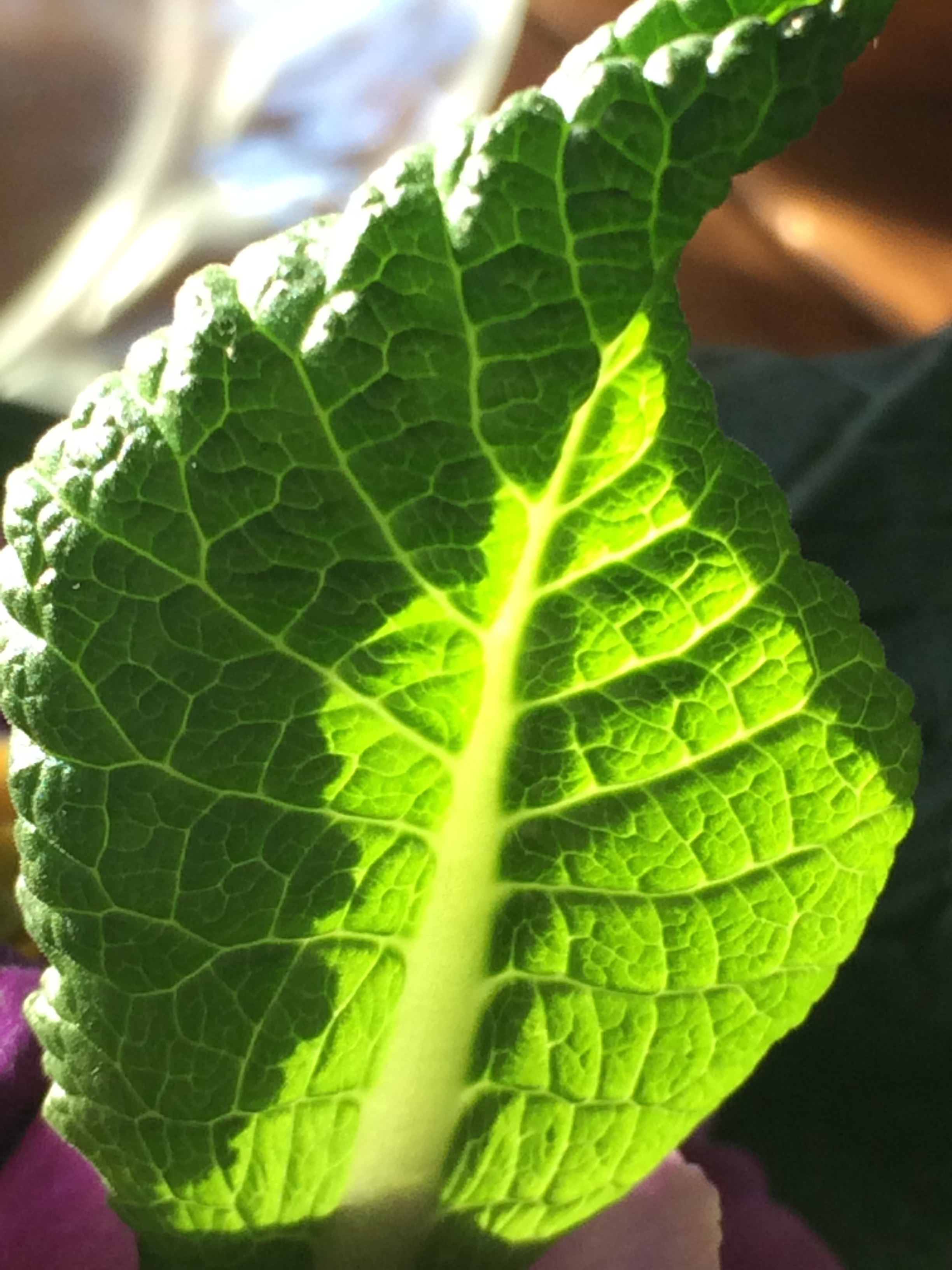
Primrose.


Light shining through an unfurling young primrose leaf.

Light shining through an unfurling young primrose leaf.

The Importance of Mud Puddles!


Young man with stroller, little boy, and old man with young girl.

Hiking to pond at Topstone Park: young father with baby in stroller, young boy, and grandfather carrying young girl.

We are on an “adventure” with my son and the grandchildren, five and a half, two and a half, and twelve days old, on Labor Day. Restless people of all ages settle down in walking through a forest. So much the better if there is a pond at the end of the trail.

Beginning in 1970, a small number of residents of Redding, CT, formed the Redding Open Land, Inc. (R.O.L.I) initiative  to provide open space for the town. Topstone Park would eventually incorporate most of the land that comprised Edward Steichen’s farm on Topstone Road. Longtime resident of Redding, Steichen, the famous photographer and delphinium breeder, had decided to sell almost 400 acres of his farm at about the same time as R.O.L.I. started its work. The story of Topstone Park‘s creation proves that a small group of individuals can preserve open space for community use.

At the end of the trail we arrived at a curvaceous pond (scroll down to see many views of the pond), complete with a small beach and a beautiful expanse of rose-colored waterlilies. Steichen photographed extensively in this area.  One of his most famous “pictorialist” (tinted) photographs is “The Pond–Moonlight” (now known as “the world’s most expensive photograph”).  However, Steichen’s greatest contribution as a photographer is no doubt The Family of Man, the book that includes the 503 photographs he made for an exhibition under the same name at the Museum of Modern Art in 1955. Capturing images of human emotions in faces of people from many countries around the world, he shows viewers how similarly humans of diverse ethnicities and cultures feel. Love here, at our elbow,  is the same as love far, far away on the other side of the Earth.

Waterlilies at Touchstone Park.

Waterlilies at Touchstone Park. Little green heron settles just to the right of this scene. The lavender of pickerel weed just visible in lower right side of photograph.

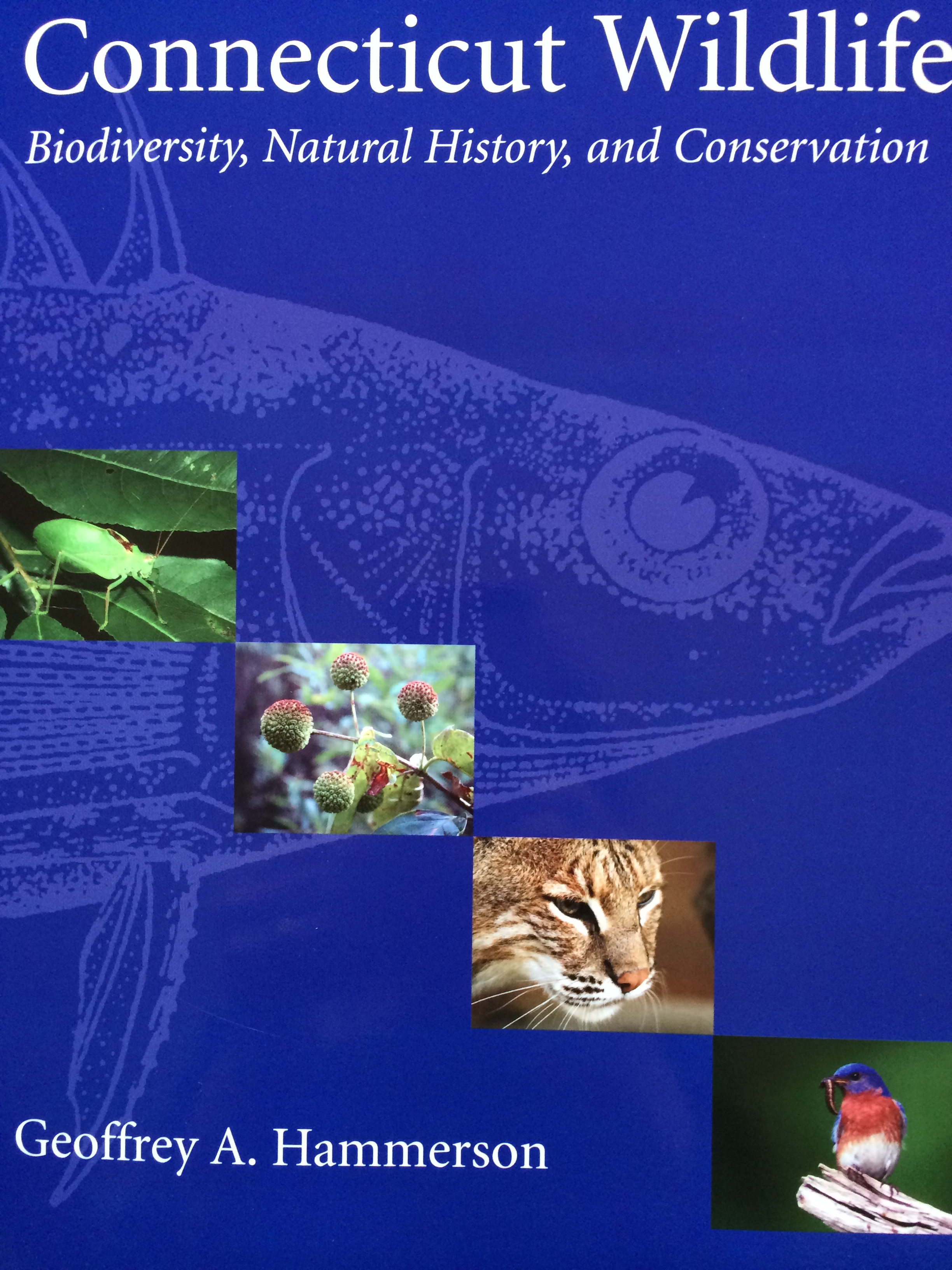
The children seize buckets left on the beach and start building a castle. I wade into the pond to fetch a few of the giant snails that sail, slowly, like an armada of Spanish galleons, underwater near shore. They are slightly slimy, covered with a gentle fuzz of green algae. The children make a fortress with a moat to enclose the snails but release them almost immediately as they discover that pouring bucket after bucket of water over them is fun. The moat slumps back into the sand in endlessly new wavy patterns and the snails sail back to sea serenely. I fetch more snails and encourage the children to touch the fuzziness of the algae on their shells. They are most likely the Chinese mystery snail (Cipangopaludina chinensis) or the Japanese mystery snail (Cipangopaludina japonica), according to information and photos in a wonderful book that I found:

Amazing reference work on Connecticut's flora and fauna.

Amazing reference work on Connecticut’s flora and fauna.

A little green heron  (scroll down to the sixth photo) soon joins us, settling on a dead branch poking out of the water lilies. The boy, who loves carrying his pint-sized binoculars with him wherever he goes, finally spots the heron, so perfectly camouflaged, his silhouette at the same jagged angle as the branch. He is thrilled, though I am not sure what he sees through the binoculars that he loves to brandish, but he does finally make out the well camouflaged bird with his naked eyes.

It is time to take baby back to mommy, so we  say good-bye to the pond, the snails, the water lilies, the little green heron, and the peacefulness. We walk back through the forest to the carpark. Here I photograph the encounter of boy and mud puddle.

He approaches.

He approaches.


“Can I?” he asks. “Sure,” I say.  He had already barreled into a puddle on our way into the park when no one was looking (and was told not to get his feet wet), but since we were the slow pokes bringing up the rear guard on the way back to the car, clearly no one besides ourselves would see where we were thinking of placing our feet.

He stares at it.

He stares at it.


The joy of wet, soggy feet.

The joy of wet, soggy feet.


“This is so much fun,” he says.

Does he see himself? The golden light of early morning? The ripples? There is so much to see.

I had not realized the sky was so beautiful until I saw its golden reflection in the puddles. It will be some time before baby can step in a puddle, but I am sure his adventure in Topstone Park registers somewhere in his small body.

It is a truism that the best things in life are free. Mud puddles fall into that category. Open space, open heart. All of us should have the opportunity to be in open space where we can experience the family of man becoming the family of all things on the Earth. The mud puddle has become a metaphor for childhood joy, a joy that is too often short-lived (please see the mission of The Muddy Puddles Project).

We must treasure the mud puddle at the very moment it appears in front of us–or, for sure, on our second chance because there is always a second chance.

Finding the Lonesome Pine


Vinegar Hollow. Stark's Ridge is the farthest bare mountain top (left of center). Back Creek Mountain stretches off on far top right.

Vinegar Hollow. Stark’s Ridge is the farthest bare mountain top (left of center). Back Creek Mountain stretches off on far top right.

Trekking abandoned logging roads by ATV with a chainsaw in the back of the vehicle is a new experience for me, but happily so. As a young girl I wanted to be a plant explorer in the great tradition of “Chinese” Wilson and Reginald Farrer, who brought back garden treasures from the remotest parts of lands still foreign to westerners at the time. Farrer roamed craggy mountains and misty valleys in Burma, China, and Tibet in life-threatening conditions armed with whiskey and a set of Jane Austen. So here I am, exploring remote mountain tops and glens of the Allegheny Mountains, fulfilling youthful dreams. I am home and do not need to carry whiskey and Austen.


Back Creek Mountain.

Back Creek Mountain  meets the sky above Vinegar Hollow.


The folds of Back Creek Mountain, which forms one of the north-south borders of Vinegar Hollow, looks impenetrable and pristine from Stark’s Ridge, the highest point directly opposite on the other side of the hollow. The wooded undulations of the mountain range reveal little of the history of human use of the landscape. In fact, it has been logged and relogged for the last several hundred years. Rough trails criss-cross the forest floor in a maze of switchbacks and curlicues. The forest giants are long gone, but secret gardens remain and a hoary pine native to the Appalachian Mountains.

Younger son on ATV.

Younger son on older son’s ATV.


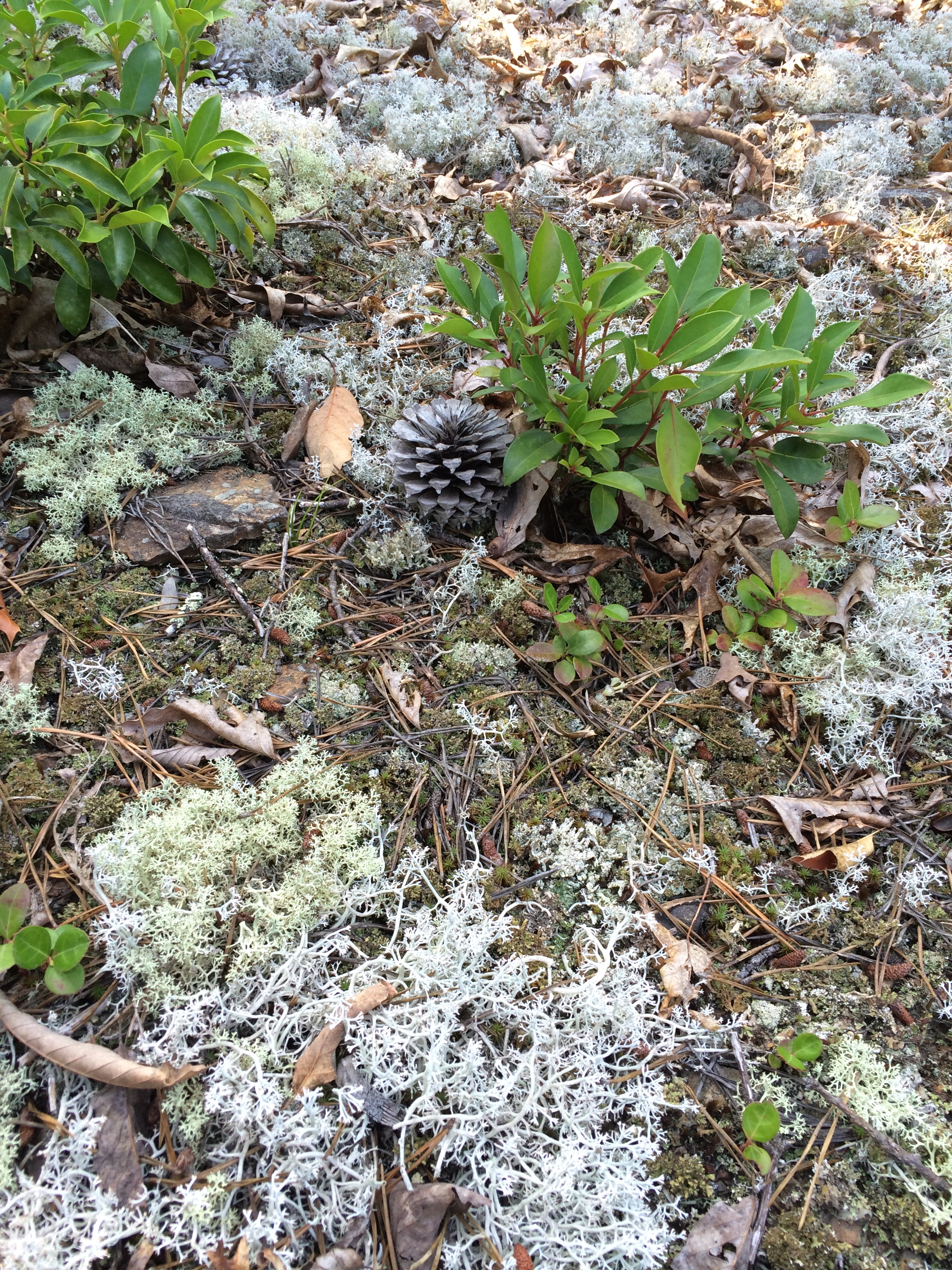
ATVs are bumpy, noisy, and smelly, but they aid enormously in botanizing and can be turned off while one explores on foot. My husband and I had driven up this part of the logging trail maybe half a dozen times, but never stopped to get out at this particular turn in the road. Maybe it was the morning light shining on an expanse of silvery pale green lichens that caught our eyes, but soon enough we were trying to hop about on delicate feet, in thrall to the wonders underfoot in what I am calling the pine cone garden.

Lichens and pine cone.

Lichened branches and pine cones.


Pine cone and lichens.

Pine cone and lichens.

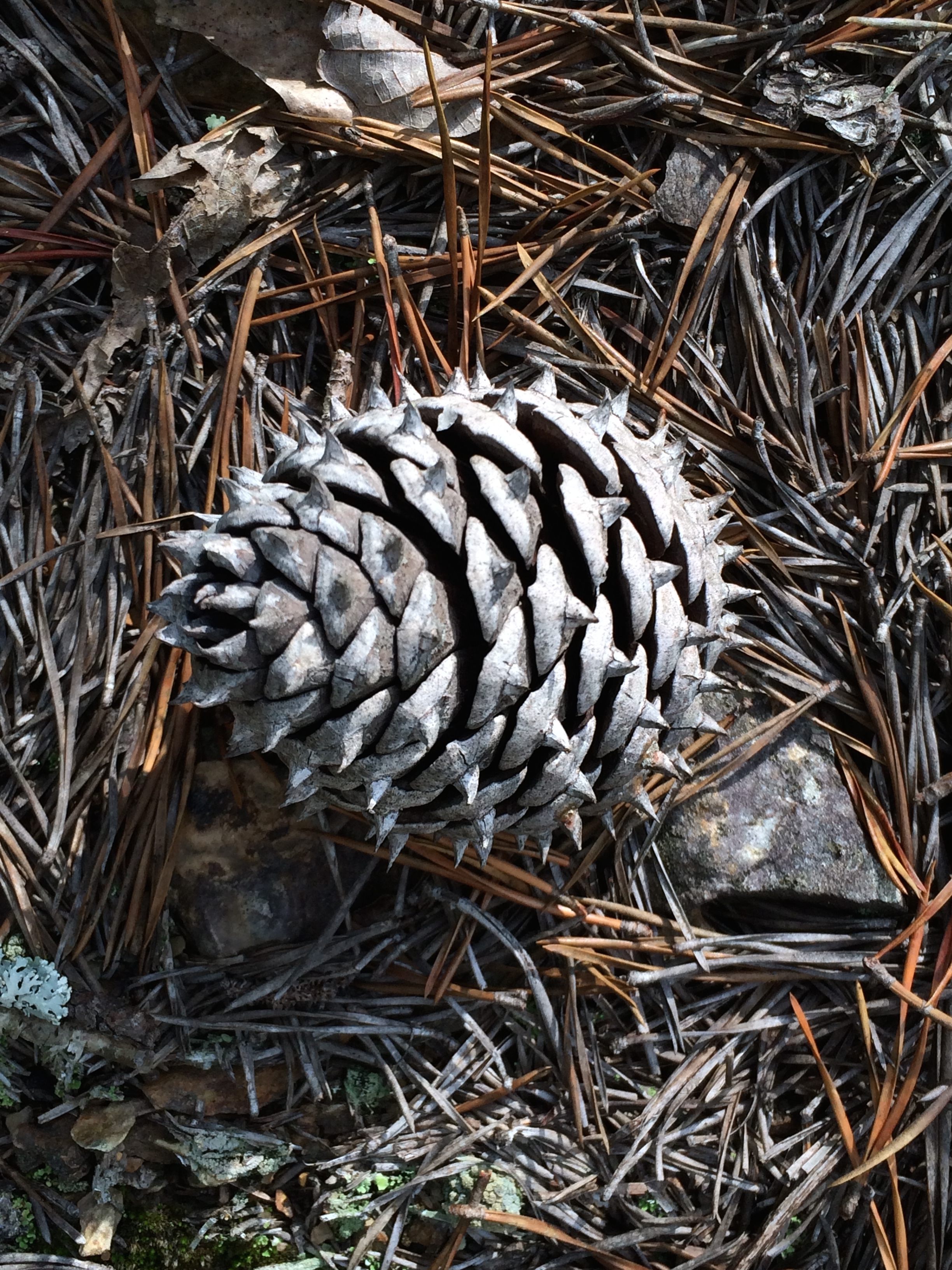
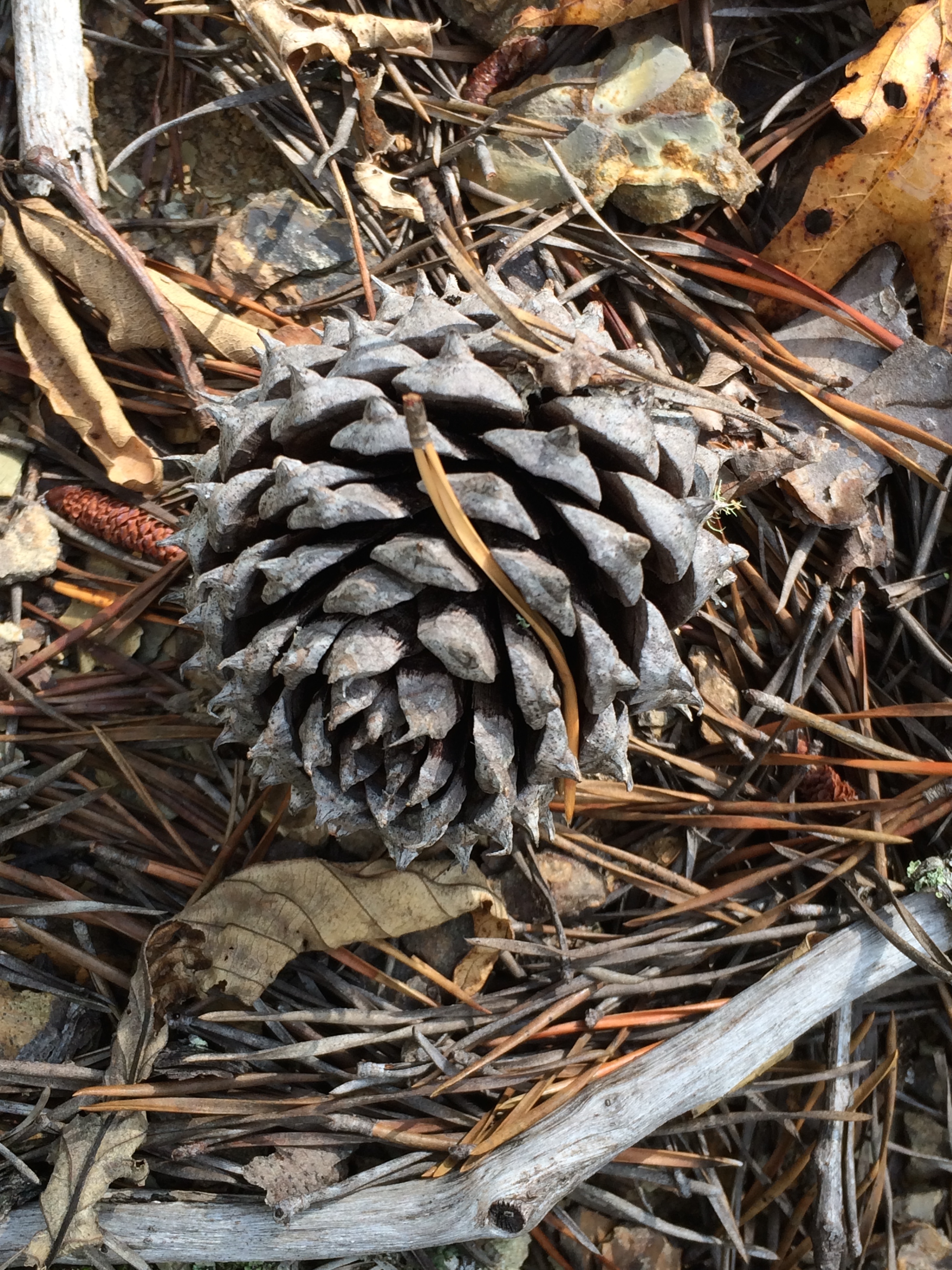
Whether nesting in lichens or pine needles, each cone seemed to be at home. Like sunflowers, pine cones have a deeply satisfying architectural form, the scales overlapping in an arrangement reflecting a sequence of numbers called the Fibonacci series. These cones are striking for their silvery gray brown shading and the curving, decorative prickles at the end of each scale.

Pine cone.

Pine cone.


Pine cone.

Pine cone.

The cones are stalkless, seemingly having sprouted out of stout branches.

Fallen branch with cones.

Fallen branch with cones.

But where was the parent tree? I looked up finally.

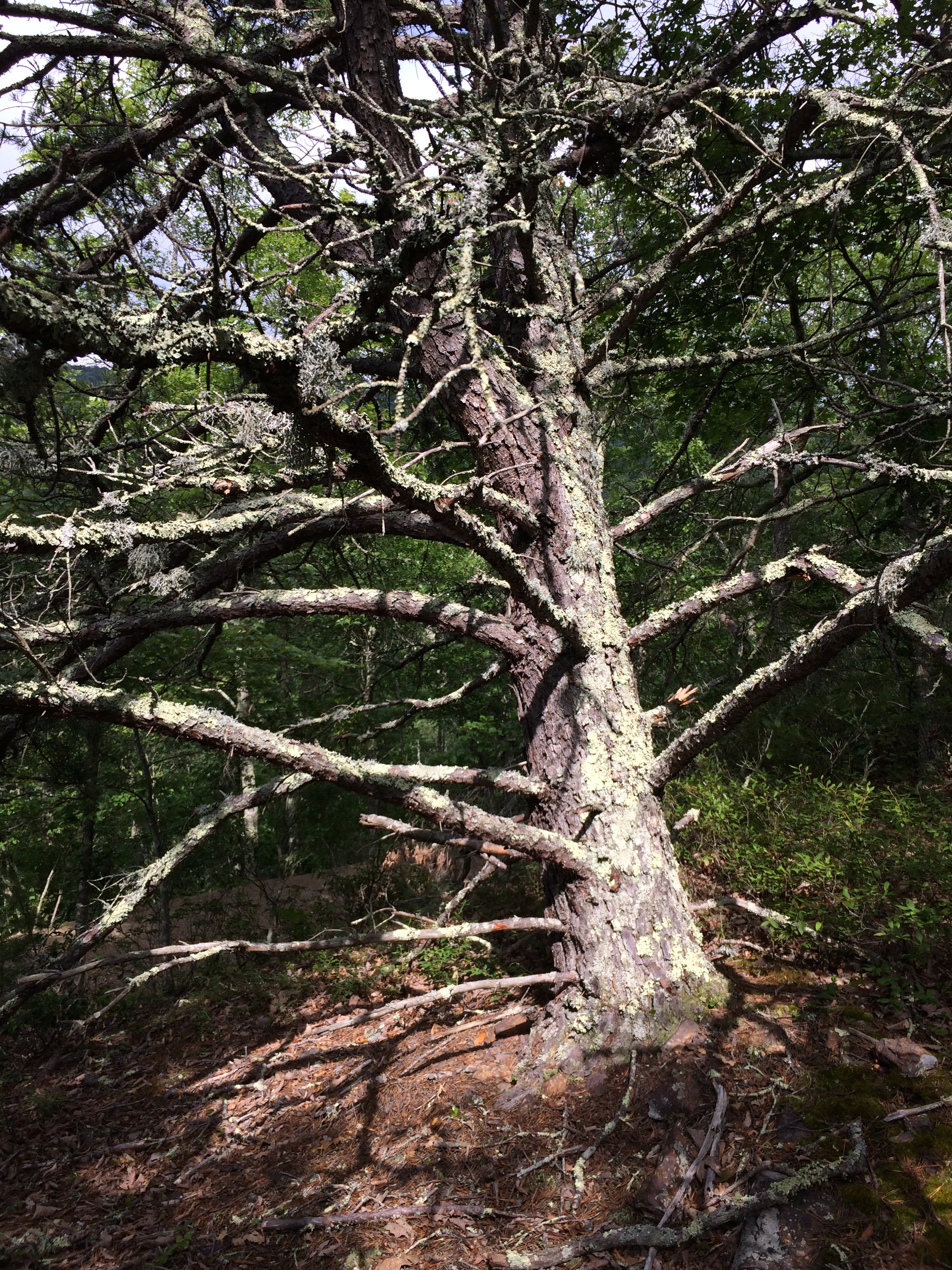
Parent tree.

Parent tree.

The morning light shone on its lichened, outstretched arms. One branch lay blasted on the ground.

Branch bent to the ground.

Branch of parent tree bent to the ground.

Lichens covered the bark exuberantly.

Lacy lichen.

“Lacy lichen” on parent tree.


Lichen on parent tree.

“Hoary lichen” on parent tree.

Further walking on this rocky slope by the side of the logging road revealed some dainty lichens displaying a  lovely pastel, slightly orange-pink coloration, something that forest fairies might have planned.

Fairy lichen.

Pink earth lichen.


Dainty lichen.

The extremely photogenic pink earth lichen again.

I know I wrote in my last blog about the importance of identifying small life forms, but I decided not to pursue lichen identification here (it would be like Alice falling into a wonderland of splendid but strange forms and vocabulary) because my primary goal now is to honor the pine and its cones. “Hoary lichen” and “lacy lichen” are just my own bland names, not proper common names. It turns out (courtesy of my husband’s research) that the lichen with the pink knobs is easy to identify via Google images. It is known by a lovely common name–the pink earth lichen. Its scientific name, Dibaeis baeomyces, is not at all user friendly. Project Noah offers a photo with a description offering the information  that the knobs are filled with “cottony fibers.”

My husband and I got busy taking measurements and assessing characteristics that would identify the pine.

Pine cone display technician David Fernandez.

Pine cone display technician David Fernandez.


A 2-3 needle pine!

A 2 (-3) needle pine! Apparently the number of needles per bundle is not totally constant.


One thing that makes pines fairly easy to identify is that there are not many different species of them in the world. Further, pine needles are arranged in little bundles bound in a common sheath, and the number of needles in the bundle (fascicle) is distinctive for each species. The familiar white pine, distinctive for its long, graceful needles, has five needles per bundle, for example.  So, it’s pretty easy to count the number of needles per bundle on a pine sample–we found two needles per bundle in this pine–and look up a list of 2-needle pines in North America. The list is not that long. Also, the pine cones of our pine were unusually prickly, which proved an excellent identifying characteristic. First we settled on Pinus echinata, the shortleaf pine, because it has prickle-tipped cones and it’s native, but its growth habit (overall shape) wasn’t right. We moved on through the list of 2-needle pines.

Voila Pinus pungens, commonly known as the prickly pine, table mountain pine, and hickory pine! Prickly pine  is certainly a suitable common name because of the cone, and table mountain because of the high elevation at which it likes to grow, but hickory pine? A hickory tree is in a completely different family and order and is known for its shaggy bark and edible nuts. I love it when the common names of life forms become interesting metaphors, connecting the unlike through some hint of likeness, so I puzzle over its derivation.  Hickory trees are often gaunt and gangly in shape, which is perhaps the likeness that inspired the common name of hickory pine because Pinus pungens is  described as having a “rounded, irregular shape.” Another possibility is that the common name recognizes the fact that Pinus pungens likes to grow with hickories. However, there were no hickories on this rocky hillside.

It is a lonesome pine. Unlike most species of pines, this pine is known for growing as scattered individuals, rather than in large groves.  Lonesome but not unsung. John Fox Jr. made this species famous in his book The Trail of the Lonesome Pine, a top-ten bestseller of 1908-1909, and a book still dramatized in yearly pageants in Big Stone Gap, Virginia where John Fox died in 1919. Fox’s book beautifully describes the Appalachian mountain culture and landscape, and the confusion and disruption that occur when modern civilization arrives, here in the form of the train and coal mining. Fox describes the lonesome pine repeatedly so that it becomes a character in its own right, representing the isolated individual struggling to retain identity. The main human protagonist is a young man from “civilization” who arrives to bring change to the area but is nevertheless sensitive to the value of what he finds there. Fox writes from the point of view of this character:

He had seen the big pine when he first came to those hills—one morning, at daybreak, when the valley was a sea of mist that threw soft clinging spray to the very mountain tops: for even above the mists, that morning, its mighty head arose—sole visible proof that the earth still slept beneath. Straightaway, he wondered how it had ever got there, so far above the few of its kind that haunted the green dark ravines far below. Some whirlwind, doubtless, had sent a tiny cone circling heavenward and dropped it there. It had sent others, too, no doubt, but how had this tree faced wind and storm alone and alone lived to defy both so proudly? Some day he would learn.

–John Fox, The Trail of the Lonesome Pine   

He suggests a parallel and a connection between the plight of the lonesome pine and the human being. Defiance in the face of unaccountable whirlwinds, like World War II. My parents loved this book for its description of the mountains they settled in post my father’s service in the war. With all their hearts they aspired to be mountain folk, fierce individuals never at peace when far from lichen-covered trees and forested vistas. Their grandson has now purchased some of this mountain land to protect–from the “green dark ravines far below” to the rocky slopes of the ridge tops where the lonesome pine survives, casting its prickly cones into a garden of fantastical lichen, both tender and tough.

IMG_3329

Trees rising from one of the deep, green glens of Back Creek Mountain.


Fieldwork 101: Identifying the “Infinite in the Small”


Summer in the northeast United States is a time for a bounty of life forms, little bugs munching leaves and landing out of nowhere in our midst and tiny weeds decorating “waste” places trying to show us that life can be lived in the most unassuming of places. Seemingly they have come from nowhere and humbly they will disappear at frost. Having a minor  reputation in my neighborhood as a naturalist, I am presented with various creatures for ID, and then one simply fell into my lap (precisely speaking, onto my page), and then there is the case of the striking stranger that came for the cat food. I write about them in the spirit that the least among us deserves recognition and has a story to tell–part of the Big Story of Life on Earth.


Carrion beetle on my kitchen counter.

Burying beetle on my kitchen counter.


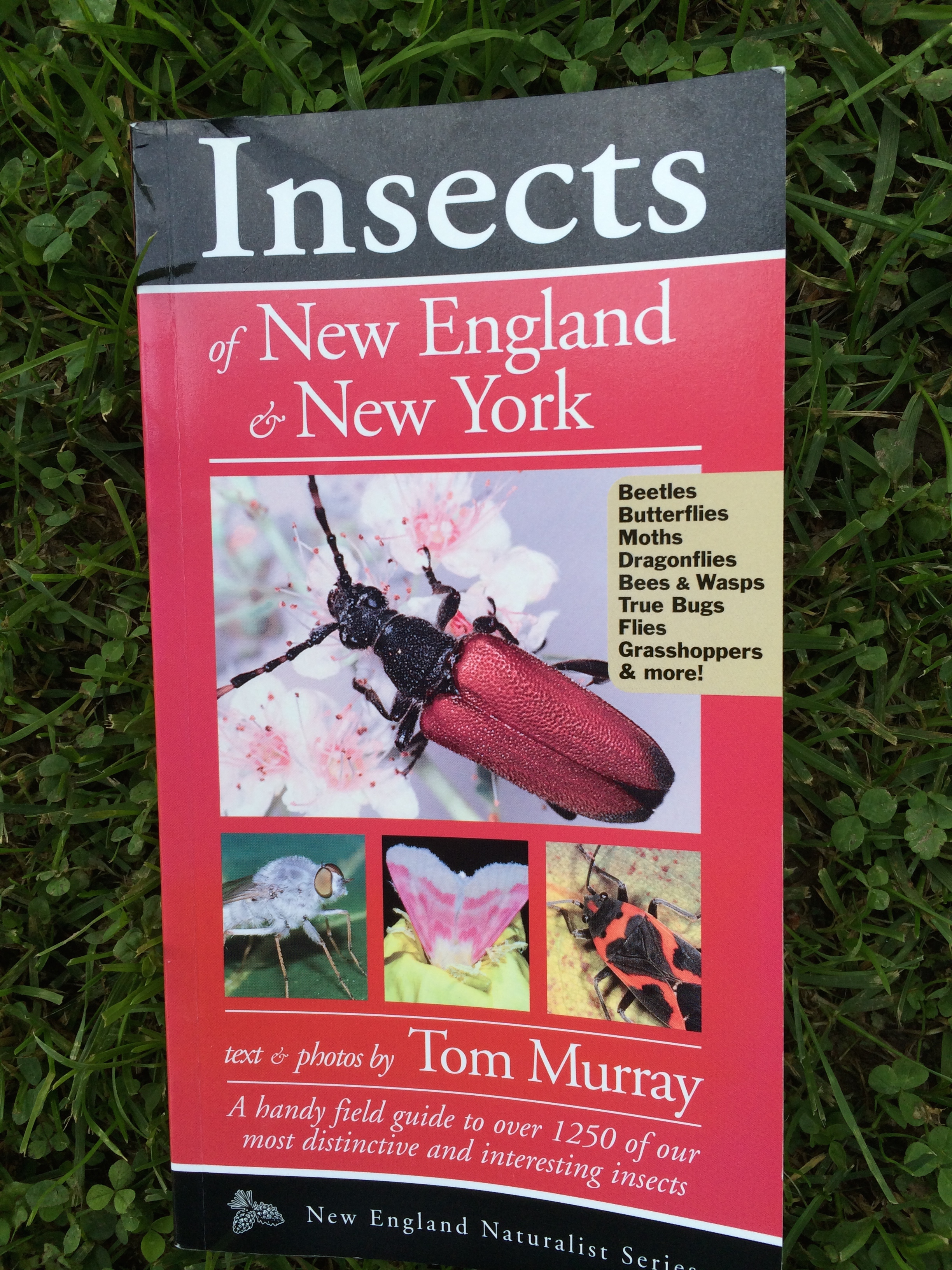
This handsome beetle popped out of an empty cat food can in my sink.  We had gone to Columbus, Ohio, for a wedding, leaving Rex Fernandez the cat in the care of an expert cat sitter who left the nearly empty Fancy Feast cans in the sink as requested.  Upon tidying up I encountered this large, dramatically colored beetle. I was surprised but not horrified. As most naturalists would, I decided to photograph it with my iPhone for identification. Darwin, famously, put a beetle, or was it two, in his mouth for safekeeping to carry home for study, because his hands were full with specimens and equipment. I had just acquired Insects of New England & New York by Tom Murray, so it was a simple matter of flipping through pages of photographs of beetles to find one like this.

Insects of New England and New York by Tom Murray, published by Kollath + Stensaas Publishing.

Insects of New England and New York by Tom Murray, published by Kollath + Stensaas Publishing.

Simple-minded or not, this is my first approach to identification. It was quickly apparent that this individual belonged to the family of Carrion Beetles (Silphidae) and more particularly to the genus Nicrophorus, commonly known as Sexton (Burying) Beetles. Murray writes,

“In the Northeast we have 9 of the 15 Burying Beetles species. Adults bury the carcass of a small mammal or bird, and then lay eggs on it and are dedicated parents, feeding the larvae bits of carrion.”

That’s how life continues, by not wasting available resources and good parenting. I narrowed from genus to species. It looked exactly like the photo of Nicrophorus defodiens in Murray’s book, which I stumbled upon online as well. These beetles get around. One comment beneath the online photo indicates they are a pest on the Isle of Skye in western Scotland, or I should say a wee pest (the go-to lingo of the Scots). I am sure that I could not put this kind of beetle in my mouth.

And then in further tidying I discovered a note and a container from the expert cat sitter by the telephone.

“Elizabeth. I’m trying to find a home for this strange bug–also to find out what kind of bug he is. Maybe the [grand]children would be interested?! I consulted an insect ID book to no avail. Anyway he is a fascinating little (very) creature. Susan”

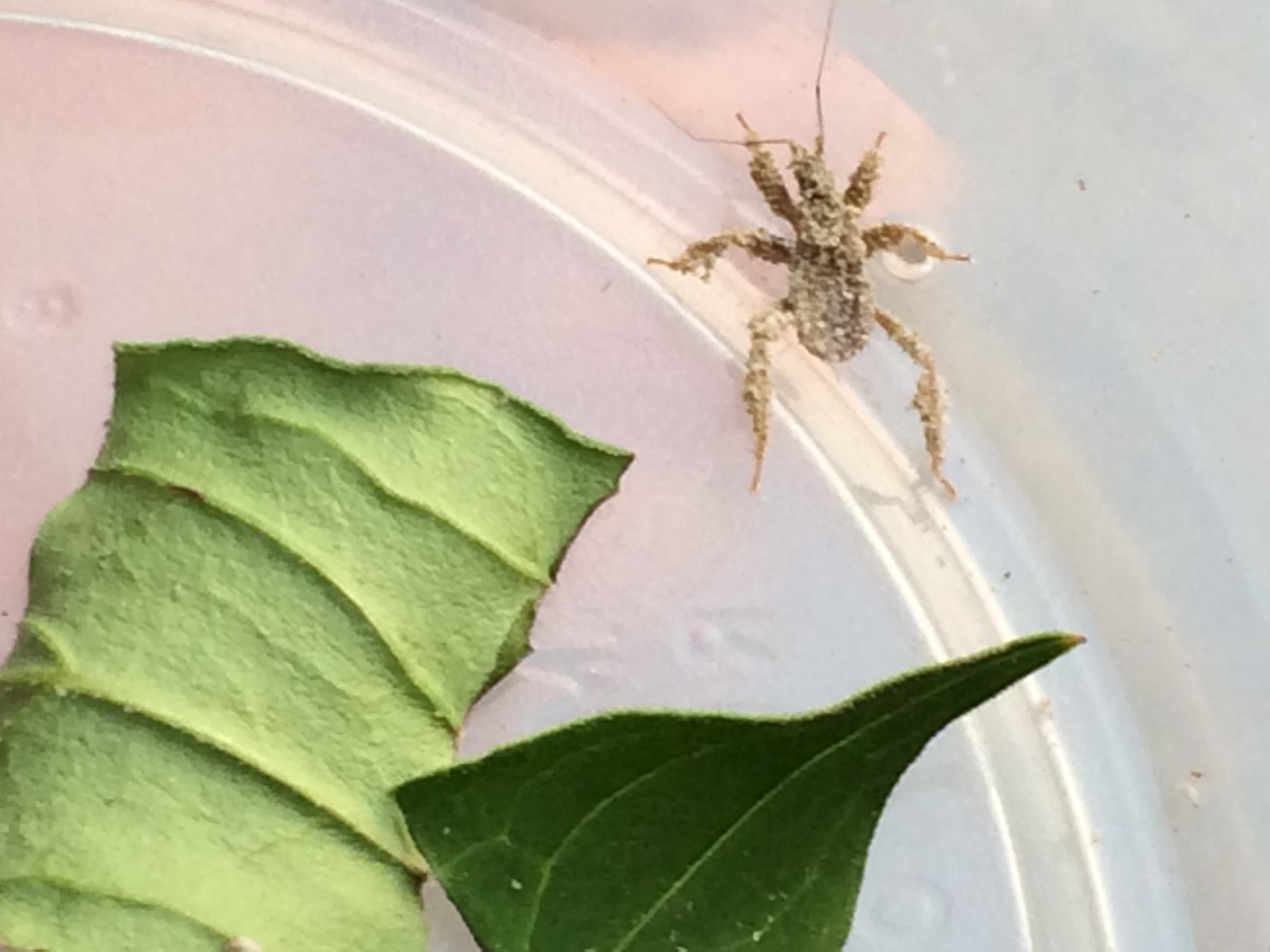
The Wegman’s Olive Bar container had beautiful little holes in the lid and nothing in it at first view. Near some shredded leaf parts I saw a tiny, very tiny as she had said, fuzzy little bug.

Susan's bug.

Susan’s bug, magnified considerably.

Higher magnification of Susan's bug.

Higher magnification of Susan’s bug. Note the widened “flanges” of the hind legs.


I went off on a wild goose-bug chase. The chances of ID-ing such a tiny bug, especially one that appeared to have been rolling around in gooey dust  seemed futile. I observed it, photographed it, and then let it go because I didn’t want it to die while I was on my chase. The hind legs were distinctive.  I immediately thought of leaf-footed bugs, known for “leaf-like expansions” (Murray) of their hind legs, and a photo in Murray’s book of the Distinct Leaf-footed Bug (Merocoris distinctus) bore some likeness. Murray’s description reads: “These little, fuzzy bugs can be found on flowers throughout the eastern U.S., except Florida where M. typhaeus occurs.” Susan said that she had found it on her shower curtain, but this unusual location did not necessarily rule out the Distinct Leaf-footed Bug because bugs get around for various reasons. Such a tiny bug could have blown on a gentle breeze from one of the flowers in her garden to her shower curtain, possibly. I wasn’t satisfied, however. The Distinct Leaf-footed Bug was supposed to be 9 mm or so, and Susan’s bug was smaller I thought. But perhaps it could be just a nymph, an immature stage in maturation of insects. It would get bigger and then look more like the photo in Murray’s book perhaps, especially if it was cleaned up. But that line of thinking was definitely fuzzy. I puzzled on.

Browsing around online, googling search terms like “tiny, fluffy bug” or “tiny, fuzzy bug” or “tiny, sticky bug,” I can’t remember exactly, I stumbled on Doug Green’s Simple Gifts Farm (www.simplegiftsfarm.com) with a great photo of a lookalike. You have to scroll down past the wooly aphid to get to the photo of the nymph of the Masked Hunter Bug (similar to Susan’s bug). The fascinating little creature on the shower curtain was a member of the Assassin Bug family, specifically Reduvius personatus. Called Assassin Bugs, because they hunt and kill other bugs, they like to be indoors and can, if disturbed, inflict very painful bites upon humans. The Masked Hunter is so-called because the nymphs go around covered in dust as a camouflage. The adults are not half as fascinating looking, as shown on Michigan State University’s webpage, written byHoward Russell, who notes that they have a “sizable beak” with a “needle-like mouthpart.” I am more entranced by the Masked Hunter with its costume of dust.

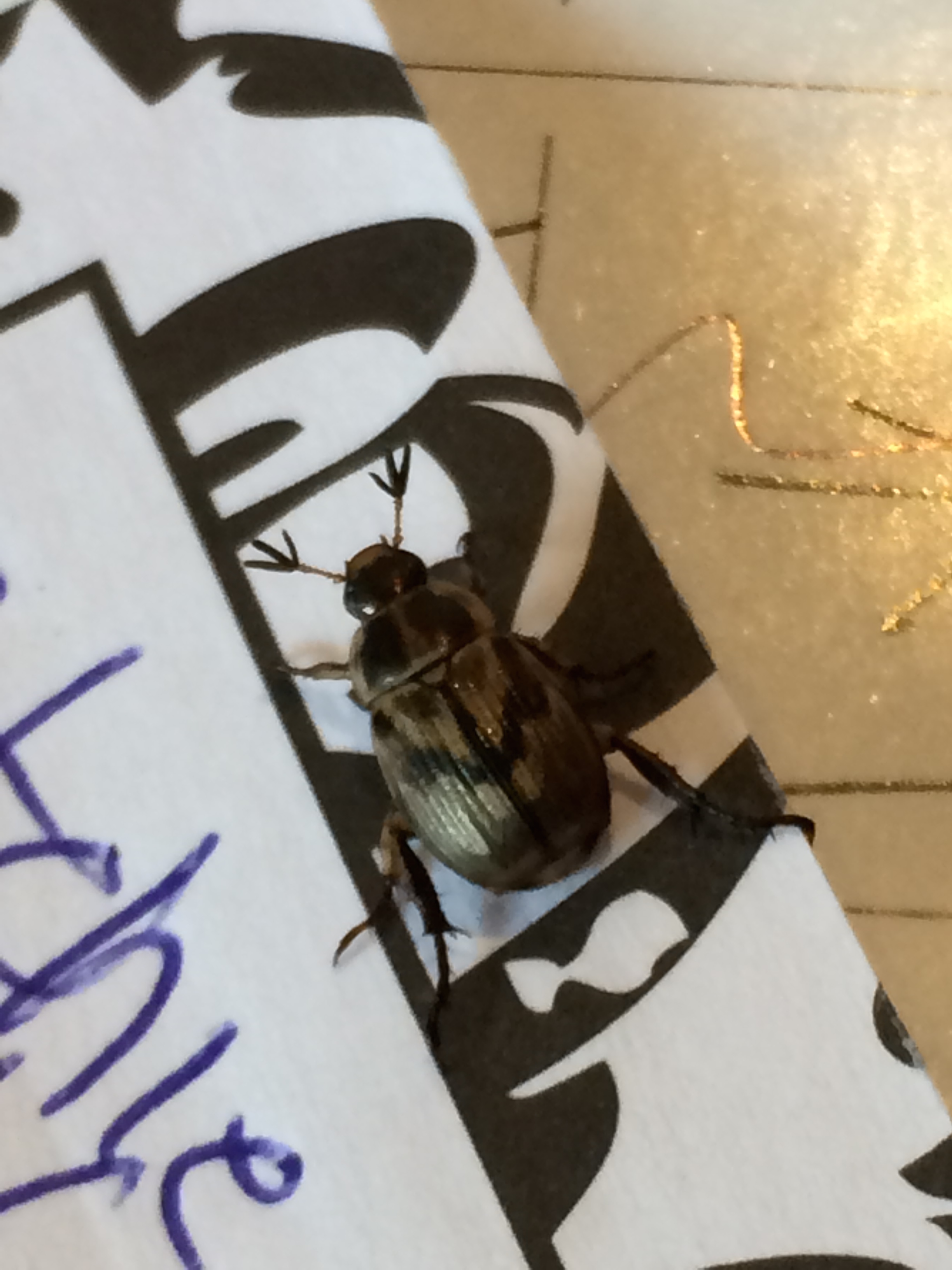
My third identification adventure occurred in a coffee shop. I was sitting with my portable, paper 2014 Edward Gorey’s The Evil Garden Calendar (Pomegranate) open and my coffee, plotting to get my life in order when a beetle dropped onto the page.

Beetle on calendar.

Beetle on calendar.

I had been immersed in beetles and bugs, and here was another one begging for attention. Had it dropped off the ceiling? my hair? At least it wasn’t an assassin bug. It seemed cheerful and actively explored my page.

Beetle on the move.

Beetle on the move.

The pattern on the back was interesting but not outstandingly helpful. After escorting the beetle outside to an ornamental planting by the parking lot, I started looked through all beetles that had three-pronged, black antennae. There were a lot. I narrowed it down to some type of scarab beetle, and after much wandering among beetle photographs decided that it was mostly likely the Oriental Beetle, Exomala orientalis (synonym Anomala orientalis). My photographs match those on bugguide.net almost exactly. Various accounts point out that the pattern often varies this way and that (i.e., no two snowflakes are alike), and sometimes it is completely black, as shown in Murray’s book. It is an immigrant from Asia, and frequents rose and hollyhock blossoms. The grubs live in the ground and feed on turfgrass roots.

In graduate school I took courses that gave me practice in some of the arts of identification–Agrostology, the study of grasses, at the University of Texas at Austin, and Entomology, the study of insects, at Cornell.  It’s not so much the name per se that a naturalist seeks, but knowing and honoring the individual through seeing well–discriminating between details of appearance with appreciation. I cannot fly around the world like David Attenborough, but I can engage in adventures that everyday life presents, and they are nonstop.

I found a wonderful website called Beetles in the Bush created by entomologist Ted MacRae. He posted  ID Challenge # 23on July 12, 2014. I was too busy investigating my own challenges to undertake his challenge, but I urge readers to get involved and accept challenges. For example, here is a long-legged insect that I found ensconced on peony fruit capsules in my Secret Garden.

Long-legged green insect on peony fruit capsules.

Long-legged green insect on peony fruit capsules.


Here's a higher magnification.

Here’s a higher magnification.

I think it is a katydid. The challenge is what kind of katydid? I also pose this challenge in the spirit of the  “revisioning the insect-human connection,” the subtitle of a wonderful book by Joanne Elizabeth Lauck titled The Voice of the Infinite In the Small. This is a beautiful book about tuning in to our smallest brethren and shedding human self-centeredness in order to really belong to the delicate lace of life on planet Earth. I for one feel that my life is more in order when I try to identify my fellow life forms.

A classic: The Voice of the Infinite in the Small: Revisioning the Insect-Human Connection by Joanne Elizabeth Lauck.

A classic: The Voice of the Infinite in the Small: Revisioning the Insect-Human Connection by Joanne Elizabeth Lauck.